

News archive
On this page you can search for older news. Choose a topic, type of news or enter your own keyword to filter out news.
View compact
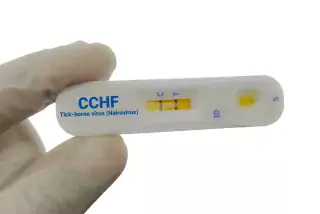
Researchers at Karolinska Institutet, in collaboration with JLP Health and others, have identified how the tick-borne Crimean-Congo haemorrhagic fever virus enters our cells. The results are published in Nature Microbiology and are an important step in the development of drugs against the deadly disease.
News
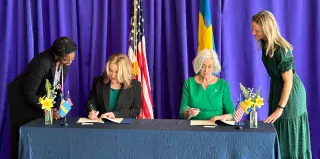
Sweden and the USA have previously enjoyed strong collaboration in the field of cancer care and research, and now it is further strengthened through a bilateral agreement. The purpose is to promote exchange between the two countries in both cancer research and the implementation of this research within cancer care, including both prevention and improved quality of life.
News
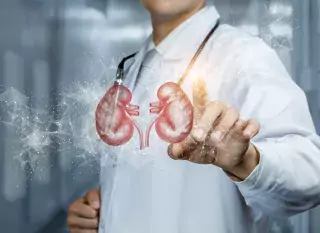
The Swedish Kidney Foundation (Njurfonden) distributes more than SEK 7 million to research into kidney diseases. This is the largest sum since the fund was established and is awarded to 40 researchers, 19 of whom are active at Karolinska Institutet. The grants go to research related to chronic kidney disease, dialysis and transplantation.
News

In the healthcare setting, keeping things clean can be vital to prevent the spread of dangerous bacteria. But in a household, what’s best for your health – to live pretty dirty or to be a clean freak? Read our interviews with the researchers who have a pure interest in cleaning.
News

After half a century in near-Earth orbit, humans are heading further out in space. First to the moon again. Then on to Mars! For this to go well, more research is needed on how space stresses the human body.
News

The Swedish Childhood Cancer Fund's allocation reflects the needs that exist in areas such as new technology and precision medicines. This year's call for proposals means that SEK 125 million will be allocated to 62 projects in the field of childhood cancer, of which SEK 35,400,000 will go to researchers at Karolinska Institutet.
News
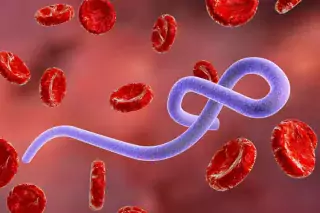
In a recent study published in Nature Communication, researchers from Karolinska Institutet and the Institute of Molecular Biotechnology have identified a new molecule in cells that is necessary for Ebola and Marburg viruses to infect and spread in the body.
News

Extracellular vesicles are small cell bubbles that play a crucial role in how our cells communicate. A recent study published in Science Advances has unlocked some fascinating insights into these tiny messengers and their potential in healthcare.
News

Five researchers at Karolinska Institutet are awarded 30 million Swedish kronor from the Swedish Research Council (VR) to establish a so-called centre of excellence for further development of cell-based cancer treatments. The funds will be distributed over five years, with the potential for another five years of funding after evaluation.
News
A watercolour painting, anatomical artwork or a whole house dedicated to the body. When scientists turn to art, science takes on new forms.
News
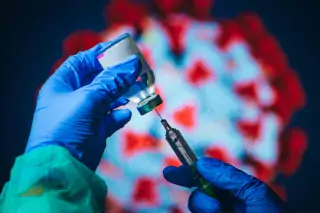
A new DNA-based COVID-19 vaccine is now being tested for the first time on healthy volunteers at Karolinska University Hospital. The vaccine has been developed at Karolinska Institutet and target multiple parts of the virus, making it less vulnerable to mutated strains and potentially effective against new variants.
News

Thirteen researchers at Karolinska Institutet have been awarded 54.9 million Swedish kronor from the Swedish Cancer Society. The foundation is distributing a total of SEK 124.3 million to 31 cancer researchers in Sweden.
News

How should healthcare providers identify bacteria or other pathogens in the blood of sepsis patients as quickly as possible? Volkan Özenci is focusing on this in his research. This article is part of an in-depth feature from KI's popular science magazine Medicinsk Vetenskap.
News
Professor Christian Giske has been appointed deputy chairperson of the Committee for Research effective immediately, following a decision by KI’s president. His mandate runs until Dec. 31, 2025.
News
Immunotherapy is an effective form of therapy for different types of cancer. However, for pancreatic cancer, its effect is limited and differs between men and women. Researchers at Karolinska Institutet have now found a possible explanation for this sex difference. The study, which is published in Cancer Research, reveals the presence of an immune cell in women with pancreatic cancer that obstructs the body’s immune response. The results can pave the way for a more sex-specific treatment.
News

During the pandemic, it became clear that children who contracted COVID-19 became less ill than adults. One hypothesis has been that common colds would give children immunity protecting against a severe form of the disease. Researchers at Karolinska Institutet are now able to show that OC43, one of the coronaviruses that cause common colds, boosts the immune response to COVID-19. The study, which is published in PNAS, could give rise to more tailored vaccine programmes for children and adults.
News
Readership of news articles written by KI researchers for The Conversation jumped 62 percent on the year in 2022. Since KI became a member two years ago, 43 researchers have penned over 42 articles, reaching around 3.8 million readers worldwide. “I have never experienced such a response to my research before,” says postdoc Filip Gedin.
News

Eighteen kidney researchers at Karolinska Institutet have been allocated grants totaling 3.2 million Swedish kronor from the Swedish Kidney Foundation, an announcement made in connection with World Kidney Day on March 9.
News
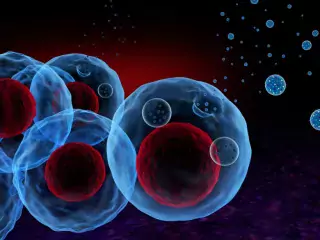
Researchers at Karolinska Institutet, Karolinska University Hospital and Cellevate AB, have received almost 5 million SEK from Vinnova, to investigate how stem cells interact with their environment. The goal is to develop more effective production of stem cell therapies, and eventually contribute to better treatment of public diseases such as heart failure and diabetes.
News

The Cancer and Allergy Fund has awarded a grant of SEK 4.2 million to 23 patient-end projects on cancer and allergies. Of these, fifteen researchers at nine departments at Karolinska Institutet are to share SEK 2.5 million.
News

In its recent call, the Swedish Research Council has awarded in excess of SEK 19 million for six projects at KI. The project receiving the largest grant aims to study the long-term impact of the pandemic on the lifestyle and health of young adults.
News

Researchers at Karolinska Institutet have identified the bacteria most commonly found in severe oral infections. Few such studies have been done before, and the team now hopes that the study can provide deeper insight into the association between oral bacteria and other diseases. The study is published in Microbiology Spectrum.
News
Karolinska Institutet's programme of study is expanding. From autumn 2023, KI will offer a new Master's Programme in Biomedical Laboratory Science. The programme is given in Swedish and aimed at working professionals.
News
Congratulations to the winners of this year’s KI Lifestyle4Health Best paper award for junior researchers. In this occasion, two, of many fantastic publications that were nominated, shared the first place:
News
Jonas Fuxe has been appointed Head of the Department of Laboratory Medicine, starting on January 1, 2023.
News
A new immunological treatment against hepatitis B and D viruses, both of which can cause liver cancer, shows promising results in animal models. Results from the treatment, which is being developed by researchers at Karolinska Institutet, have been published in the journal Gut.
News
Researchers at Karolinska Institutet are developing a coronavirus vaccine designed to be less sensitive to mutations and equipped for future strains. The vaccine showed promising results in mice in a newly published study in EMBO Molecular Medicine, and the researchers now hope to be able to take it to safety studies on humans.
News
The clinical outcome and severity of COVID-19 cannot be explained by a single factor like age, gender, or comorbidities. A new study from Karolinska Institutet in Sweden has identified potential determinants of COVID-19 severity at the cellular level using advanced systems biology analysis. The findings, published in the journal Cell Systems, offer insights into the metabolic tug-of-war in the human body and its association with disease severity.
News

The majority of cold wave related deaths occurred in middle-income countries followed by high-income countries, deaths were likely to occur during heat waves than cold waves or severe winter weather, in particularly in high-income countries and increased CO2 emissions can result in an increased number of deaths during severe weather events. That is the conclusion of a recently published study that looked at extreme weather events and deaths in the years 1999 to 2018.
News
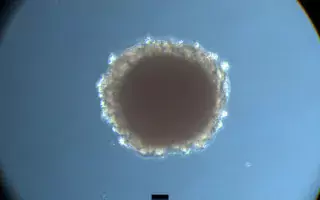
A team of scientists including at Karolinska Institutet has used mini-kidneys simulating those of diabetic patients to further our understanding of the link between diabetes and COVID-19. The researchers found that diabetic mini-kidneys have a higher susceptibility to SARS-CoV-2 infection than non-diabetic mini-kidneys. The study, which is published in the journal Cell Metabolism, also identified genetic evidence for the essential role of the ACE2 receptor in COVID-19.
News
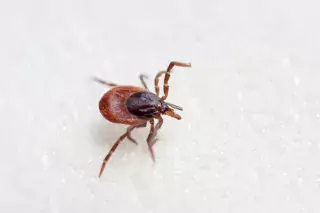
Researchers at Karolinska Institutet have identified key signalling pathways that when blocked by existing drug candidates limit reproduction of the Crimean-Congo haemorrhagic fever (CCHF) virus. The findings, published in the journal eLife, offer hope for patients affected by this potentially deadly disease.
News

On March 16 the Minister for International Development Cooperation visited Karolinska Institutet to discuss current research about vaccination and development cooperation for health. The visit was made in conjunction with National Vaccination Week, which has the aim of achieving more people being vaccinated against Covid 19.
News

The causes of complex diseases can be identified by representing them in the form of mathematically produced networks. This method was used to find bacteria that drive atopic dermatitis, for example.
News
The Swedish Kidney Foundation has appointed the researchers who will be receiving money this year for kidney research. Out of a total of 49 researchers and SEK 6.1 million, 19 researchers at Karolinska Institutet will share SEK 2.2 million. In connection with the recognition of the grants, one KI researcher will be awarded the Bengt Rippes Research Prize.
News

Global warming is likely to increase the number of people requiring hospitalization due to critically low sodium levels in the blood, a condition known as hyponatremia. A new study from Karolinska Institutet projects that a temperature rise of 2 degrees Celsius would increase the burden on hospitals from hyponatremia by almost 14 percent. The findings are published in the Journal of Clinical Endocrinology and Metabolism.
News

You are the same person inside, although your body is ageing and your memory failing. Professor Maria Eriksdotter hopes to add to our knowledge of Alzheimer’s disease. But she also wants to fight ageism. “The status of the elderly needs to be raised,” she says.
News
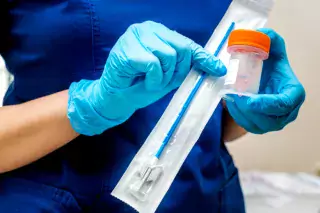
An international team of scientists, including from Karolinska Institutet, has discovered a means of identifying the risk of breast and ovarian cancer by analysing cell samples from the cervix. By measuring epigenetic changes in cervical samples from over a thousand women, the researchers have found two unique signatures for breast and ovarian cancer. The results are presented in two papers in the journal Nature Communications.
News

WHO experts are now recommending using the drug baricitinib to treat severe COVID-19 infection. Researchers at Karolinska Institutet were involved in the early analysis of the drug’s efficacy against the disease: “I myself would’ve benefited from it when I got COVID-19,” says adjunct professor Ali Mirazimi.
News

Five researchers from Karolinska Institutet have been awarded grants from the Sjöberg Foundation, in total a sum of SEK 18.1 million. The foundation supports research with a focus on cancer, health and the environment.
News

Eleven researchers at five departments at Karolinska Institutet have received funding from Cancer- och Allergifonden (Cancer and Allergy Fund) for their point-of-care research projects on cancer and allergies. The researchers from Karolinska were allocated SEK 2.6 million. In total, the Fund distributed a total of five million SEK to Swedish cancer and allergy research.
News

Researchers at Karolinska Institutet have charted the number of healthcare workers in Stockholm who were on duty during the first wave of the pandemic despite being infected with SARS-CoV-2, having been asymptomatic at the time. The results of the study, which is published in the journal PLOS ONE, present very low figures but the researchers believe that this could still have affected the spread of infection.
News
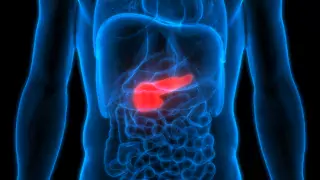
Bacteria from the digestive system seem to have the potential to cause damage to pancreatic cells, increasing the risk of malignant tumours. Now for the first time, live bacteria from cystic pancreatic lesions that are precursors to pancreatic cancer, have been analysed by researchers at Karolinska Institutet. The study, which is published in Gut Microbes, can lead to prophylactic interventions using local antibiotics.
News

Fourteen researchers connected to Karolinska Institutet are on the 2021 list of highly cited researchers presented by Clarivate, the company behind Web of Science. In all, the list includes some 6,600 researchers from across the globe.
News
The Swedish Research Council grants 14 research projects at KI for their research about postcovid. A total of SEK 50 million is granted, of which SEK 33,800,000 is awarded to nine research projects at Karolinska Institutet.
News
During the pandemic, it has become evident that people with cardiovascular disease and obesity are at much higher risk of developing very severe, even fatal COVID-19 disease. Researchers at Karolinska Institutet have identified some metabolic processes that SARS-CoV-2 uses to attack lung tissue. The results, which are published in Molecular & Cellular Proteomics, could one day be used to treat COVID-19, and potentially for other viruses like the Crimean-Congo hemorrhagic fever virus and HIV-1.
News

Scientists hope that tiny sacs of material excreted by cells – so-called extracellular vesicles – can be used to deliver drugs inside the body. Researchers at Karolinska Institutet now show that these nano-bubbles can transport protein drugs that reduce inflammation caused by different diseases. The technique, which is presented in Nature Biomedical Engineering, shows promising results in animal models.
News

On 1 July 2021, a new virtual centre – the Centre for Health Crises – will be established at Karolinska Institutet. The COVID-19 pandemic has indicated that in the event of acute health threats and pandemics, universities and colleges must be able to quickly change their research, education, and other activities to help solve urgent needs.
News

The human papillomavirus (HPV) can cause cancer and many countries run national vaccination programmes to minimise the risk. Studies involving researchers at German Cancer Research Center, Karolinska Institutet and Tampere University now report on the longitudinal effect of common HPV vaccines. The results, which are published in The Journal of Infectious Diseases and Lancet Infectious Diseases, show lasting protection against more HPV variants than the vaccines were developed for.
News
Thirteen KI researchers have received funding from the Heart-Lung Foundation for their research on the new coronavirus. The grants total SEK 6.5 million, with approximately 40 per cent of the grants being distributed by the Heart-Lung Foundation (2021). The focus of the research is on the aftermath of COVID-19 where the disease has caused late complications on the heart, vessels and lungs. A total of SEK 15.7 million was distributed to 30 research projects at six different universities.
News

Good cholesterol, which is transported in HDLs (high-density lipoproteins), plays a key part in the prevention of atherosclerosis and thus the risk of cardiovascular disease. However, according to a new paper co-authored by researchers at Karolinska Institutet and published in the journal Circulation, the anti-inflammatory properties of HDLs could be an even better biomarker for future cardiovascular events.
News