

News archive
On this page you can search for older news. Choose a topic, type of news or enter your own keyword to filter out news.
View compact
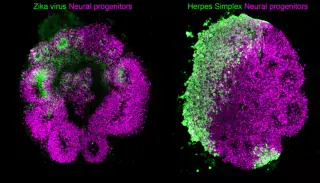
A study involving researchers at Karolinska Institutet and IMBA – Institute of Molecular Biotechnology of the Austrian Academy of Sciences – demonstrates how zika and herpes viruses can lead to brain malformations during early pregnancy. The researchers used 3D models of human brains to study which mechanisms are involved in virus-induced microcephaly, a condition where babies are born with smaller-than-usual heads. The results are published in the journal Cell Stem Cell.
News

Earlier studies have shown that supplementary vitamin D seems to provide a certain degree of protection against respiratory infections. A new study involving researchers from Karolinska Institutet has now made the most comprehensive synthesis to date of this connection. The study, which is published in the journal Lancet Diabetes & Endocrinology, confirms that vitamin D protects against respiratory infections, a result that can have significance for the healthcare services.
News

Researchers at Karolinska Institutet are investigating the efficacy and safety of COVID-19 vaccines in a new study on patients with compromised immune systems, who can become seriously ill if they are affected by COVID-19. On February 23, the first patient in the study was vaccinated with an mRNA vaccine at Karolinska University Hospital. So far, the project has received two grants from the Knut and Alice Wallenberg Foundation of SEK 10 million in total.
News
The European Commission has launched a contingency plan to meet the challenge of the various mutations of the coronavirus. KI and Karolinska University Hospital are contributing to a new network for the evaluation and testing of new vaccines.
News

Researchers at KI have received SEK 36,800,000 from the Swedish Research Council’s consolidator grant 2020. In total, SEK 217 million was distributed to 20 universities.
News
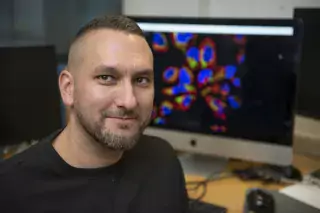
Samir El Andaloussi, researcher at the Department of Laboratory Medicine, has been awarded the 2020 European Research Council Consolidator Grant for the project “Release of engineered Extracellular vesicles for delivery of Biotherapeutics”.
News

Researchers at Karolinska Institutet have led an international team of scientists who have tested a vaccine for Crimean-Congo virus on primates for the first time. The vaccine provided protection against the virus, which can cause fatal haemorrhagic fever, and showed no serious side-effects. The study is published in the journal Nature Microbiology. The next big step will be to test the vaccine on humans.
News
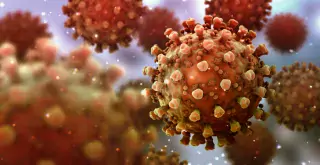
Researchers at Karolinska Institutet in Sweden report promising results from an in vitro combination therapy against COVID-19. In a study published in EMBO Molecular Medicine, the researchers show that a combination of remdesivir, an approved drug against COVID-19, and hrsACE2, a medicine currently in phase II trials for COVID-19 treatment, reduced the viral load of SARS-CoV-2 and inhibited viral replication in cell cultures and organoids.
News

The rheumatoid arthritis drug baricitinib can block viral entry and reduce mortality in patients with moderate to severe COVID-19, according to translational research by an international team coordinated by researchers from Karolinska Institutet in Sweden. The findings, published in the journal Science Advances, support the continuation of ongoing randomized clinical trials.
News

Researchers at Karolinska Institutet have been awarded a grant of SEK 290 million from the Swedish Cancer Society, meaning that over one third of the total grant of SEK 709 million, divided amongst eleven universities, is going to cancer research at KI. Two of the recipients are associate professor Mattias Rantalainen and Professor Fang Fang.
News

People with cancer who exercise generally have a better prognosis than inactive patients. Now, researchers at Karolinska Institutet in Sweden have found a likely explanation of why exercise helps slow down cancer growth in mice: Physical activity changes the metabolism of the immune system’s cytotoxic T cells and thereby improves their ability to attack cancer cells. The study is published in the journal eLife.
News
Researchers at KI have received funding from the United States Army for the development of genetic engineering methods to alleviate or cure the disease Duchenne muscular dystrophy (DMD), the most common form of genetic neuromuscular disease in children.
News
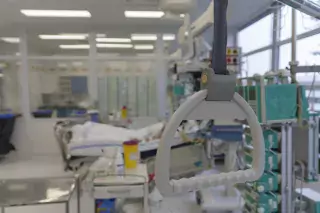
The drug tocilizumab, which is used in the treatment of various forms of arthritis, is associated with shorter time on ventilation and shorter hospital stays for patients with severe COVID-19, a new study from Karolinska Institutet and Karolinska University Hospital published in The Journal of Internal Medicine reports.
News

The COVID-19 pandemic caused by the new coronavirus has created an unprecedented public health challenge globally. Little was known about how the infecting cells respond to the virus and how the virus hijacks the host cellular machinery. A study led by researchers at Karolinska Institutet published in Emerging Microbes & Infection gives new insights into the virus-host interplay enabling newer ideas to tackle the virus.
News
A drug against rheumatoid arthritis called baricitinib could potentially be repurposed to treat patients with COVID-19, according to a study conducted by an international research team including researchers at Karolinska Institutet in Sweden. The findings, published in the journal EMBO Molecular Medicine, represent an example of how artificial intelligence (AI)-algorithms could help identify existing drugs as potential therapies against as new illnesses.
News

EU-financed Innovative Medicines Initiative (IMI) has boosted funding for research on diagnostics, medicines and vaccines against the new coronavirus SARS-CoV-2. Ali Mirazimi, researcher at Karolinska Institutet and Sweden’s National Veterinary Institute (SVA), coordinates one of eight projects provisionally selected among 144 applicants.
News

We have lost our former director, colleague and friend, Professor emeritus Folke Sjöqvist, who passed away peacefully on 30 March at the age of 86 after a protracted illness. He is sorely missed by his wife Margareta and four children and their families, as well as friends and colleagues in Sweden and around the world.
News
A drug already tested against lung disease could potentially inhibit COVID-19 by reducing the coronavirus load that enters the lungs and other organs. That is according to a study in human cell cultures and organoids by researchers at Karolinska Institutet in Sweden and the University of British Columbia (UBC) in Canada, published in the journal Cell.
News
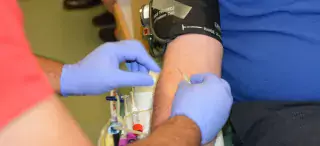
In a small clinical trial just granted approval, about 30 COVID-19 patients at Karolinska University Hospital may soon begin to receive blood plasma from people who have recovered from the disease. Sweden’s Ethical Review Authority has approved the trial treatment, and its effectiveness will be evaluated in a study by researchers at Karolinska Institutet and the Karolinska University Hospital.
News
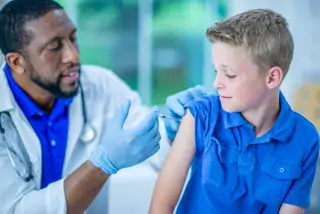
The human papillomavirus (HPV) causes, amongst other diseases, cancer of the cervix and oropharynx. A Swedish-Finnish study published in The Journal of Infectious Diseases now shows that the most oncogenic HPV types can be eliminated, but only if both girls and boys are vaccinated. Both genders will be offered vaccination in Sweden as of 2020.
News
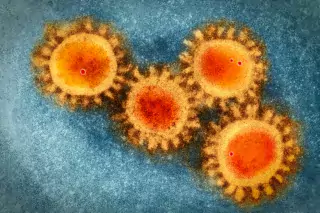
Professor Ali Mirazimi at Karolinska Institutet is part of a consortium that has received 1 million Canadian dollars (almost 7 million kronor) to try to develop a drug candidate against COVID-19. Mirazimi will assist with in vitro and in vivo infection models for SARS-CoV-2. The project is a collaboration with Canadian and Chinese researchers.
News
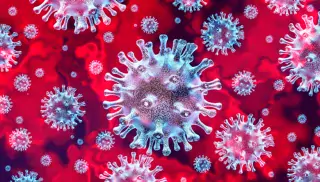
Researchers at Karolinska Institutet are on track to produce a vaccine against the new coronavirus, SARS-CoV-2. Several vaccine candidates are currently available in the freezers at the Department of Laboratory Medicine and the first animal studies are slated to begin at the end of March, according to Professor and Head of Department Matti Sällberg who is leading the effort together with virus researcher and Professor Ali Mirazimi and researcher Gustaf Ahlén.
News

Three coronavirus projects coordinated by researchers at Karolinska Institutet have moved onto the grant negotiation phase in a bid for 9 million euros (95 million kronor) in EU funding. The projects aim to find a vaccine, immunotherapies and neutralizing antibodies against SARS-CoV-2 and are being coordinated by KI’s Matti Sällberg, Qiang Pan Hammarström and Benjamin Murrell.
News
Researchers worldwide are trying to develop a vaccine and antiviral treatments against the new corona virus spreading in China. At Karolinska Institutet, virus researchers Ali Mirazimi and Matti Sällberg are working to develop a prototype vaccine against the virus. But vaccine development takes time, and it will likely take at least six to nine months before an application for clinical studies can be filed and another two to three years before a vaccine could be ready for the public.
News
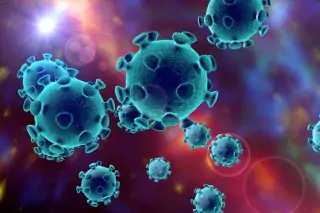
The new corona virus continues to spread despite significant measures taken by the authorities in China to stop the outbreak. However, this time the fast response coupled with increased knowledge about the nature of the virus means the world is better placed to handle the outbreak compared to 18 years ago when SARS caused widespread concern, says virus researcher Ali Mirazimi, adjunct professor at the Department of Laboratory Medicine at Karolinska Institutet.
News
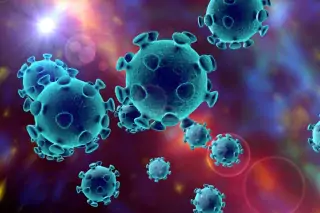
More than 200 people have died and thousands more have been sickened by the new corona virus spreading in China. A few cases have been confirmed outside China, and the World Health Organization is closely monitoring the situation. How worried about a new pandemic should we be? Virus researcher Ali Mirazimi, adjunct professor at the Department of Laboratory Medicine at Karolinska Institutet, gives us his perspective.
News
Two researchers at Karolinska Institutet have been awarded funds from the Sjöberg Foundation. The foundation promotes cancer research, and research on health and the environment.
News
Researchers at Karolinska Institutet, together with colleagues from the EU-funded project HUMAN, recently published a study on a new animal model for studies of human lipoprotein metabolism and pharmacodynamics. The study is a result of the EU project HUMAN using a new animal model and new technologies to study aging and cardiometabolic diseases.
News
KI researcher Thomas Gustafsson, professor at the Department of Laboratory Medicine / Division of Clinical Physiology and Stefan Arver, Associate Professor at the Department of Medicine and Chief Physician at ANOVA Karolinska University Hospital Huddinge, are responsible for a study examining changes in muscle mass, muscle composition and strength in transgender persons during hormone treatment.
News
The Swedish Research Council has awarded a little more than SEK 46 million to researchers at the Karolinska Institutet in the areas of science and technology; humanities and social sciences; project grants for international collaborations in antimicrobial resistance; and project grants for international collaborations in personalized medicine.
News

Altogether SEK 170 million. This is this year's allocation from the European Commission under the funding programme for health in Horizon2020. A total of 20 research projects at Karolinska Institutet are being supported, three of them also coordinated from here: a survey of what we are exposed to in the environment; mapping of the brain's different nerve cells; and a project to bring down the mortality rate in childbirth in four African countries.
News
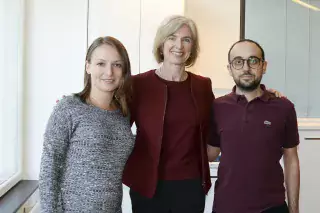
This year’s Sjöstrand lecture was held by Professor Jennifer Doudna, best known for having developed the CRISPR/Cas-9 tool with professor Emanuelle Charpentier. Apart from the lecture itself, she was also involved in several activities during the day at which she met researchers and students from SciLifeLab and Karolinska Institutet.
“I’ve read about her work and never thought I’d get to present my own project to such an important pioneer,” says KI researcher Mihaela Zabulica.
“I’ve read about her work and never thought I’d get to present my own project to such an important pioneer,” says KI researcher Mihaela Zabulica.
News
Researchers at Karolinska Institutet now quickly generate new knowledge on clinically important drug-drug interactions associated to the anticoagulant warfarin.
News
New research from Stockholm University and Karolinska Institutet shows that viruses interact with proteins in the biological fluids of their host which results in a layer of proteins on the viral surface. This coat of proteins makes the virus more infectious and facilitates the formation of plaques characteristic of neurodegenerative diseases such as Alzheimer's disease. The study is published in Nature Communications.
News