
The ‘last cohort’ from the old medical programme is now entering the workforce
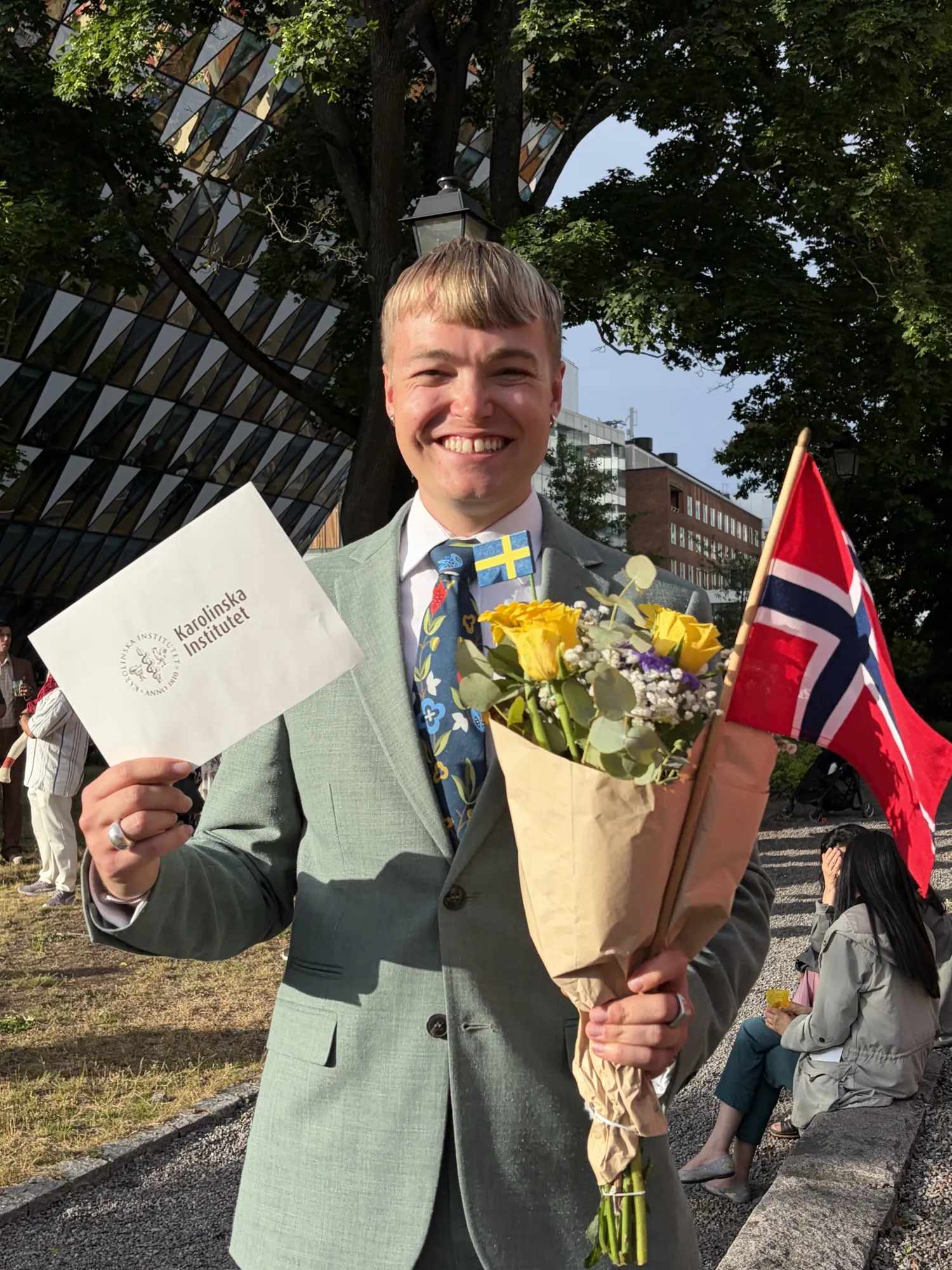
When Gottfrid Rehnman and his fellow students from the 5.5‑year medical programme enter working life, they will first begin their general medical internship. “The learning curve is likely to be steep,” he says.
When Gottfrid Rehnman started the medical programme in the spring term of 2021, he knew that a new medical programme was about to launch. That was originally the one he had planned to take.
“I was tired of school after upper secondary school and wanted time to live, time to travel. But in October after graduating, I realised that I wanted to get started,” he says.
Friends at KI thought the medical programme was good, while the new one was not yet finalised.
“What I knew was that it was longer and that you received your licence straight away,” he says.
He also mentions the general medical internship, AT, as a reason for choosing the old programme.
“I’ve heard a lot of good things about the AT internship; it’s a system that works and that people are happy with. It’s out in working life that you really learn,” says Gottfrid Rehnman.
Well prepared for working life
During the patient-focused final exam, it became clear that he was ready to enter the profession.
“I felt well prepared for patient encounters. Next time I meet patients, I’ll be a doctor with the knowledge I have now. There is a great deal you don’t know, but being ready to get out there – absolutely.”
His AT internship will begin at Lycksele Hospital in Southern Lapland.
“It’s a small hospital with an air ambulance helicopter and a catchment area larger than Switzerland. It will be exciting, and the learning curve is likely to be steep,” he says.
As master of ceremonies at the welcome ceremony for new students at KI, he usually emphasises that studying must not take over your entire life.
“Your whole personality shouldn’t be that you’re a medical student. You need a social life outside your studies. For me, it took a few terms before I found and got involved in being a marshal, an ambassador and a mentor,” he says.
Relief at the finish line
His year group is known as “the last cohort”, and not being able to drop down a term has been stressful.
“It now feels like such a relief to have reached the finish line! That’s true for everyone, but for us a bit more – we reached the finish line according to the timetable that was planned,” says Gottfrid Rehnman.
Finally, he highlights the importance of looking beyond the differences between the two programmes.
“For the most part, we learn the same things and are placed at the same hospitals. They have different practical requirements, but switching medical programmes doesn’t mean that medicines or basic disease mechanisms change. Sometimes people seem to forget that,” says Gottfrid Rehnman.
Text: Lotta Fredholm