
Hien Vu aims to improve care for newborns with respiratory distress
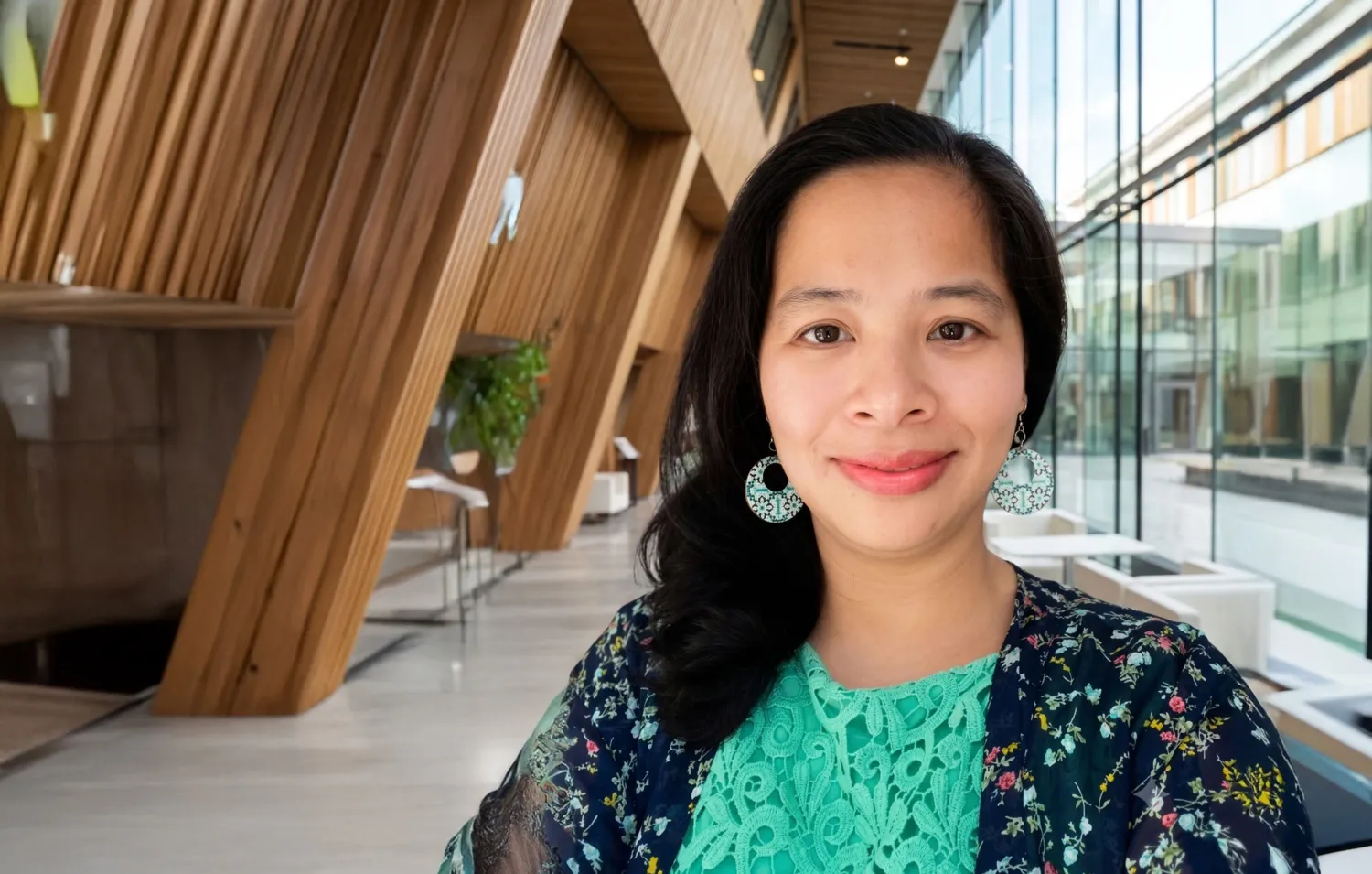
Hien Vu is an experienced anesthesiologist who has spent nearly two decades working in one of Vietnam’s largest maternal hospitals. Now a PhD student at the Department of Global Public Health, she combines clinical expertise with research to improve neonatal respiratory care and help save the lives of newborns in low-resource settings worldwide.
Hien Vu, PhD student
Department: Global Public Health
Research group: Global Child Health and the Sustainable Development Goals.
Supervisor: Dr. Susanna Myrnert Höök.
Thesis title: Key to survival - Airway management in neonates with respiratory distress: clinical evaluation of Laryngeal Mask Airways and nasal respiratory support in Vietnam.
Could you briefly tell us about your background and what led you to pursue doctoral studies at KI?
I graduated from Hanoi Medical University in 2007 and earned my master’s degree in medicine in 2013. For the past 18 years, I have been working as an anesthesiologist at Phu San Hanoi Hospital, one of the largest maternal hospitals in northern Vietnam, with around 35,000 deliveries every year.
In 2012, I was selected for the Resources Exchange International program and spent three months with the anesthesiology and obstetrics team in Greenville, South Carolina. That experience profoundly deepened my understanding of global health and international cooperation.
My career took a new direction in 2016 when I rediscovered my passion for research through collaboration with the professional and inspiring team at Karolinska Institutet. Today, I am proud to be an active member of the NeoSurf team within Global Public Health at KI.
Through my work with the KI team, I realized that research and PhD training could help save many more babies, not only at my hospital or in Vietnam, but also around the world. This belief became one of the strongest motivations for me to pursue doctoral studies at KI.
What is your doctoral thesis about, and what is the overall aim of your research?
My doctoral thesis focuses on improving airway management and respiratory support for newborns with respiratory distress in low-resource settings, particularly in Vietnam. Respiratory distress is one of the leading causes of neonatal morbidity and mortality, and timely and effective airway management can be lifesaving.
The overall aim of my research is to evaluate the burden of neonatal respiratory distress and current airway management practices in a large NICU in Vietnam, with a focus on the use of laryngeal mask airways and nasal respiratory support.
Through clinical studies conducted in Vietnam, I hope the findings will contribute to safer neonatal care, strengthen clinical guidelines, and support healthcare workers in settings where access to advanced neonatal intensive care is limited.
If any so far – what have been the most surprising or significant findings?
One of the most significant findings has been how effective interventions can be when implemented correctly and systematically. In particular, we have seen that laryngeal mask airways can be a feasible alternative for surfactant administration in infants weighing less than 1500 grams, especially in situations where endotracheal intubation is difficult or resources are limited. To our knowledge, this represents one of the largest cohorts to date of infants under 1,500 grams treated with SALSA (surfactant administration via laryngeal mask or supraglottic airway). However, a randomized controlled trial is still needed to evaluate the true clinical effect.
Another important insight has been the importance of training and teamwork. Even with limited equipment, improving clinical skills and establishing clear protocols can make a major difference in neonatal outcomes.
These findings reinforce the idea that innovation in global health is not always about expensive technology, but about developing practical solutions that can be adapted to local healthcare systems.
What has been the most rewarding part of being a PhD student at KI?
One of the most rewarding aspects has been the opportunity to work in a truly international and collaborative research environment. At KI, I have learned not only scientific methods and critical thinking, but also how research can directly contribute to improving clinical practice and patient care.
I have especially appreciated the supportive mentorship and the opportunity to collaborate with researchers and clinicians from different disciplines and countries. Being able to combine my clinical experience in Vietnam with academic research at KI has been both professionally and personally meaningful.
Have you had any collaborations that have been particularly important for your development as a researcher?
Yes, collaboration has been central to my development as a researcher. Working with the NeoSurf team and colleagues from KI and Vietnam has provided me with valuable experience in international research collaboration, clinical study design, and implementation research in neonatology.
Another collaboration that has been especially important to me is the cooperation with the anesthesiology team at Brigham and Women’s Hospital, Harvard Medical School. I greatly appreciate their dynamic, effective, and insightful approach from the perspective of anesthesiology and critical care. This collaboration has broadened my clinical and research perspectives and strengthened my understanding of teamwork across specialties.
I have learned a great deal from multidisciplinary collaboration involving neonatologists, anesthesiologists, obstetricians, midwives, nurses, as well as IT and support teams. These experiences have helped me better understand how research can bridge the gap between evidence and clinical practice.
Overall, these partnerships have highlighted the importance of mutual learning and long-term collaboration in global health research.
What advice would you give to new PhD students who are just starting their research journey?
My advice would be to stay curious, patient, and open to learning. A PhD journey can be challenging, and setbacks are part of the process, but persistence is essential.
I would also encourage new PhD students to actively seek collaboration and mentorship. Research is never done alone, and having supportive colleagues and supervisors makes a significant difference.
Finally, try to stay connected to the broader purpose of your work. For me, remembering that our research may help improve the survival and quality of care for newborns has always been a strong source of motivation.