
Teresa's doctoral research focuses on health economics in pediatric obesity and overweight
Teresa Santos discovered health economics whilst studying economics. She is now a PhD student, and her research aims to evaluate the cost-effectiveness of various interventions in order to provide decision-makers with the evidence they need to optimise investments in public health.
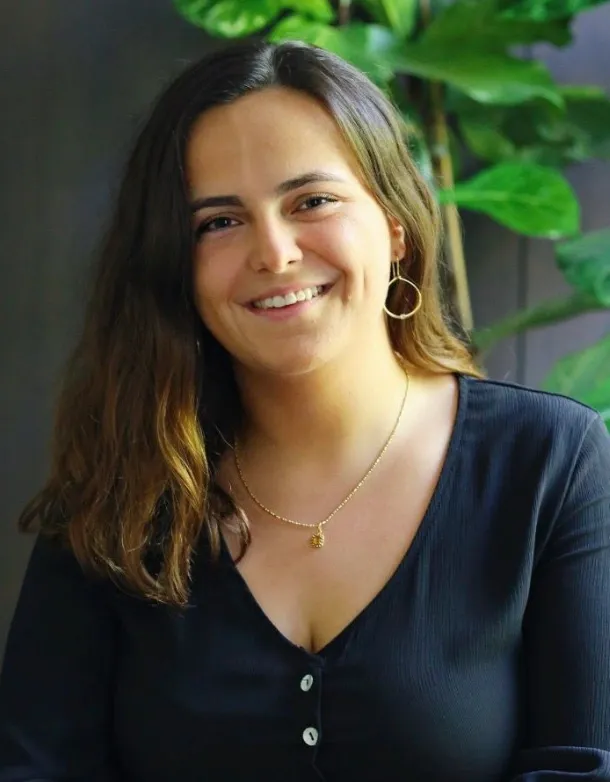
Teresa Santos, PhD student
Research group: Community nutrition and physical activity (CoNPA), Department of Global Public Health.
Supervisor: Kristi Sidney Annerstedt. Co-supervisors: Shuang Hao and Liselotte Schäfer Elinder.
Thesis title: Health Economic Studies on Pediatric Obesity and Overweight Treatment and Prevention.
Hello Teresa Santos! Could you briefly tell us about your background and what led you to pursue doctoral studies at KI?
"I discovered health economics during my bachelor's in economics and finance and quickly knew it was the field I wanted to study during my masters! After taking two years to consolidate the theoretical knowledge of my bachelor's with some practical experience as a strategy and finance consultant, I moved to Sweden for my master's at KI, where I fell in love with research and felt supported by my colleagues and supervisors, leading me to pursue a PhD here."
What is your doctoral thesis about? What is the overall aim of your research?
"My doctoral project focuses on applying health economic methodologies to the field of prevention and treatment of pediatric obesity and overweight. The overall aim of my research is to evaluate the cost-effectiveness of different interventions within this field, providing policymakers with evidence for optimized investments in public health."
If any so far – what have been the most surprising or significant findings?
"I have just started, so no concrete findings yet, but one thing I have come to realize is that cases of pediatric overweight tend to “fall through the cracks”. This is not that surprising- with limited resources, the focus is on pediatric obesity as it is more serious- however, this came as an interesting realization to me due to the prevention potential of these cases: focusing on pediatric overweight might be a “quick win” for policy making!"
What has been the most rewarding part of being a PhD student at KI?
"The most rewarding part of being a PhD student at KI has been to engage and collaborate with fellow researchers within and outside my research group and department. The environment is extremely positive and supportive, providing me with opportunities to engage with different projects outside of my doctoral thesis."
Have you had any collaborations that have been particularly important for your development as a researcher?
"I collaborated with Claudia Hanson’s research group (IMPAQT) as a research assistant, and Claudia and her group have been kind to involve me in the group ever since, providing me with many opportunities for collaboration and growth! Additionally, one of my co-supervisors, Shuang Hao, is working at the MEB and LIME departments, and collaborating with her during my PhD has been invaluable for my growth as a health economist."
What advice would you give to new PhD students who are just starting their research journey?
"Take every interaction as an opportunity to learn: at KI everyone is so wise, and even if they work in a completely different field, there is always so much you can learn from them!"