
First allocation of the 2027 research funding completed
A decision on an initial allocation of the 2027 research grant has now been made by the President and the Faculty Board. This is the first time the allocation for the coming year takes place as early as June and within the framework of the new resource allocation model in its entirety. This provides better conditions for planning the 2027 activities within each campus group and department.
The new model for research funding has been introduced step by step since 2025 and will be used without exception from 2027 onwards. A first allocation of the grant can now be made as early as June, instead of October previous years. Additional funds are likely to be allocated during the autumn, once a more detailed analysis of the budgetary scope for the coming year can be made.
More funds and clearer responsibilities
At least 600 million SEK will reach the organisation in 2027, compared with 476 million SEK in 2024, before the model was revised. For 2027, a total of:
- 300 million SEK in base funding will be allocated to the campus groups following a decision by the President.
- 300 million SEK in performance-based funding will be allocated to the departments following a decision by the Faculty Board.
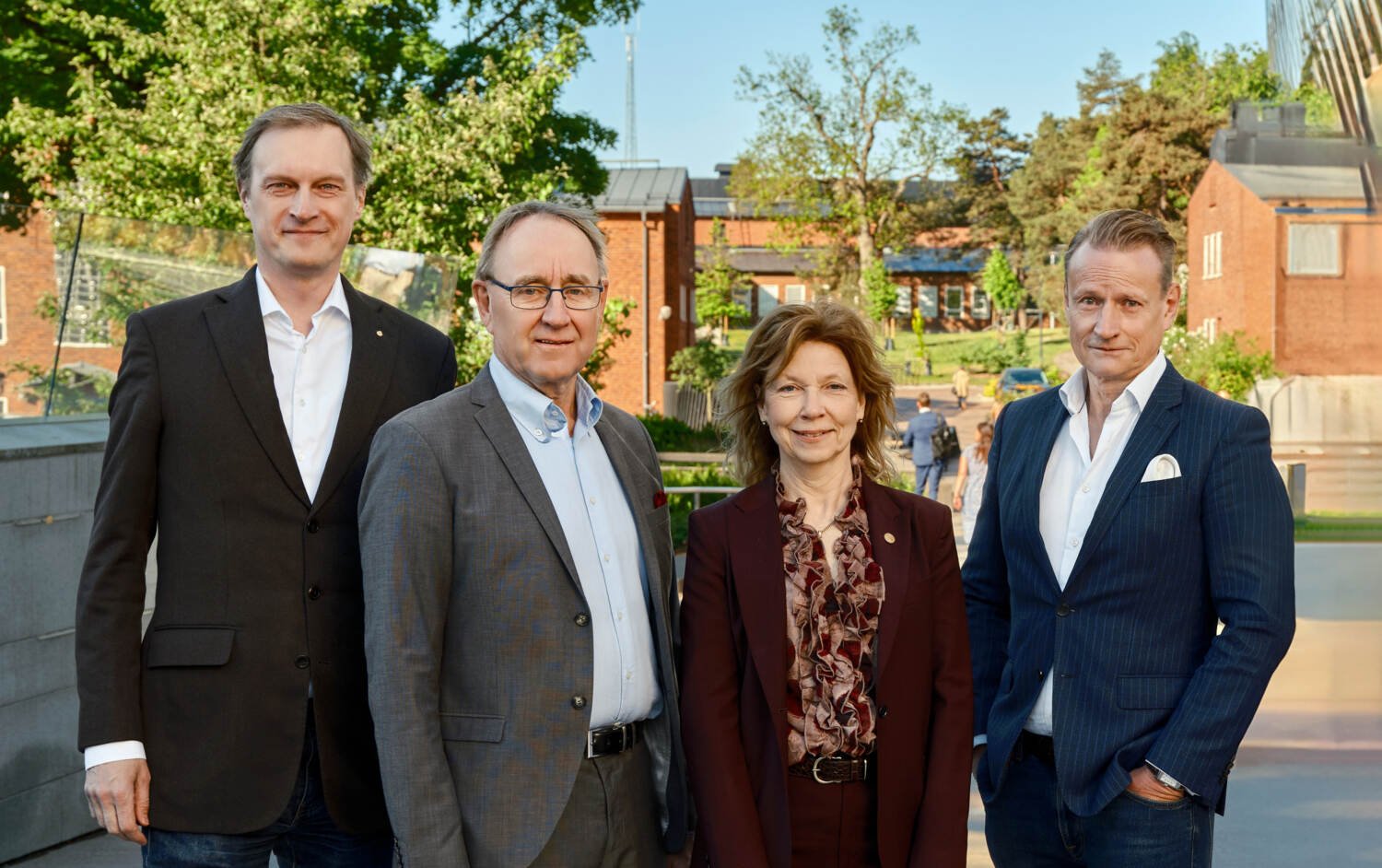
– I am glad that we can announce the allocation already in June instead of October because this gives our campus management groups more time for long-term planning. Our Heads of Department and Deans (Vice-Presidents from 1 July) know their parts of our organisation best and can together make the strategic priorities required, says President Annika Östman Wernerson.
The new model provides a clearer division of responsibilities. The Deans and their management groups (the departments’ Heads of Department) decide how the base funding is allocated within the campus groups, while the Heads of Department are responsible for the performance-based part within their departments.
For forward-looking needs
A key principle is that resources should be allocated based on forward-looking needs and active decisions, rather than historical patterns. The model is intended to support strategic discussions and choices at all levels of the organisation.
This may, for example, involve balancing different research environments; choosing between distributing funds broadly or more selectively; or deciding to invest in new initiatives rather than focusing on established strengths.
– The resource allocation model is fundamentally a tool for shared prioritisation. I want it to help us steer us towards KI’s long-term goals while also ensuring transparency in the decisions we make, says the President, who earlier this spring decided on guidelines to support resource allocation.
Follow-up of results and impact
An important part of the model is that it will be reviewed regularly and can be adjusted if needed.
The Faculty Board has already decided on an initial revision of the journal list, which is one of the indicators in the performance-based component. The outcomes of the performance-based part continue to be monitored by the Faculty Board, which may decide on further adjustments for future years.
The University Management holds triannual follow-up meetings with each campus management group, linking resource allocation with KI’s process for operational planning and follow-up.
– Our aim is to create stability and security within the organisation, but we are also prepared to adapt if conditions change. I am therefore pleased that we now have a clear model that encourages active responsibility throughout the organisation, says the President.
What happens next?
The management groups at each campus are now continuing their prioritisation work and the further allocation of funds to the departments. Decisions will be made gradually throughout the year, and more funds are expected to be distributed within the model this autumn. More information is available on the Staff Portal: Allocation of resources 2027.
Base funding to campus groups
Base funding 2027: 300 million SEK in total, according to the first decision in June
The allocation of base funding is decided by the President and distributed to the campus groups under the leadership of the Dean (Campus Vice-President from 1 July). The distribution is based on each group’s share of the total costs in 2025.
Solna: 96 780 000 SEK
South: 92 113 000 SEK
North: 111 107 000 SEK
Performance‑based allocation to departments
2027: 300 million SEK in total, according to the initial decision in June
The Faculty Board decides on the allocation to the departments in accordance with the performance‑based part of the model which is based on the indicators external funding and bibliometrics.
| Department | Performance-based allocation by department (SEK) | Percentage breakdown of 300 million SEK |
|---|---|---|
| MTC - Department of Microbiology, Tumor and Cell Biology | 14 931 000 | 5,0% |
| MBB - Department of Medical Biochemistry and Biophysics | 34 909 000 | 11,6% |
| FYFA - Department of Physiology and Pharmacology | 14 173 000 | 4,7% |
| NEURO - Department of Neuroscience | 15 575 000 | 5,2% |
| CMB - Department of Cell and Molecular Biology | 25 270 000 | 8,4% |
| IMM - Institute of Environmental Medicine | 12 101 000 | 4,0% |
| LIME - Department of Learning, Informatics, Management and Ethics | 2 158 000 | 0,7% |
| MEB - Department of Medical Epidemiology and Biostatistics | 15 263 000 | 5,1% |
| KI DS - Department of Clinical Sciences, Danderyd Hospital | 6 768 000 | 2,3% |
| NVS - Department of Neurobiology, Care Sciences and Society | 13 450 000 | 4,5% |
| LABMED - Department of Laboratory Medicine | 9 671 000 | 3,2% |
| MEDH - Department of Medicine, Huddinge | 26 581 000 | 8,9% |
| CLINTEC - Department of Clinical Science, Intervention and Technology | 10 293 000 | 3,4% |
| MMK - Department of Molecular Medicine and Surgery | 13 203 000 | 4,4% |
| MEDS - Department of Medicine, Solna | 25 829 000 | 8,6% |
| KBH - Department of Women's and Children's Health | 9 622 000 | 3,2% |
| ONKPAT - Department of Oncology-Pathology | 12 429 000 | 4,1% |
| CNS - Department of Clinical Neuroscience | 20 466 000 | 6,8% |
| GPH - Department of Global Public Health | 7 541 000 | 2,5% |
| DENTMED - Department of Dental Medicine | 3 838 000 | 1,3% |
| SS - Department of Clinical Science and Education, Sdersjukhuset | 5 931 000 | 2,0% |
| Sum | 300 000 000 | 100,0% |
KI’s total turnover
SEK 8.7 billion for 2025
The research grant usually accounts for between 20 and 25 per cent of KI’s total turnover.
The majority of KI’s income comes from external grants, but the education grant and other operating income are also significant. Read more in KI’s Financial Report for 2025.