
Radiotherapy provides benefit in advanced melanoma
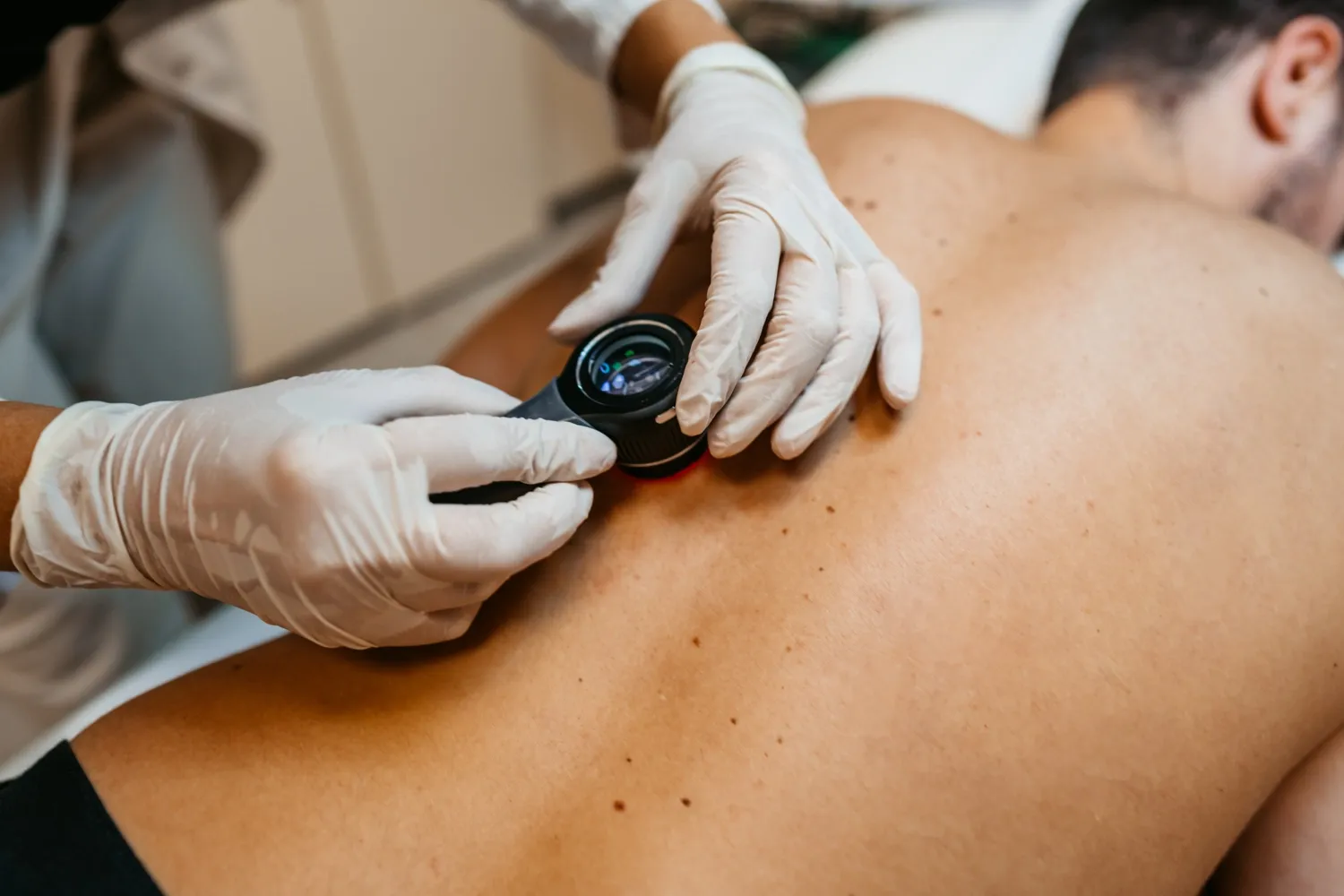
Melanoma is the most aggressive form of skin cancer and can be difficult to treat in advanced stages. In a new doctoral thesis from Karolinska Institutet, Ellen Heurlin shows that radiotherapy combined with modern drug treatments provides clear clinical benefit in advanced melanoma. The results demonstrate good local tumor control, especially with stereotactic techniques, and few serious side effects. The most promising results were observed when radiotherapy was combined with immunotherapy.

“My thesis focuses on the role radiotherapy can play alongside modern drug treatments in advanced melanoma. The main focus has been on combinations with immunotherapy and so-called BRAF/MEK inhibitors. I have primarily investigated whether radiotherapy can enhance the effects of immunotherapy, and how the combination of radiotherapy and modern systemic treatments affects survival and side effects,” says Ellen Heurlin, doctoral student at the Department of Oncology-Pathology.
What are the key findings?
“Patients who received radiotherapy together with immunotherapy often showed a clear shrinkage of the irradiated tumor. In some patients, metastases that had not been irradiated also decreased in size, which may indicate a so-called abscopal effect, meaning that the immune system is activated and attacks tumors even outside the irradiated area.
The thesis also studied stereotactic radiotherapy in patients with limited tumor spread and found excellent local control and few serious side effects. However, we could not identify any specific patient group that benefited particularly strongly from the treatment. Exposure to immunotherapy did not appear to significantly affect progression-free survival or side effects, but we observed improved overall survival.
We also investigated patients in whom BRAF/MEK inhibitors had begun to lose effectiveness and found that radiotherapy provided clinical benefit in about half of them. The treatment was well tolerated and caused no serious side effects. The results also suggested that it was better to continue BRAF/MEK inhibitors despite disease progression, or switch to immunotherapy, rather than stopping treatment completely.”
How can this knowledge contribute to improving people’s health?
“The hope is that the results will make it easier to determine when and how radiotherapy should be added in metastatic melanoma, so that more patients can achieve better treatment outcomes without increased side effects.”
What are your future ambitions?
“I want to compare our results with patients who have received only systemic therapy, and to study radiotherapy in an adjuvant setting, that is, after surgery. Radiotherapy for brain metastases from melanoma is also an area I would like to explore further, especially in combination with modern systemic treatments.
There are also other types of skin cancer where the role of radiotherapy is still relatively understudied, such as Merkel cell carcinoma, basal cell carcinoma, and squamous cell carcinoma, and I would very much like to expand the research into those areas.”
Doctoral thesis
“Radiotherapy in the era of modern systemic melanoma treatments”
Dissertation
Friday June 12 at 9:00 in J3:11 Birger & Margareta Blombäck, Solnavägen 30