
News archive
On this page you can search for older news. Choose a topic, type of news or enter your own keyword to filter out news.
View compact
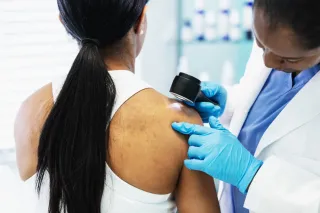
A blood test that measures how quickly tumour cells divide could in future help doctors assess prognosis and select treatment strategies for patients with melanoma that has spread to other parts of the body. This is shown in a study involving researchers from Karolinska Institutet, published in the journal Clinical Cancer Research.
News

Matthew Hunt at Karolinska Institutet is one of the recipients of the IBSA Foundation Fellowships 2025. He is awarded the fellowship for a research project on new treatment strategies for aggressive skin cancer.
News
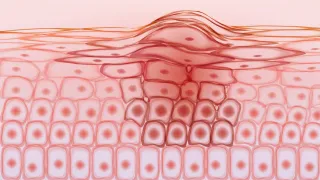
Each year, more than 6,000 Swedes are diagnosed with melanoma. Melanoma is a form of skin cancer that, if detected late, can be fatal. Not all melanomas behave in the same way. A new doctoral thesis from Karolinska Institutet investigates why some patients have poorer outcomes than others and whether certain markers in tumor tissue can help us predict who is at risk.
News
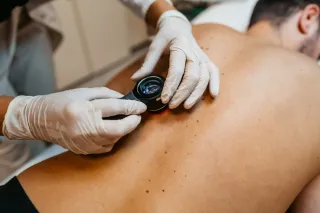
Melanoma is the most aggressive form of skin cancer and can be difficult to treat in advanced stages. In a new doctoral thesis from Karolinska Institutet, Ellen Heurlin shows that radiotherapy combined with modern drug treatments provides clear clinical benefit in advanced melanoma. The results demonstrate good local tumor control, especially with stereotactic techniques, and few serious side effects. The most promising results were observed when radiotherapy was combined with immunotherapy.
News
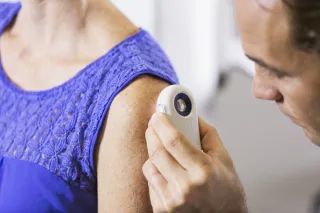
According to a new study, lower doses of approved immunotherapy for malignant melanoma can give better results against tumours, while reducing side effects. This is reported by researchers at Karolinska Institutet in the Journal of the National Cancer Institute.
News

A new study by researchers at Karolinska Institutet and Karolinska University Hospital shows that patients diagnosed with the rare skin cancers mycosis fungoides and Sézary syndrome face a significantly higher risk of dying from lymphoma and infections compared to the general population. The study was recently published in the British Journal of Dermatology.
News
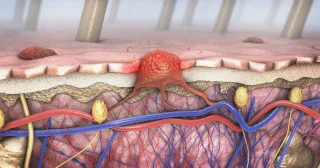
Pathologists' examinations of tissue samples from skin cancer tumours improved when they were assisted by an AI tool. The assessments became more consistent and patients' prognoses were described more accurately. This is shown by a study led by Karolinska Institutet, conducted in collaboration with researchers from Yale University.
News

The Swedish Society for Medical Research (SSMF) provides financial support to promising researchers in medicine who are at the beginning of their careers and supports both basic and applied research. Silvia Angori receives 3 million SEK distributed over three years for her project titled "Uncovering the role of SAMHD1 in tumor suppression and therapy resistance in cutaneous melanoma."
News
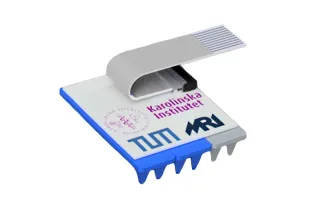
Researchers at Karolinska Institutet have developed a new method for detecting malignant melanoma. A new type of patch equipped with microneedles can identify the biomarker tyrosinase directly in the skin, according to a study published in Advanced Materials.
News

In recent years, the treatment landscape for solid tumors has undergone a notable change. With new cancer treatments, the future looks brighter for many young cancer patients, making fertility issues and future family planning an important aspect. Six specialists in oncology and onco-fertility at the Department of Oncology-Pathology join forces to compile knowledge and recommendations on this important issue.
News

A team of researchers at Karolinska Institutet and Yale School of Medicine wanted to know what happens to mosaic skin upon injury. Do simple wounds or surgery enhance the skin cancer risk by expanding mutated cells even more as generally believed? The surprising answer is no, according to newly published study in Nature.
News

Our skin contains specialised long-lived killer cells that protect against intruders. Researchers at Karolinska Institutet and the University of Copenhagen have now identified how these cells are formed, and shown that high levels of memory killer cells in cancer tissue correlate with a better survival rate in people with melanoma. The study is published in the journal Immunity.
News
A comprehensive comparison of cancer survival between the Nordic countries shows improvements for all countries over time with previously observed differences attenuated. The reasons for these improvements are likely multifactorial. Previous studies comparing cancer survival between the Nordic countries have found marked differences, with a notably poorer survival in Danish patients.
News

A new type of immunotherapy for the skin cancer malignant melanoma shows promising results. Three severely ill patients are now long-term survivors. The study, published in OncoImmunology, is the result of a collaboration between researchers at Karolinska Institutet and Karolinska University Hospital.
News

The risk of developing more than one skin melanoma over a ten-year period has seen a ten-fold increase in Sweden since the 1960s, a new study by researchers at Karolinska Institutet and Lund University published in The Journal of the National Cancer Institute reports. The researchers suspect that the increase is due to a change in holiday customs with more active sunbathing and overseas trips to southern climes.
News

Individuals with an inherited form of skin cancer often have a poor prognosis. The type of immunotherapy that was awarded this year’s Nobel Prize in Physiology or Medicine is, however, particularly effective in this patient group, research from Karolinska Institutet in Sweden shows. The study is published in the Journal of Medical Genetics.
News