
Karin Leander receives KI’s Sustainability Award 2026
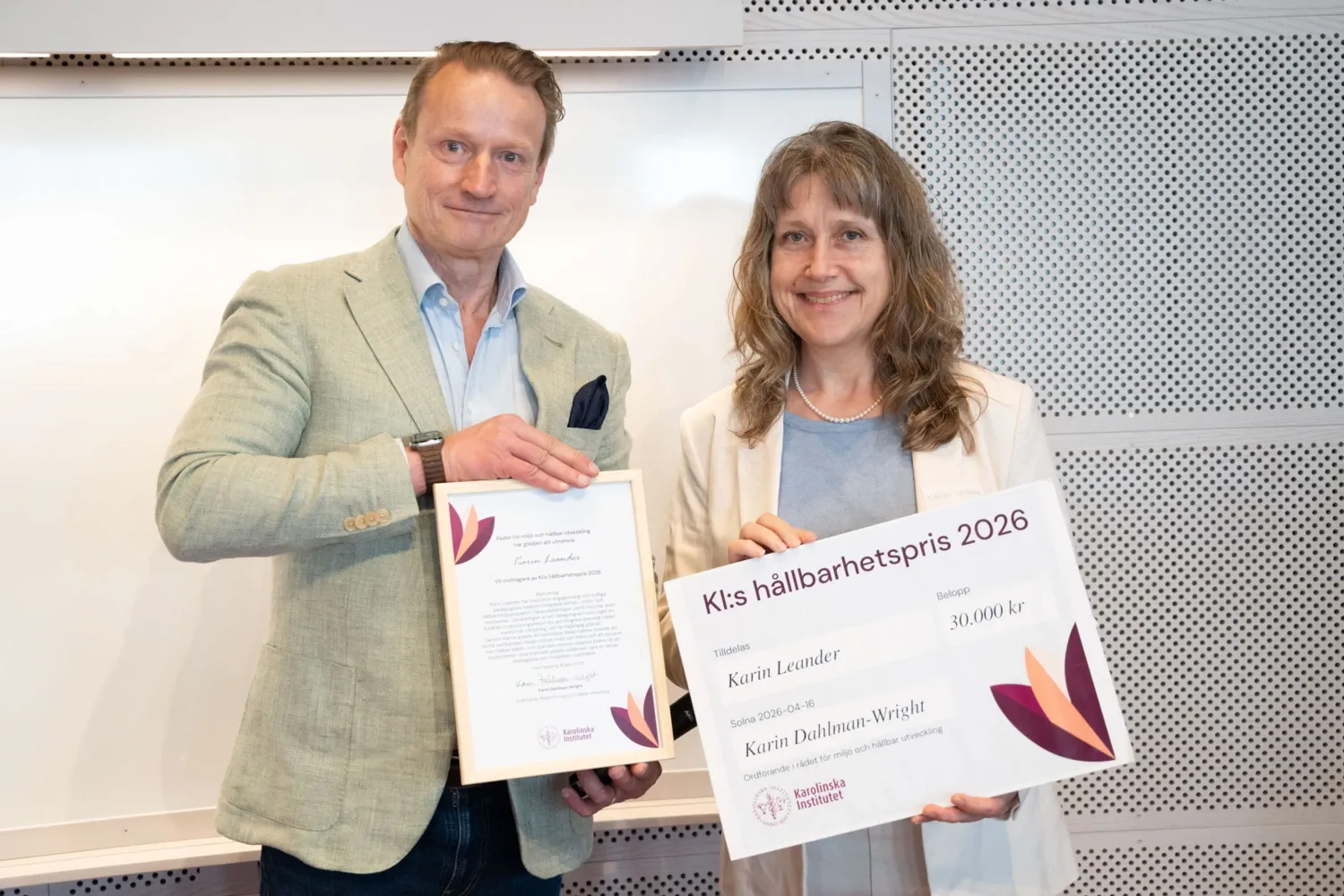
Karin Leander is awarded Karolinska Institutet’s Sustainability Award for her commitment to integrating climate, environmental and sustainability perspectives into the medical programme. Through pedagogical initiatives and a digital tool, she contributes to strengthening future physicians’ competence for a more sustainable healthcare system. The award was presented on 16 April in conjunction with KI’s Sustainability Day.
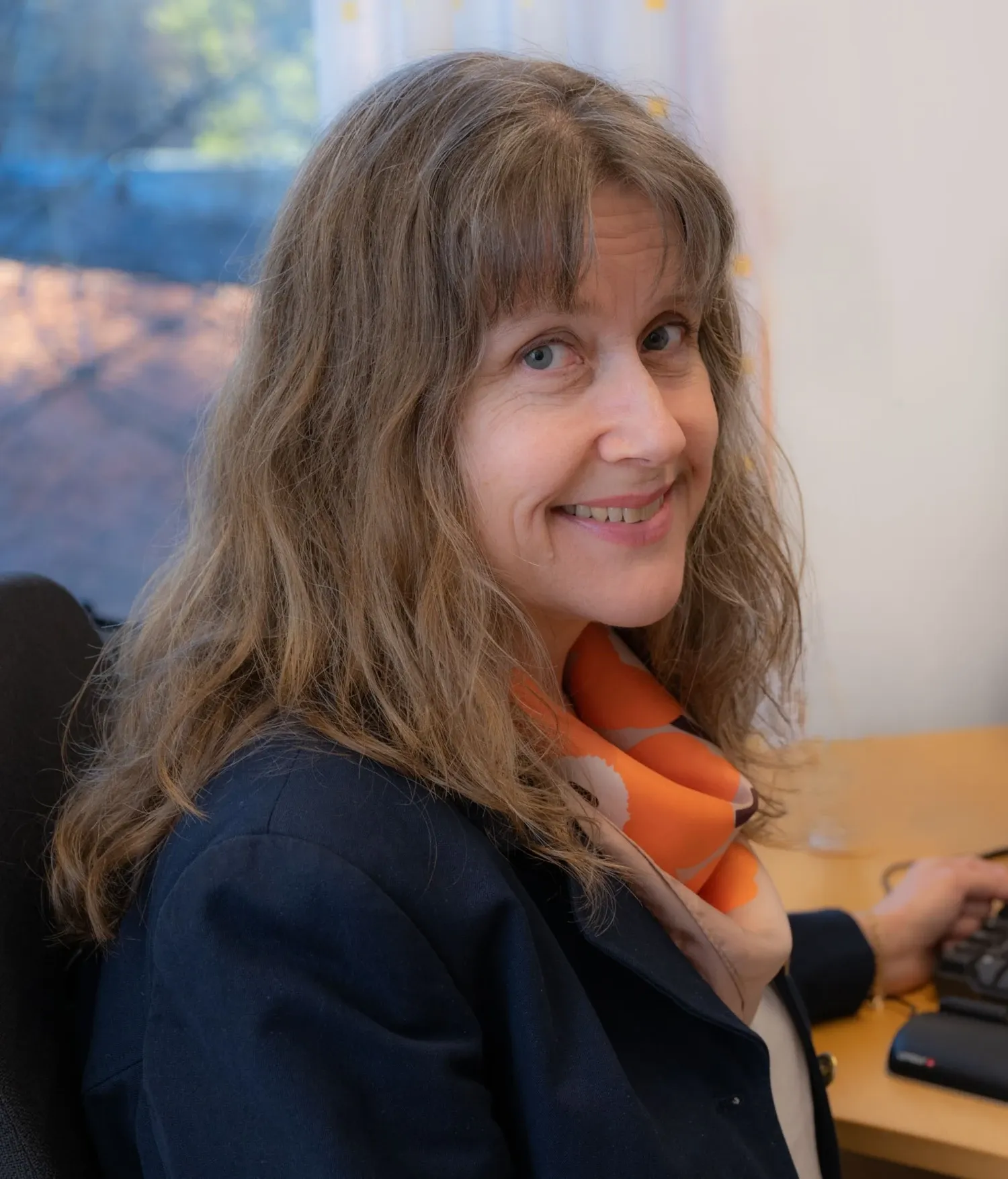
Karin Leander, Senior Lecturer at the Institute of Environmental Medicine and Associate Professor of Epidemiology at Karolinska Institutet has always been interested in environmental health. As climate issues and sustainable development have come to play an increasingly important role in society, the need to integrate these perspectives into medical education became clear to her. When she became course director for the course Health in Society and the Environment in the medical programme in 2017, her educational engagement in sustainability issues deepened.
The course provided medical students with scientifically based knowledge of how societal and environmental issues affect individual health and public health, including learning about health risk assessments and disease prevention measures. Since then, Karin has worked to monitor developments nationally and internationally to ensure that the educational content remains current and relevant.
Her engagement in sustainability focuses on how physicians and the healthcare system can contribute to a more sustainable society. She emphasises the important signalling role of physicians and explains that, with knowledge of sustainable development, they can help patients make healthy choices that both reduce patient suffering and resource use within healthcare.
Digital development in medical education
Karin has been involved in the development of the computer-based programme The ePlanet online serious game, which is planned to be used in teaching within the medical programme during the autumn semester. The game is an educational tool within the ePlanet project and aims to provide knowledge about planetary health, where users encounter various challenges related to food, air pollution and heat, as well as infectious diseases. She points out that there is strong research support for integrating e-learning into education.
“Blended learning is important, that is, combining e-tools such as this with campus-based teaching. That is how we plan to use it,“ says Karin Leander.
One challenge going forward is keeping the material up to date in line with developments in research. The project to develop the computer programme has been completed, but the hope is that the game will be able to be updated and further developed in step with progress in the field, she explains.
“We want to instil hope in the students. It is a challenge to talk about solutions and to create constructive teaching that shows that the problems can be solved,“ says Karin.
A strong team for sustainable education
Karin Leander is also a member of the medical programme’s Curriculum Committee, where she, among other responsibilities, coordinates issues relating to planetary health and sustainability. In this role, she works to integrate these perspectives throughout the medical programme in order to ensure that the education is socially relevant. Student representatives are important, as they help ensure that the teaching is perceived as relevant and meaningful, she explains.
“I would like to highlight the support from students, teachers and the programme management within the medical programme. It is a strong collaboration and clear teamwork,“ emphasises Karin Leander.
How does it feel to be the recipient of this year’s Sustainability Award?
“It feels wonderful. I was surprised and very happy. It is an honour to receive the award,“ says Karin Leander.
The jury’s motivation
“With strong commitment and clear pedagogical initiatives, Karin Leander has integrated climate, environmental and sustainability perspectives into the medical programme at KI. She has also been involved in the development of a computer-based programme that serves as a concrete teaching resource for integrating planetary health into medical education and is accessible globally.
Through Karin’s work, future physicians are better equipped to understand the links between climate, the environment and health, and to promote a more sustainable healthcare system. Her efforts help ensure that students, in their future professional lives, can both be part of the solutions and serve as role models in society.“