

HPV vaccine provides long-term protection against cervical cancer
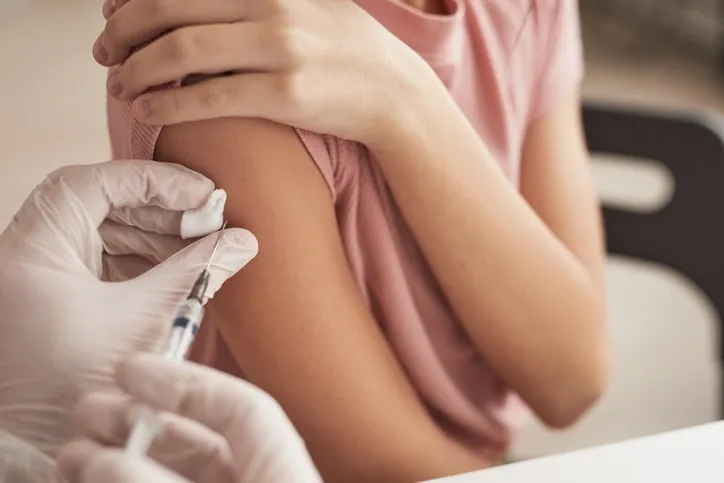
HPV vaccination reduces the risk of cervical cancer for at least 18 years, according to a new study from Karolinska Institutet published in The BMJ. There were no signs of waning protection over time.
In Sweden, all children in middle school are offered vaccination against human papillomavirus (HPV). This reduces the risk of developing cervical cancer, among other things, but it is not yet clear how long the protection lasts.
The new study is based on data from Swedish health registries and covers over 926,000 girls and women born between 1985 and 2001. Of these, 365,000 had been vaccinated against HPV. The participants were followed for up to 18 years.
During the follow-up period, 930 people were diagnosed with invasive cervical cancer. Of these, 97 had received the HPV vaccine.
80 per cent lower risk
Women who were vaccinated before the age of 17 had the best protection, with an almost 80 per cent lower risk of cancer compared to those who were not vaccinated. However, even those who were vaccinated in their late teens and early adulthood had a reduced risk of cervical cancer. There were no indications of waning protection during the follow-up period, regardless of when the vaccine was taken.

“It is encouraging that the protection persists as young girls become adults and reach the ages when cervical cancer often occurs,” says Shiqiang Wu, research assistant at the Department of Medical Epidemiology and Biostatistics and doctoral student at the Institute of Environmental Medicine, Karolinska Institutet. “This suggests that no booster doses of the HPV vaccine are needed at present.”
Vaccination in schools is effective
The study also shows clear differences between age groups covered by different vaccination programmes. Those who were offered the vaccine through school health services had a 72 per cent lower risk of cervical cancer compared to older age groups who were only able to get vaccinated outside routine programmes.
“When vaccination is offered in schools, more people are reached, and our results show how important this is for reducing the risk of cervical cancer in the entire population,” says Shiqiang Wu.
The researchers point out that the study is register-based and that certain factors that may have influenced the results, such as lifestyle and sexual habits, are not recorded. Nor have they been able to study which type of HPV caused the cancer cases. At the same time, the large scale and long follow-up period provide a clear picture of vaccine effectiveness in real-world settings.
Protection against other cancers
The next step is to investigate how vaccination rates can be further improved to ensure that the benefits of HPV vaccination reach everyone.

“We will continue to follow the population to assess the vaccine’s long-term effectiveness against cervical cancer, including the impact of different dosing schedules,” says Jiayao Lei, assistant professor at the Department of Medical Epidemiology and Biostatistics, Karolinska Institutet. “In addition, we are studying how the vaccine protects against other HPV-related cancers in both women and men.”
The study was conducted in collaboration with the Public Health Agency of Sweden and Karolinska University Hospital. It was funded by the Swedish Research Council for Health, Working Life and Welfare, the Swedish Research Council, the Swedish Cancer Society, the Swedish eScience Research Centre, the European Union and Karolinska Institutet. The researchers declare no conflicts of interest.
Publication
“Extended follow-up of invasive cervical cancer risk after quadrivalent HPV vaccination: A nationwide register-based study”, Shiqiang Wu, Yunyang Deng, Tiia Lepp, Lina Schollin Ask, Pär Sparen, Mark Clements, Joakim Dillner, Jiayao Lei, The BMJ, online 26 February 2026, doi: 10.1136/bmj-2025-087326.