

Microglia can drive aggressive brain tumors in children
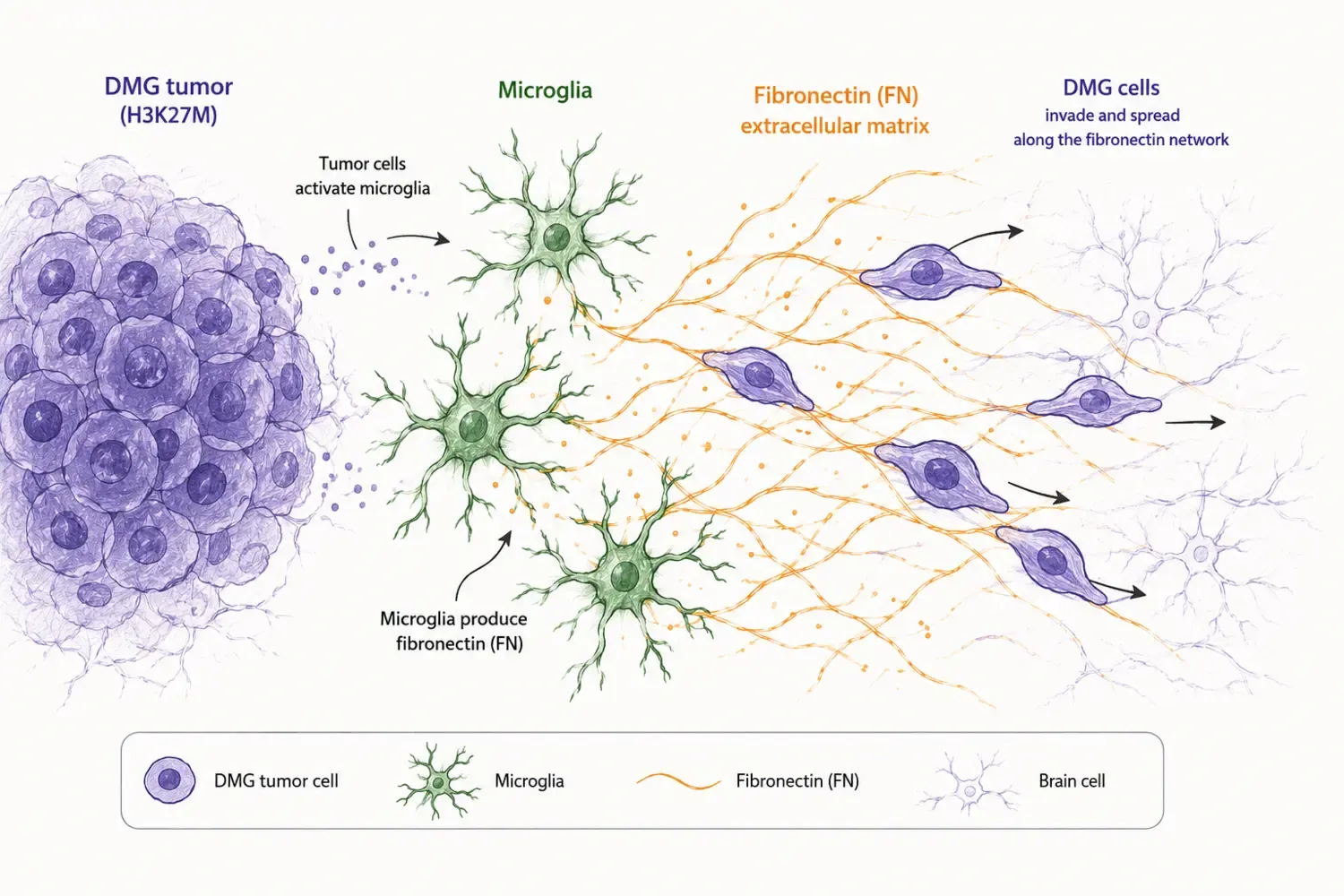
Researchers at the Institute of Environmental Medicine (IMM), Karolinska Institutet, have identified a possible mechanism behind the spread of the aggressive brain tumor diffuse midline glioma. The study shows that the brain’s own immune cells, microglia, may contribute to the tumor’s invasive capacity by producing the protein fibronectin. The results are published in the journal Cell Death and Disease.

Diffuse midline glioma (DMG), also known as diffuse intrinsic pontine glioma (DIPG), is a rare but highly aggressive brain tumor that primarily affects children. There is currently no effective treatment, and the prognosis is very poor.
In the present study, the researchers investigated how microglia — the brain’s immune cells — are affected by tumor cells and what role they play in disease progression.
The researchers observed that microglia exposed to DMG cells began producing large amounts of extracellular matrix proteins, particularly fibronectin. Analyses of patient samples and single‑cell data also showed that microglia were the main source of fibronectin in the tumors.
“Our results suggest that microglia not only react to the tumor but actively contribute to making it more invasive,” says Professor Bertrand Joseph at IMM.
In laboratory experiments, the researchers demonstrated that fibronectin from microglia increased the tumor cells’ ability to invade surrounding tissue. When fibronectin was blocked — chemically or genetically — the invasiveness of the tumor cells was clearly reduced.
The study also shows that high levels of fibronectin and other matrix proteins were associated with poorer prognosis in several independent patient cohorts.
“Fibronectin emerges as a potential therapeutic target in a disease where treatment options are currently very limited,” says Bertrand Joseph.
The researchers hope that, in the long term, the results may contribute to the development of new treatment strategies for DMG.
This work was supported by the Swedish Childhood Cancer Fund, the Swedish Cancer Society, the Cancer Research Funds of Radiumhemmet, the Swedish Research Council, the Strategic Research Program in Cancer, the Strategic Research Program in Neuroscience, the InnoHK initiative from the Innovation and Technology Commission of the Hong Kong Special Administrative Region, and the foundations of Karolinska Institutet.
Publication
"Microglia in diffuse midline glioma contribute to extracellular matrix remodelling and cancer cell invasion", Keane, L., Škandík, M., Posada-Pérez, M. et al. Cell Death and Disease, online 30 May 2026, doi:10.1038/s41419-026-08891-y.