

When gaming takes over your life
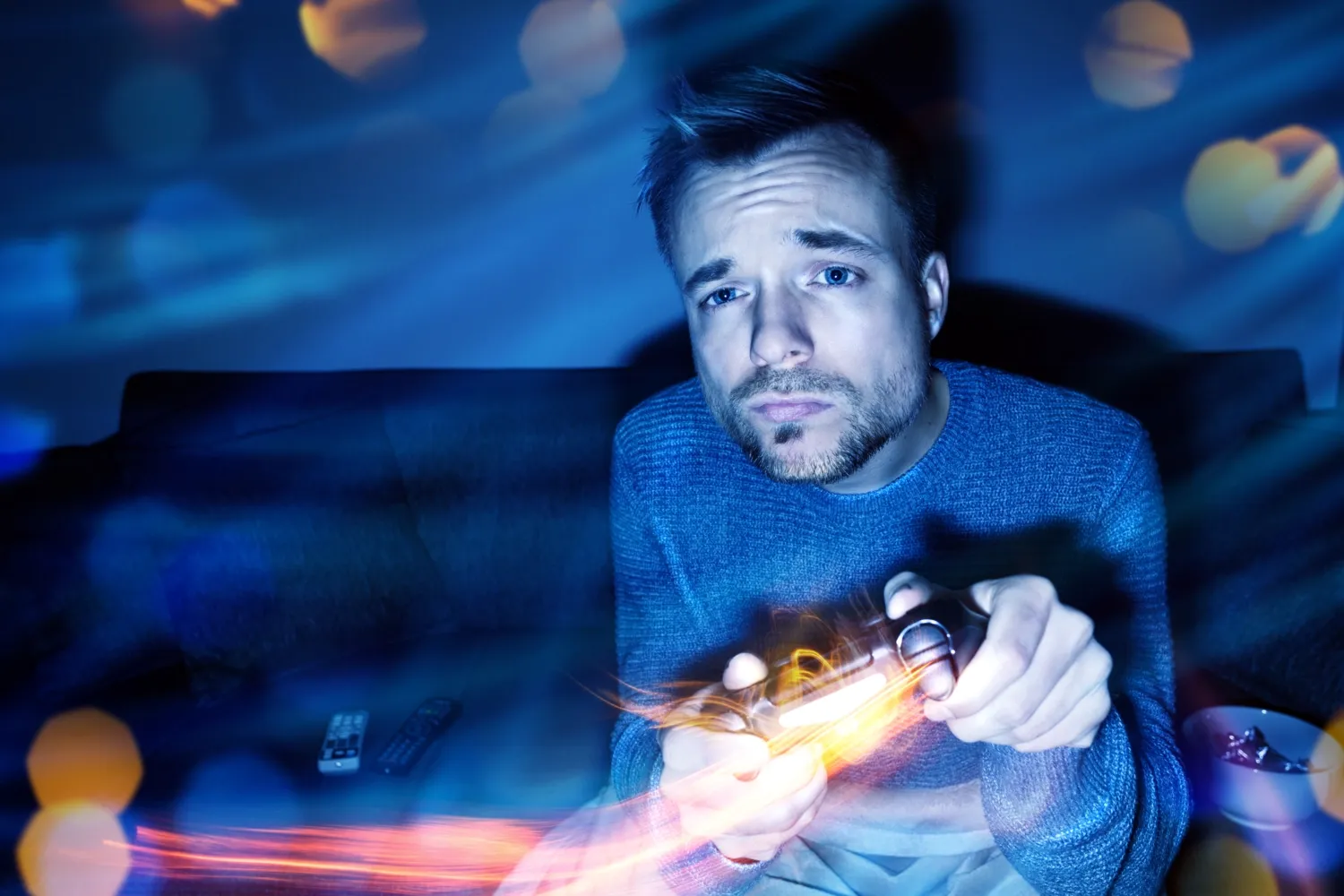
Gaming disorder is on its way to becoming a recognised diagnosis in Swedish healthcare. This is welcomed by researcher and psychologist Philip Lindner, who is increasingly concerned about the growing role of money in modern games.
Text: Sara Nilsson, first published in Swedish in Medicinsk Vetenskap no 1 2026
Playing computer games is popular. More than half of all children and young people aged 9–18 play, as do almost half of all people aged 16–84, according to the Swedish surveys Children and Media 2025 (Ungar och media 2025) and Swelogs 2021.
In addition to being fun and relaxing, gaming can positively affect reaction time, hand-eye coordination, and attention span. For many, gaming is also an important way to socialise. But for a small group of people, gaming becomes all-consuming and leads to problems, like sleep issues or a lack of motivation to go to school or work.
These cases are what the diagnosis gaming disorder aims to identify as it becomes part of Swedish healthcare.

The introduction of the diagnosis can make it easier for people with gaming-related problems to get help, says Philip Lindner, associate professor and research group leader at Karolinska Institutet, and a psychologist in addiction care in Stockholm.
“The fact that gaming disorder is formally classified as a behavioural addiction suggests that addiction care will have a clearer responsibility for treatment. And it creates a clear place for people to turn to,” he says.
Persistent pattern of gaming
According to the ICD-11, an international diagnostic manual, gaming disorder is defined as a persistent pattern of gaming that the person finds difficult to control. The behaviour must also lead to significant distress and considerable impairment in daily life.
“But it is not possible to set a fixed time limit, because the amount of time you need for other things in life varies from person to person,” says Philip Lindner, who has also evaluated a rating scale for gaming disorder that is now being introduced nationally.
When the diagnosis was first proposed, critics argued that it risked medicalising a normal part of youth culture. Philip Lindner believes the research field has now reached a consensus that computer games may have an addictive component and, like other behavioural addictions, can lead to symptoms resembling addiction and negative consequences.
One concern, however, is that the diagnosis may fail to capture girls’ problematic screen habits. While a large proportion of boys aged 16–17 play video games, 40–50 per cent of girls in the same age group spend more than three hours a day on social media.
“Perhaps a broader diagnosis, or an additional one, is needed for other types of screen habits that better match girls’ symptom patterns,” says Philip Lindner.
Virtual cosmetic items
Approximately one to two per cent of the population is estimated to be affected by gaming disorder, but prevalence varies by age and gender.
“The vast majority are men. Extensive gaming is most common around the age of fifteen, but that is not necessarily when problems are the greatest. They tend to become more serious in your mid-twenties to around thirty, when gaming starts to compete with other responsibilities in life,” he says.
One development that worries him is that gaming today is not only about playing but also involves money or gambling-like features. Players can pay for in-game advantages or random rewards, similar to gambling. Many games also allow the purchase of so-called “skins”, virtual cosmetic items that change the appearance of weapons or characters.
“As this becomes more common and attracts children and teenagers at increasingly younger ages, I think the symptoms among those who develop problems may emerge faster and become more severe than we have seen before,” says Philip Lindner, and continues:
“It is also becoming clear that there is an increased risk of developing traditional gambling addiction later in life if you play a lot of computer games.”
Carefully map your gaming
Treatment for gaming disorder often relies on cognitive behavioural therapy (CBT), and usually does not require complete abstinence, but rather focuses on reducing the amount of time spent gaming.
“You carefully map your gaming: when you play, what you play and why, and try to find a way of setting boundaries that works for you,” says Philip Lindner.
This might include using technical tools to limit gaming time, removing certain programmes, and finding alternative activities to turn to when the risk of playing too much is highest.
“In general, the treatment is effective, reducing both time spent gaming and its negative consequences. For example, a pilot study of a Swedish CBT-based treatment indicates a halving of patients’ symptoms,” he says.
Anyone struggling with their gaming can contact their primary care centre, school health services, youth clinics, child and adolescent psychiatry or addiction care, depending on where they live.
Gaming disorder as a diagnosis
Gaming disorder has been included in the World Health Organization’s international classification of diseases, ICD, since 2019 and is used in Swedish healthcare. Sweden is currently transitioning to the latest version, ICD-11. The Swedish translation is being prepared under the responsibility of the National Board of Health and Welfare, and the first official version was published in January 2026.
In Swedish, the condition is provisionally referred to as “behavioural addiction with gaming” and involves persistent gaming characterised by:
- impaired control (for example over onset, frequency, intensity, duration, ending or context)
- increasing priority given to gaming over other interests and daily activities
- continued or escalating gaming despite negative consequences.
The behaviour must lead to significant distress and substantial impairment in personal daily activities, family life, social contacts, studies, work or other important areas of functioning. The goal is for ICD-11 to be used in the National Board of Health and Welfare’s health data registers from 1 January 2028.