

Some immune cells can limit the effect of cancer immunotherapy
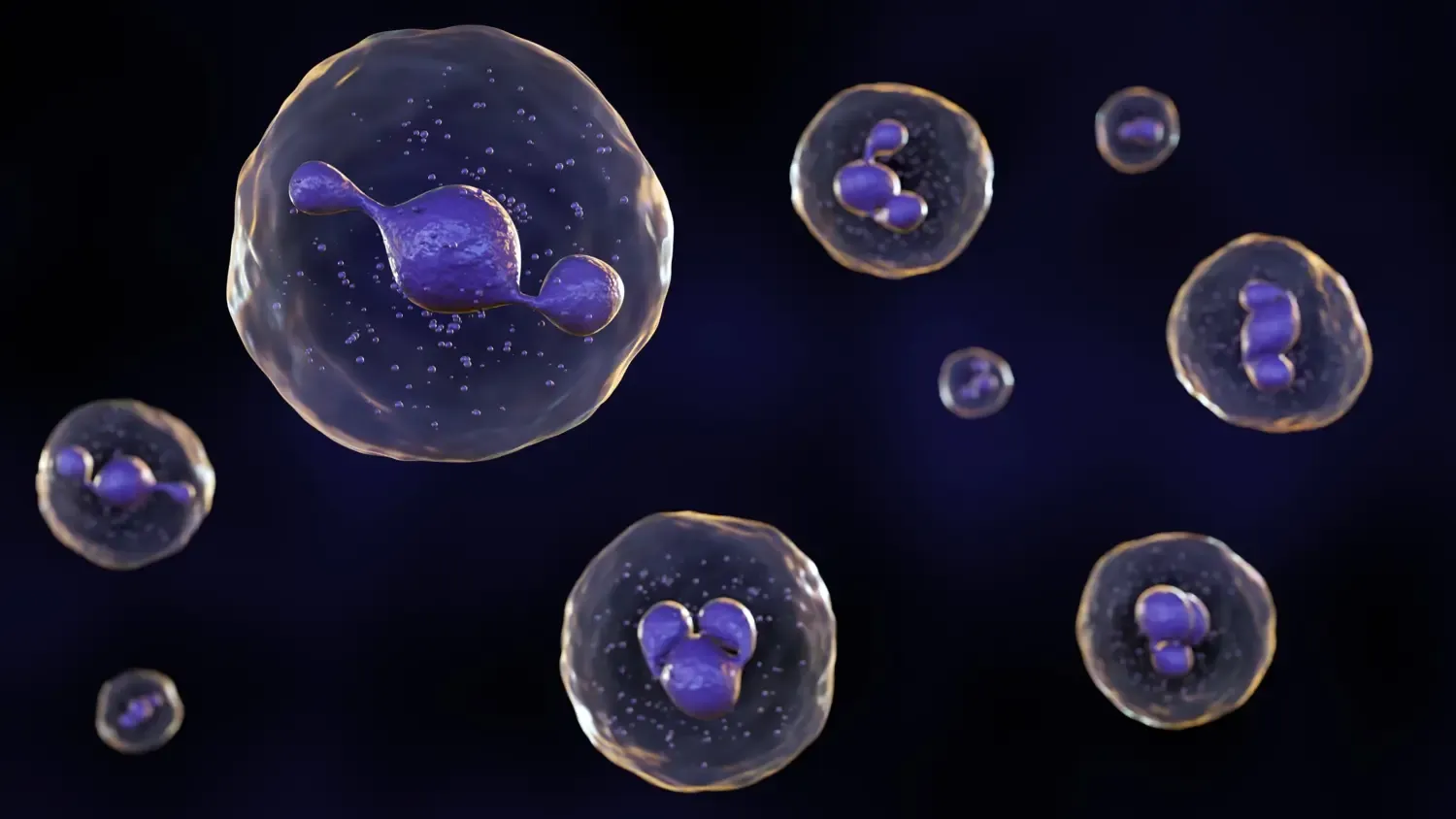
A type of white blood cell in the immune system, known as neutrophils, can make cancer immunotherapy less effective. This is shown in a new study from Karolinska Institutet published in the journal Immunity. The results show that a signalling molecule in the tumour affects neutrophils, reducing the effect of treatment.
Immunotherapy is used to activate the body’s own immune system against cancer, but not all patients respond to the treatment. In the new study, researchers investigated how neutrophils influence different forms of immunotherapy in two mouse models of melanoma and breast cancer. Neutrophils play an important role in fighting infections, but can have different functions in tumours.
The researchers compared mice with normal neutrophil levels to mice that completely lacked these cells. When neutrophils were absent, several immunotherapies were more effective. Tumours shrank more, and higher numbers of T cells, immune cells that can kill cancer cells, entered the tumour and became activated.
“We see that neutrophils can dampen the effect of immunotherapy by influencing T‑cell activity,” says Shengduo Pei, former doctoral student at the Department of Microbiology, Tumour and Cell Biology, Karolinska Institutet, and the study’s first author.
Tumour signals influence treatment
The study also shows that neutrophils themselves change in response to treatment. When immunotherapy is initiated, neutrophils begin to express PD‑L1, a protein that inhibits T‑cell activity. This change is driven by the signalling molecule interferon‑gamma, produced by activated immune cells within the tumour. When the researchers specifically removed PD‑L1 or the interferon‑gamma receptor from neutrophils, the treatment became more effective.
“This means that the neutrophil response to immunotherapy is not static but governed by signals in the tumour environment. It also shows the importance of studying blocking mechanisms that arise once treatment begins. The results may contribute to the development of treatments that combine several therapies to counteract these inhibitory effects,” says Mikael Karlsson, professor at the same department.
The researchers also found indications that the same mechanisms are present in humans, including analyses of tumour samples from lung cancer patients who had received immunotherapy.
The study was carried out in collaboration with researchers in Sweden, the United States, Germany and China. The research was funded by, among others, the National Institutes of Health, the Swedish Cancer Society and the Swedish Foundation for Strategic Research. The researchers report no conflicts of interest.
Publication
"Neutrophil regulation of immunotherapy for cancer is controlled by type II interferon", Shengduo Pei, Yueyun Pan, Heng Liang, Li Lei, Qirong Lin, Jiarui Mi, Jeffrey V Ravetch, Oliver Soehnlein, Mikael C.I. Karlsson, Immunity, online 15 June 2026, doi: 10.1016/j.immuni.2026.05.014.