

Immune cells are programmed within the body to fight cancer
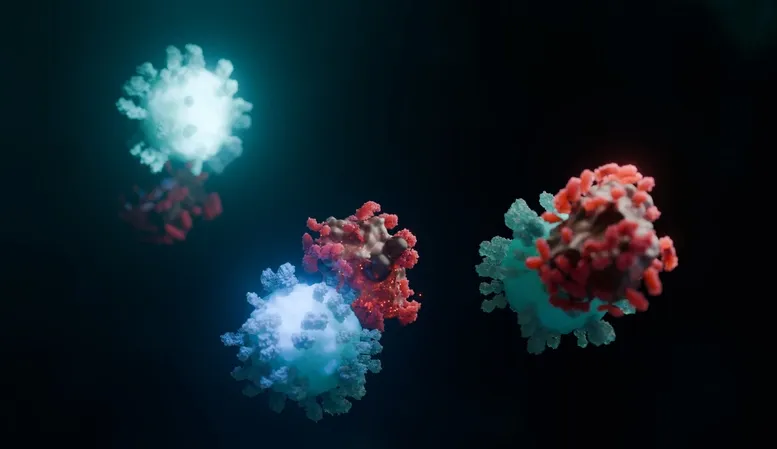
A new method makes it possible to generate gene-targeted CAR-T cells inside the body to attack tumours, report researchers at Karolinska Institutet and the University of California, San Francisco (UCSF) in Nature. The study demonstrates that several types of cancer in mice can be treated without the immune cells needing to be extracted and processed in a laboratory.
CAR-T cell therapy is a relatively new type of immunotherapy used for blood cancers, involving the reprogramming of the immune system’s T cells so that they can attack tumour cells more effectively. The treatment is currently an advanced and costly method in which the patient’s T cells are extracted and modified before being returned to the body. This process can take weeks and is not available to everyone who could benefit from the treatment.
In the new study, the researchers tested a different approach to simplify the process and reduce costs. They designed a system comprising two particles that deliver the CRISPR-Cas9 gene-editing tool and new genetic information for genetic targeting directly to T cells in the blood. One particle was specifically directed towards T cells using antibodies, whilst the other carried the DNA sequence that instructs the cells to recognise tumours.
The cancer disappeared
The method was tested on mice with humanised immune systems and three different types of cancer: acute leukaemia, multiple myeloma, or a solid sarcoma tumour. A single injection of the particles cleared all detectable cancer in nearly all the animals within two weeks. In some organs, the reprogrammed cells accounted for up to 40 per cent of the immune cells.
“Achieving a long-term response has been difficult in CAR-T cell therapy of multiple myeloma, which makes this result particularly significant,” says the study’s first author William Nyberg, assistant professor at the Department of Medicine, Huddinge, Karolinska Institutet, who worked on the project during his postdoctoral studies at UCSF in the US and is now continuing his research at Karolinska Institutet in Sweden. “The aim now is to further develop the treatment in studies using patient samples from Karolinska University Hospital so that it can eventually be tested in humans.”
Improved T-cell properties
T cells that were programmed inside the mice also exhibited several superior properties.
“What was especially remarkable was that the cells we’re generating in vivo actually look better than what we make in the lab,” says Justin Eyquem, associate professor of medicine at UCSF who led the research. “We think that when cells are taken out of the body and grown in the lab, they lose some of their ‘stemness’ and proliferative capacity and that doesn’t happen here.”
The study is a collaboration between researchers at UCSF, Karolinska Institutet, the Gladstone Institutes, Duke University and the Innovative Genomics Institute. The work was funded by, among others, the Parker Institute for Cancer Immunotherapy, the Swedish Research Council, the European Research Council and the Swedish Society for Medical Research. Several of the authors have reported conflicts of interest linked to patents and biotechnology companies. Justin Eyquem and his collaborators founded Azalea Therapeutics, a company based on the technology described in the study, with the aim of progressing the research to the clinical stage.
This news article is based on a press release from UCSF.
Publication
”In vivo site-specific engineering to reprogram T cells”, William A. Nyberg, Pierre-Louis Bernard, Wayne Ngo, Charlotte H. Wang, Jon Ark, Allison Rothrock, Gina M. Borgo, Gabriella Kimmerly, Jae Hyung Jung, Vincent Allain, Jennifer R. Hamilton, Alisha Baldwin, Robert Stickels, Sarah Wyman, Safwaan H. Khan, Shanshan Lang, Donna Marsh, Niran Almudhfar, Catherine Novick, Yasaman Mortazavi, Shimin Zhang, Mahmoud Abd Elwakil, Sidney Hwang, Simon N. Chu, Hyuncheol Jung, Chang Liu, Devesh Sharma, Travis McCreary, Zhongmei Li, Ansuman Satpathy, Julia Carnevale, Rachel L. Rutishauser, M. Kyle Cromer, Kole Roybal, Stacie E. Dodgson, Jennifer A. Doudna, Aravind Asokan, Justin Eyquem, Nature, online 18 March 2026, doi: 10.1038/s41586-026-10235-x.