
She saves lives after brain trauma
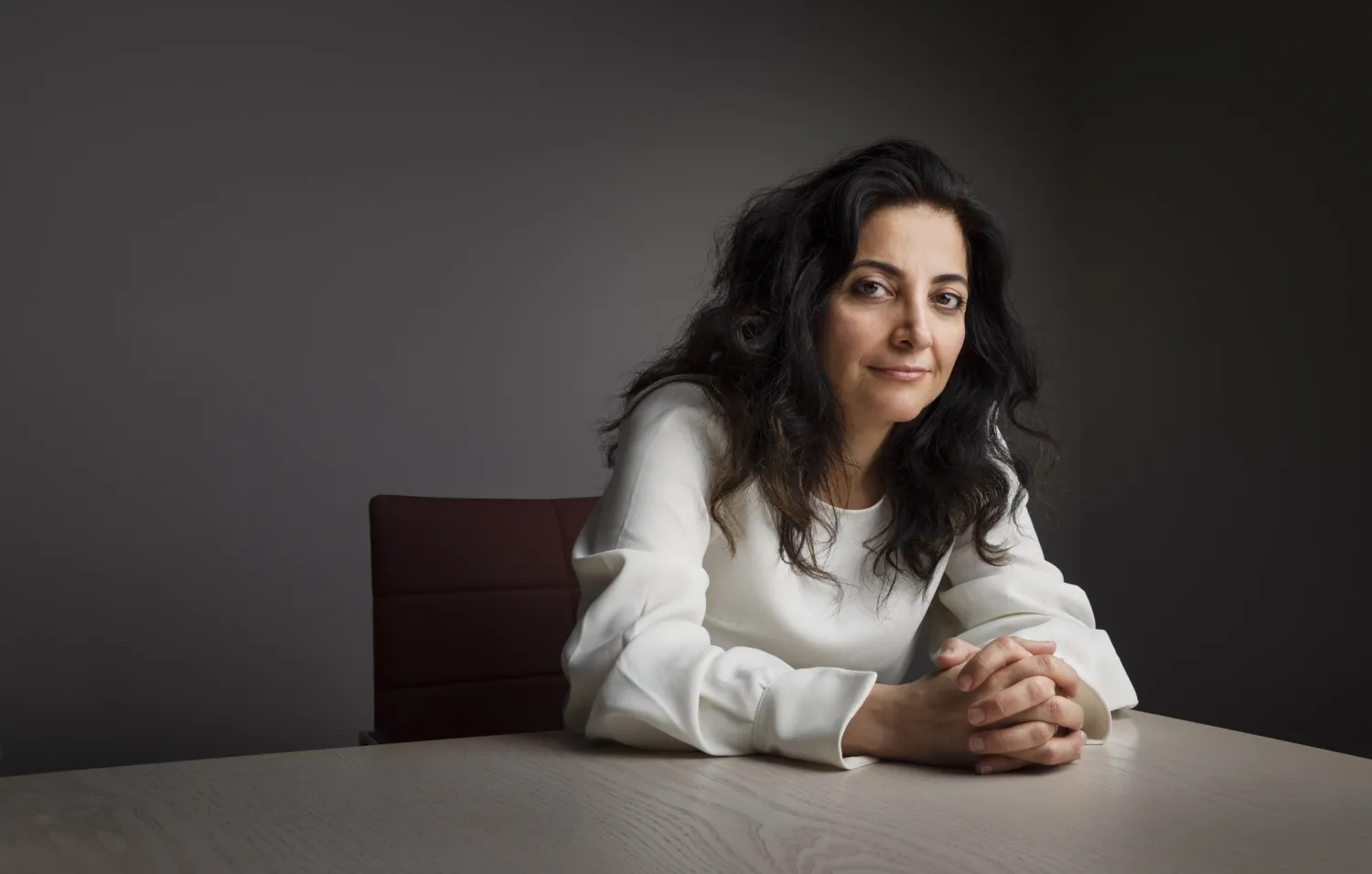
Forced to flee as a child, today Elham Rostami saves lives in emergency situations – and conducts research to understand why some patients with brain injuries recover unexpectedly well.
Text: Cecilia Odlind, first published in Medicinsk Vetenskap nr 4 2025
The first interview with Elham Rostami is cancelled. “I am the song leader I must win in surgery,” she texts. It is her mobile phone’s autocorrect that has caused confusion in the rush, but I gather she has to cancel because she needs to perform emergency surgery. Things move fast when Elham Rostami is around. But then again, she is a neurosurgeon – a specialist in emergency care where things can get extremely urgent.
Want to understand how the brain recovers
Elham Rostami works with traumatic brain injuries. Globally, 70 million people are affected every year. Causes include traffic accidents, assaults or sports injuries. For small children and older people, falls are the most common cause. At present, there are no specific drugs available for these patients. Intensive care aims to optimise the physiological conditions for the body and brain to prevent secondary damage and save as much brain as possible. Recovery outcomes for those who experience a brain injury vary greatly, she explains when we meet for the rescheduled interview.
“You can sustain the same type of injury but recover very differently. Some patients are expected to be left with severe disabilities, yet they return astonishingly well. Understanding why is what I am trying to uncover in my research,” says Elham Rostami.
By collecting extensive data during hospitalisation and follow-ups, her research group hopes to identify factors that promote recovery. They use patient data, population registers and AI tools to analyse large datasets.
Treatment after a brain injury also affects patient outcomes, and this has been shown to vary considerably across the country.
“In our research we have seen that factors such as gender, education and where you live affect the rehabilitation you receive in Sweden. The proportion of patients offered rehabilitation after discharge from intensive care differs greatly between rural and urban areas. Patients living outside cities had up to a 40 per cent lower chance of receiving rehabilitation. That is clearly an inequality issue we need to address. It is also something we must take into account in our analyses,” says Elham Rostami.
Her studies have also shown that people who suffer head injuries are often already less healthy.
“Compared with their siblings and with controls from the Swedish population, these individuals are somewhat less healthy and use more medication,” she explains.
Studying human brains is challenging – in the acute phase the focus is on saving as much function as possible. Researchers therefore also use animal models. Mice with different genetic variants can reveal which genes may influence outcomes.
Strong effect of gene that stimulates synapse formation
“Research indicates that around 25 per cent of outcomes are linked to genetic variation. We have seen a strong effect of a gene that codes for BDNF, a protein in the brain that stimulates synapse formation and cell survival,” says Elham Rostami.
However, findings in mice do not always translate to humans. Most treatment studies successful in rodents have unfortunately failed in humans.
“There is a unique study by Niklas Marklund, currently a professor at Lund University, where a small piece of brain tissue was taken during surgery on patients with traumatic brain injuries to study how it responded to damage. When we compared this with our preliminary results in mice, we found major differences,” she notes.
That is why Elham Rostami is also involved in a project with researcher Carl Sellgren Majkowitz at Karolinska Institutet’s Department of Physiology and Pharmacology. Together they transplant human organoids – miniature lab-grown brains – into rat brains. This allows them to study how human nerve cells respond to injury in an experimental setting, and how this differs from rat brains. In this model they can also test treatments and measure cell survival and synapse formation, as well as inflammatory responses, scarring and levels of various substances that may play a role.
“The goal is to develop individually tailored drug treatments.”
More women are becoming neurosurgeons
In Sweden, increasing numbers of women have opted for a career in neurosurgery over the last 10–15 years. Even so, women remain a small minority in the field, both here and internationally. In countries such as the US and the UK, only about five to ten per cent are women.
“That means many closed doors and fewer mentors. I often say neurosurgery is one of the last dinosaurs that needs to change,” she says.
Recently, Elham Rostami was elected chair of the neurotrauma section of the European Association of Neurosurgical Societies (EANS).
“It was the first time a woman was elected chair. It is a small step, but it could lead to change in the long run,” she says.
In Sweden there are only about one hundred neurosurgeons. It is a demanding speciality, often involving difficult medical decisions. Deciding whether to continue or end treatment is part of daily practice and requires both expertise and humility in recognising human vulnerability. It is a reminder of the immense responsibility the profession carries, Rostami reflects.
“Being a neurosurgeon is almost like a lifestyle. You really have to love the job to cope with the extra hours and unsociable shifts. You cannot say ‘I am going home now’ in the middle of an operation,” she says.
Is research almost like a break for you?
“Yes, I do not think I could manage without it. I find it incredibly enjoyable. My husband often says research is my hobby. Searching for answers to all the questions that nag at you is deeply satisfying,” she says.
Life as a refugee has shaped her
At the age of seven, Rostami fled Iran with her family during the Iran–Iraq war. It was a long and arduous journey before they arrived in Sweden, at Sunne holiday village.
“Everyone there was so wonderfully kind. We learnt to skate, play the piano and go on forest outings. I still feel happy every time I smell the forest,” she says.
But life as a refugee was tough, and she believes it has shaped her.
“My parents always told me and my siblings that education is vital and that we must never give up. I think that does something to you – you feel you must seize every opportunity.”
That commitment and drive to contribute to society are also evident in her work outside research.
Elham Rostami is vice chair of the Young Academy of Sweden, where she works extensively on issues relating to research policy, dialogue between science and society, communication and trust in research.
“That is how I believe we can build resilience in society, by holding on to a shared perception of reality grounded in science,” she says.
Facts about Elham Rostami
Name: Elham Rostami
Title: Docent (Associate Professor) of Neurosurgery at the Department of Neuroscience, Karolinska Institutet; Neurosurgeon at Uppsala University Hospital
Age: 46
Family: Husband and two daughters, aged 7 and 10
How I relax: Exercising, mushroom picking, playing chess with my daughters. I also draw portraits and occasionally illustrations for my own scientific publications.
Role model: My mother – a strong person who has endured many hardships yet remains hopeful about the future. Meeting her makes you feel everything will be alright.
Motto: Never give up! Sometimes you probably should, but I am stubborn.
Best research quality: I have lots of ideas!
Elham Rostami on…
… meeting severely ill and injured patients: “It gives you an important perspective on your own life. You become grateful for what you have and for the health of your loved ones when you see how quickly and unexpectedly everything can change.”
… e-scooters: “We are seeing an increasing number of traumatic brain injuries caused by electric scooter accidents. Much stricter regulation is needed – for example mandatory helmets and a ban on carrying children.”
… physical activity and brain injury: “There is some evidence that people who are physically fit recover better after brain injury. Training after injury also improves healing and recovery.”
… the long-term effects of brain injury: Even a mild brain injury can affect you quite significantly later in life. The risk of dementia is higher, and up to a third experience lasting problems such as brain fatigue.