

Johan Lundström sniffs out new knowledge
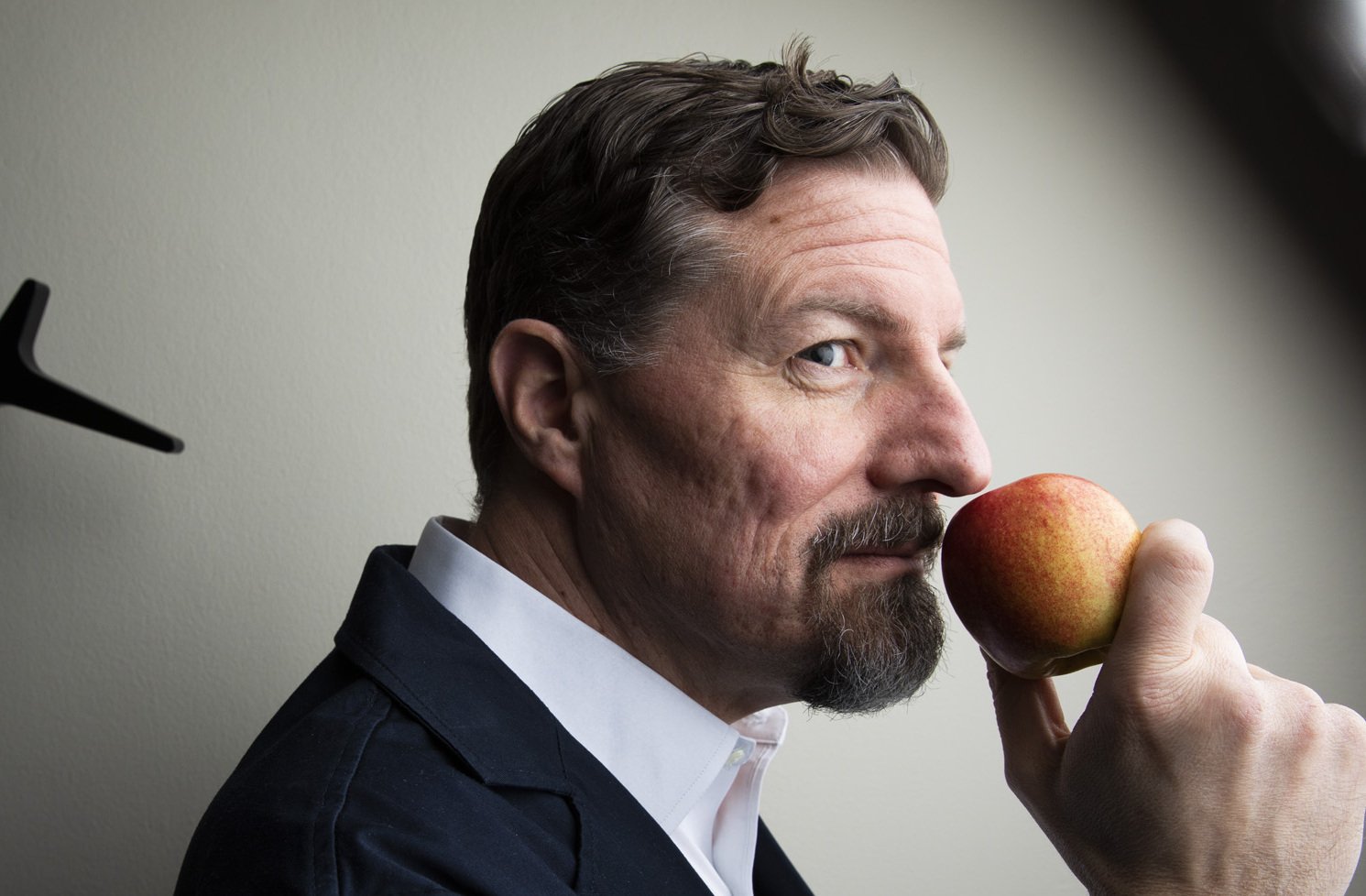
Scented television, questions about farts and the smell of newborn babies. Johan Lundström's days include everything from treating smell loss to researching how our sense of smell actually works.
Text: Cecilia Odlind for the magazine Medicinsk Vetenskap no 1, 2026, in translation from Swedish.
Why do my own farts smell good? That is one of the most common questions Johan Lundström gets. We agree straight away that they do not smell nice at all. But perhaps slightly less disgusting than someone else's?
"We are more prepared for a smell when it is our own. And there is probably something familiar about it," he laughs.
“But smell is also psychology; the brain is programmed to make us avoid bad smells from others,” he continues.
After the COVID-19 pandemic, the importance of smell research has become clearer to the general public, according to Johan Lundström. Loss of smell, and in particular parosmia, i.e. when smells become distorted, is common after coronavirus infections.
"This became clear when SARS-CoV-2 arrived and so many people were affected," he says.
Johan Lundström helped set up the smell and taste clinic at Karolinska University Hospital, where 1,800 people were on the waiting list during the pandemic. He still works there part-time as scientific support for complex cases. One treatment involves regular smell training using familiar scents. But a major challenge has been getting patients to complete the training, with only 20-30 per cent succeeding.
"It is a bit like physiotherapy; people tend not to get round to it. To make it easier and more fun, we teamed up with a company to develop a ready-made kit containing ten familiar smells that are used together with an app. Up to 90 per cent complete the exercises when they receive a kit, so it works much better," says Johan Lundström, proudly, showing off a box of colourful scent cards (while pointing out that he does not profit from the sale of the kits).
Alongside smell training, his research group is investigating several other methods to restore the sense of smell. One involves transcutaneous electrical stimulation of the olfactory bulb, the part of the brain that processes smell information from the nose and transmits it to other parts of the brain.
"It has been tested on healthy volunteers, and we are now going to try it on people with a reduced sense of smell," he says.
"Life becomes duller witout smell"
Cognitive behavioural therapy is another method that may work for people with parosmia.
"We have tried letting test subjects overcome their initial resistance to certain smells that they perceive as disgusting and smell them repeatedly. This can then lead to the disgust subsiding," he explains.
Improving the sense of smell, for example, through smell training, is important, not least for quality of life. Having no sense of smell or a clinically impaired sense of smell, i.e. only having about 10 per cent of your sense of smell left, is associated with an increased risk of low mood and depression. In fact, clinical smell impairment affects as many as around 25 per cent of the population, with older adults being significantly overrepresented.
"Life becomes duller. Many social activities revolve around food and eating: coffee breaks, lunches, dinners. If everything you eat tastes like porridge, you are less motivated to eat with others and you risk losing contact with friends," says Johan Lundström.
As it happens, both of his parents now have no sense of smell, so he has seen the effects up close.
"They put sambal oelek on everything to create a false aroma experience. Strong spices stimulate the same area of the brain and create something similar to smell," he says.
Together with suicide-prevention researcher Vladimir Carli, he has applied for EU funding for a study on what it is in the smell of babies, a scent that makes almost everyone feel good, that activates the reward system.
"If we can identify the chemical behind the effect, it could potentially be used as a kind of depression-preventive drug," he says.
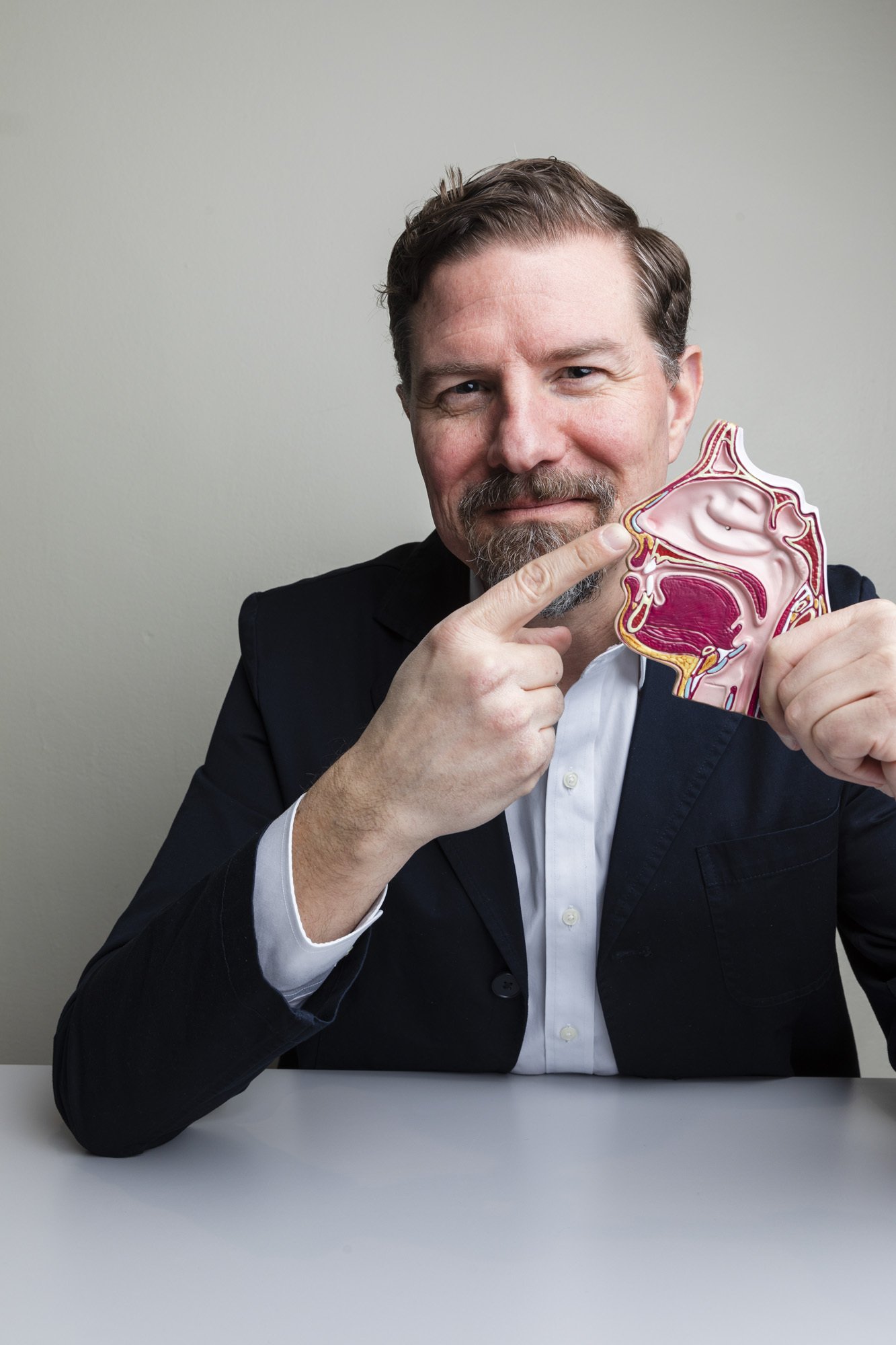
Goal: To restore the sense of smell
Johan Lundström is not particularly interested in smell as such, he explains, but since the field is largely unexplored and touches on many different areas of expertise, it offers huge variety. And that suits Johan Lundström perfectly.
"I want to answer questions, and to succeed, I look for the right methods. That makes me a method generalist. And at the same time, a smell specialist," he explains.
An overall goal is to be able to restore the sense of smell for people who have lost it. To succeed, it is necessary to better understand how the olfactory system works at a fundamental level.
“For the first time, we have developed a method to measure what happens when the olfactory system processes a smell, from the moment a chemical binds to a receptor, to the electrical signal that triggers brain activity in the olfactory cortex, and then back to cells in the nose as we prepare for the next sniff,” explains Johan Lundström.
In a new project, funded by the prestigious European Research Council, he and colleagues in Germany and Israel are attempting to digitise odours.
"We want to learn how to capture a smell, send the information over the internet and recreate the smell in another part of the world, essentially creating scented television. We have already managed to transmit the scent of roses! However, two other smells have not worked at all," says Johan Lundström.
An interesting question, he thinks, is how close you have to be to the original smell.
"The brain can fill in the gaps, so it does not have to be exact for us to understand. But how close does it have to be? What determines whether we can identify rose scent as rose? "
Other research projects that Johan Lundström is involved in range from exactly which odour particles reach the odour receptors in the olfactory bulb (the team has a new machine that can measure which chemicals are present in an air stream every millisecond) to using brain imaging of the brain's olfactory regions to distinguish between schizophrenia and bipolar disorder in young people at an early stage. Further research focuses on working memory.
"We probably do not have a working memory for smell in the same way that we do for sight and hearing. In other words, we cannot recreate smells using our memory. Give it a try," says Johan Lundström enthusiastically.
Smells trigger memories
However, the brain is excellent at the reverse: smells often trigger strong memories.
"Every time I smell tar, I am thrown back to when I helped my grandfather tar the boat in my childhood. We believe the sense of smell helps us seek out things we need, such as a romantic partner, our children or nutritious food. Our sense of smell also helps us avoid danger such as bad food or sick people with infectious diseases,” says Johan Lundström.
To conduct research across so many fields, a great deal of collaboration is required, but also creativity and the ability to get things done, he believes.
“I usually try to teach my students two things. First: Get it done. Things rarely need to be perfect, but they do need to be finished. Second: Focus on the positive.
He lives by the motto “look up” and always finds bright spots on the horizon.
“Difficult moments can usually be turned into something positive, a change or development. I often compare it to stubbing your toe. It hurts a lot, but we have learned that it will pass. And that is how you should look at life too,” he says.
Facts about Johan Lundström
Title: Professor at the Department of Clinical Neuroscience, Karolinska Institutet.
Age: 53
Family: Partner and a 9-year-old daughter.
How I relax:
"I do not really feel the need to relax. I have tried really hard to find a hobby and have tried at least 20 different activities, but none of them stuck."
Johan Lundström on...
... his favourite smell:
"The smell of freshly baked apple pie. In Chicago, I walked past a bakery on my way to work and could not pass by without buying apple croissants. I gained several kilos when I lived there."
... worst smell:
"A neighbouring lab received money from the US Department of Defence to develop a kind of smell bomb to disperse crowds. It smelled like a mixture of vomit, faeces and rotten meat."
... the psychology of smell:
"Odorous substances are chemistry. But smell is psychology. For example, if you do not know that it is Parmesan cheese you are smelling, you will think it smells disgusting. But if you know what it is, you might start craving cheese instead."
... research:
"One discovery raises many new questions, and there is an endless amount to discover. I often say that research is like a cake-eating contest. First prize is more cake, which you have to eat even faster."