
Public health students are awarded the Minor Field study grants
Four students in the master's program in public health sciences have been awarded a Minor Field study grant, which is a Sida-funded stipend for first-cycle and second-cycle students who want to conduct field studies in low- and middle-income countries to collect data or materials for their theses. Congratulations!

Rodiah Widarna
Title: Barriers to implementing tuberculosis preventive control programs in Indonesia’s carceral settings.
Prisons are high-risk environments for tuberculosis (TB) transmission due to overcrowding and limited access to healthcare. As a result, TB disproportionately affects persons deprived of liberty (PDL). Because inmates eventually return to their communities, strengthening TB prevention in prisons is not only a health priority for PDL but also a broader public health concern. Building on findings from the earlier ACTION Study, the thesis project investigates why implementing TB prevention programs in Indonesia’s prisons remains so challenging.
The ACTION Study identified several barriers: many prison officers had limited awareness of TB and the importance of prevention; PDL often struggled to access healthcare and TB testing; and available TB preventive treatments (TPT) were underutilised. Another critical issue was continuity of care—PDL released early were frequently lost to follow-up due to weak referral systems linking prisons to community health services.
"To delve deeper into these challenges, I will conduct a 10-week qualitative study exploring the barriers to implementing TB prevention programs in carceral settings. Through in-depth interviews, the study will explore participants’ knowledge, perceptions, and experiences with TB prevention programs, as well as the ethical and practical complexities of conducting TB research and implementing interventions in prisons. Participants will include PDL, prison staff, healthcare workers, TB officers at community health centres (CHCs), and TB program officers at district, city, and provincial levels, alongside representatives from the Ministry of Justice and Human Rights in West Java."

Dario Stirnberg
Title: Innovations from Classroom to Household? - Ethnographic Insights on Student Health and Urban Farming Education in Informal Settlements in Kisumo, Kenya
This project will explore what happens when students try to bring school-based health and urban farming ideas back home. Students in Kisumu are learning to grow vegetables, think about nutrition, and experiment with small-scale urban gardening. But do these lessons take root in their own households?
"Over eight weeks, I’ll follow this journey from classroom to home: joining garden lessons, talking with students, parents, and teachers, and observing how these innovations are adopted, adapted, or reinvented along the way. My goal is to understand how school-grown ideas travel into everyday life and what helps and hinders them to flourish beyond the school gates."

Nabilah Rozi
Title: "Exploring Indonesian Youths’ Perspective on Mental Health Intervention for Problematic Social Media Use"
As you may have experienced, social media use can provide benefits but also pose harms. The association between mental health and problematic social media use might be bidirectional, where mental health serves both as the predisposing factor and an outcome of problematic social media use. This finding opens up a possibility for a promotive/preventive mental health intervention to reduce problematic social media use and buffer its detrimental effect on mental health.
"My thesis project works on exploring this further through a group discussion with Indonesian youths from the Greater Area of Jakarta. Besides understanding their perspective regarding the relationship between mental health and problematic social media use, the discussion aims to answer, "If we are about to develop an intervention... how do the youths want it to be?"—as they are the hearts of the intervention."
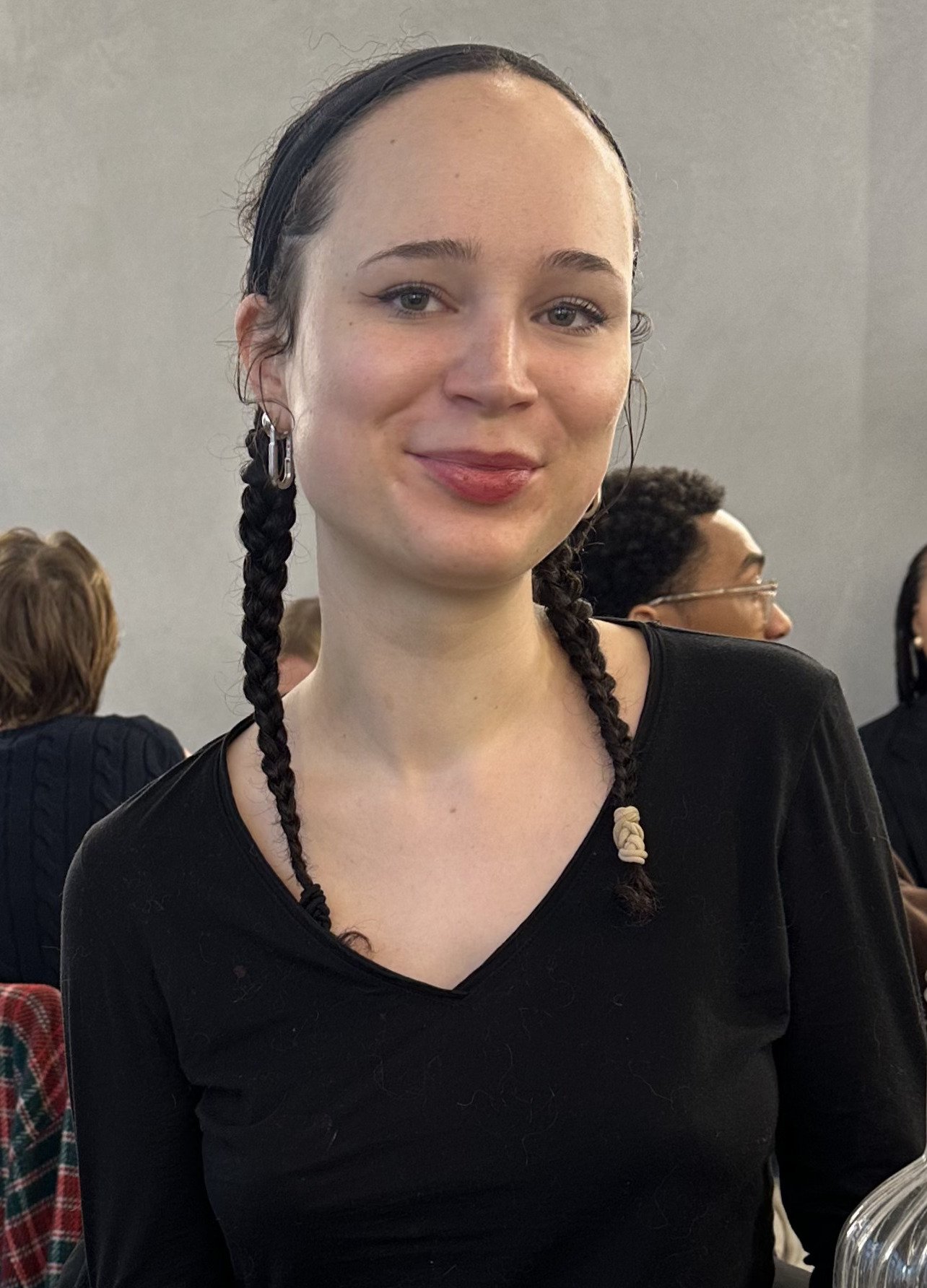
Annabelle Marusic
Title: Exploring Midwives’ Experiences of Heat Exposure and Adaptation in Uganda: Ethnographic Insights to Inform Prevention and Health Promotion in Maternal Care
This project will explore what everyday heat exposure looks like for midwives working in maternal care settings in rural Uganda. What strategies do they use to protect themselves and the women they support. As temperatures rise and climate change intensifies, midwives often work long hours in hot, poorly ventilated facilities, providing care that is both physically and emotionally demanding.
Over eight weeks of fieldwork in Moroto district, Annabelle will be joining midwives in their workplaces, listening to their stories, observing environmental conditions, and speaking with them about how heat influences their well-being, performance, and interactions with pregnant women. She will trace how they navigate constraints, from infrastructure to staffing, and identify where resilience, creativity, and knowledge-sharing appear.
"My goal is to understand how these lived experiences can inform better heat-prevention strategies and health-promoting approaches at both facility and community levels. Ultimately, this work seeks to highlight midwives’ voices in shaping practical solutions that make maternal care safer and more sustainable in a warming future."