

New map reveals how adult brain cells remember their origins
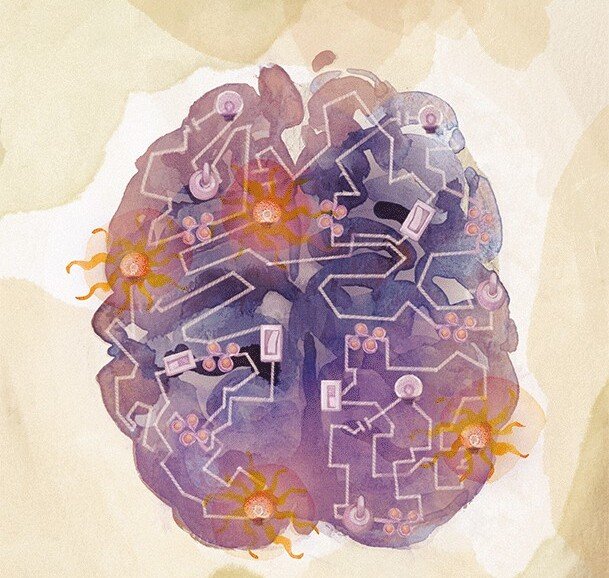
Researchers at Karolinska Institutet have created the first detailed map showing how genetic activity is controlled in individual cells of the adult human brain and spinal cord. The study, published in Nature Neuroscience, show that oligodendroglia, the cells that form the brain’s insulating myelin, retain an “epigenetic memory” of developmental programs long after these genes are no longer active.
Inside every cell, DNA is tightly packed together with histone proteins. Whether a gene is turned on or off depends on how open this packaging is, and on chemical modifications to histones that can either promote or block gene activity.
In the new study, the researchers used advanced epigenomic technologies, including single-nucleus ATAC sequencing and a dual histone profiling method called nanoCUT&Tag, to analyse hundreds of thousands of individual cells from regions across the central nervous system.
Identified a previously unknown DNA region
“Having both chromatin accessibility and histone-level information at single‑cell resolution helps understanding the logic of gene activation and repression in the adult human brain,” says corresponding author Professor Gonçalo Castelo-Branco at the Department of Medical Biochemistry and Biophysics at Karolinska Institutet.

The map allowed the team to identify a previously unknown DNA region that helps regulate activity of Sox10, a key gene that defines the identity of oligodendrocytes.
The study also found that adult oligodendrocytes retain epigenetic marks at HOX gene clusters, genes crucial during early development, even though these genes are not active in mature cells.
“This “epigenetic memory” of developmental states may allow adult oligodendrocytes to rapidly activate developmental genes when needed, for example during regeneration, but it may also make them more vulnerable to malignant transformation”, says Dr. Mukund Kabbe, first author of the study.
All datasets are being made publicly accessible through the UCSC Cell Browser, providing a new resource for studying the regulatory landscape of human neural cells.
The research was conducted with the support of Cancerfonden, Hjärnfonden, Knut and Alice Wallenberg Foundation, Göran Gustafsson Foundation, Swedish Society for Medical Research, Swedish Research Council, the European Union, Chan Zuckerberg Initiative, and the Strategic Research Area Stem Cells and Regenerative Medicine (Karolinska Institutet), among others.
Publication
Single-nucleus epigenomic profiling of the adult human central nervous system unveils epigenetic memory of developmental programs
Mukund Kabbe, Eneritz Agirre, Karl E. Carlström, Özge Dumral, Yuk Kit Lor, Fabio Baldivia Pohl, Nicolas Ruffin, David van Bruggen, Mandy Meijer, Luise A. Seeker, Nadine Bestard-Cuche, Alex R.Lederer, Jilin Zhang, Virpi Ahola, Steven A. Goldman, Erik Edström, Lisa Arvidsson, Tiago Holm Moreira, Marek Bartosovic, Maja Jagodic, Anna Williams, Gonçalo Castelo-Branco
Nat Neuroscience (2026). doi.org/10.1038/s41593-026-02208-0