
Education in outbreak epidemiology strengthens expertise and preparedness for future health crises
The Centre for Health Crises at Karolinska Institutet works to ensure that experience gained from working on health crises internationally can be transformed to benefit Sweden’s crisis preparedness. As part of this, they have conducted a one-day training excerise on global outbreak epidemiology in collaboration with the Swedish Red Cross. Its aim is to provide further education for people who have worked on projects abroad.
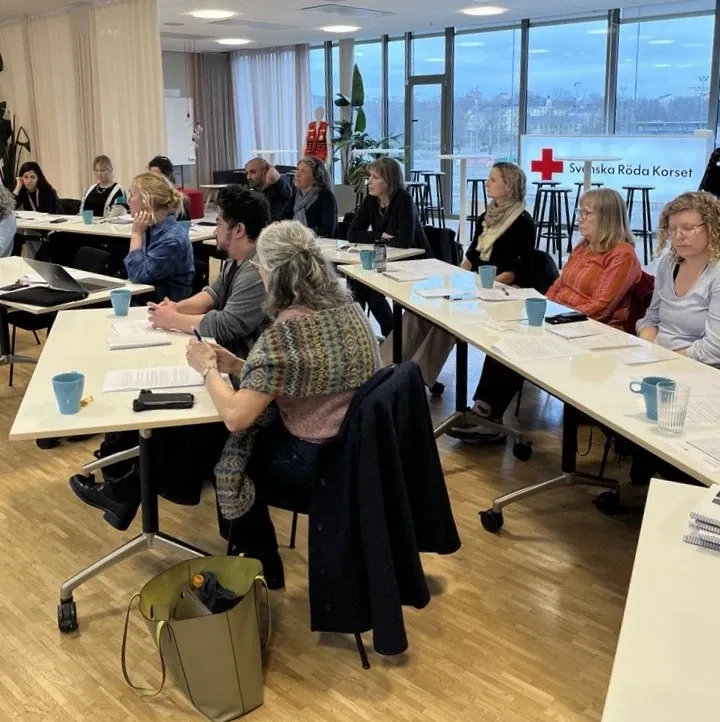
On 28 March, 15 participants gathered at the Red Cross’ office in Stockholm for a one-day training in global outbreak epidemiology. The training exercise, developed by the Centre for Health Crises, provides participants with an introduction to how disease outbreaks arise, spread and develop, as well as tools for assessing and managing them in a structured and critical manner. Thanks to the Centre’s new collaboration with the Swedish Red Cross, it has been adapted to suit people who have previous experience of working in projects in health crises abroad. Those who took part this time had a mixed professional background, ranging from project managers and physicians specialised in infectious diseases, to experts in water and sanitation.
Positive feedback on training that combines lecture and practical group exercise
The day began with a lecture on how to investigate and manage outbreaks of infectious diseases. After lunch, participants had the opportunity to put what they had learnt into practice in a group exercise where they had to manage a case of a disease outbreak. Since the training exercise is just for one day, it focused primarily on understanding the practical principles for investigating and managing outbreaks of various types of infectious diseases, as well as on decision-making in situations where information is limited.

"We received a lot of positive feedback on the course from everyone who took part, and we look forward to continuing to develop both the training and our collaboration with the Swedish Red Cross," says Caroline de Groot, collaboration coordinator at the Centre for Health Crises, who has worked on it along with the Centre’s expert coordinator in outbreak preparedness and response, Hedvig Glans.
The training exercise is part of the Centre for Health Crises’ programme area on education, called the Health Crisis Academy, which collates, conducts, and develops educational initiatives aimed at strengthening skills that lead to improved preparedness for future health crises, both in Sweden and globally.