
Bill Gates visits KI’s Alzheimer’s researchers
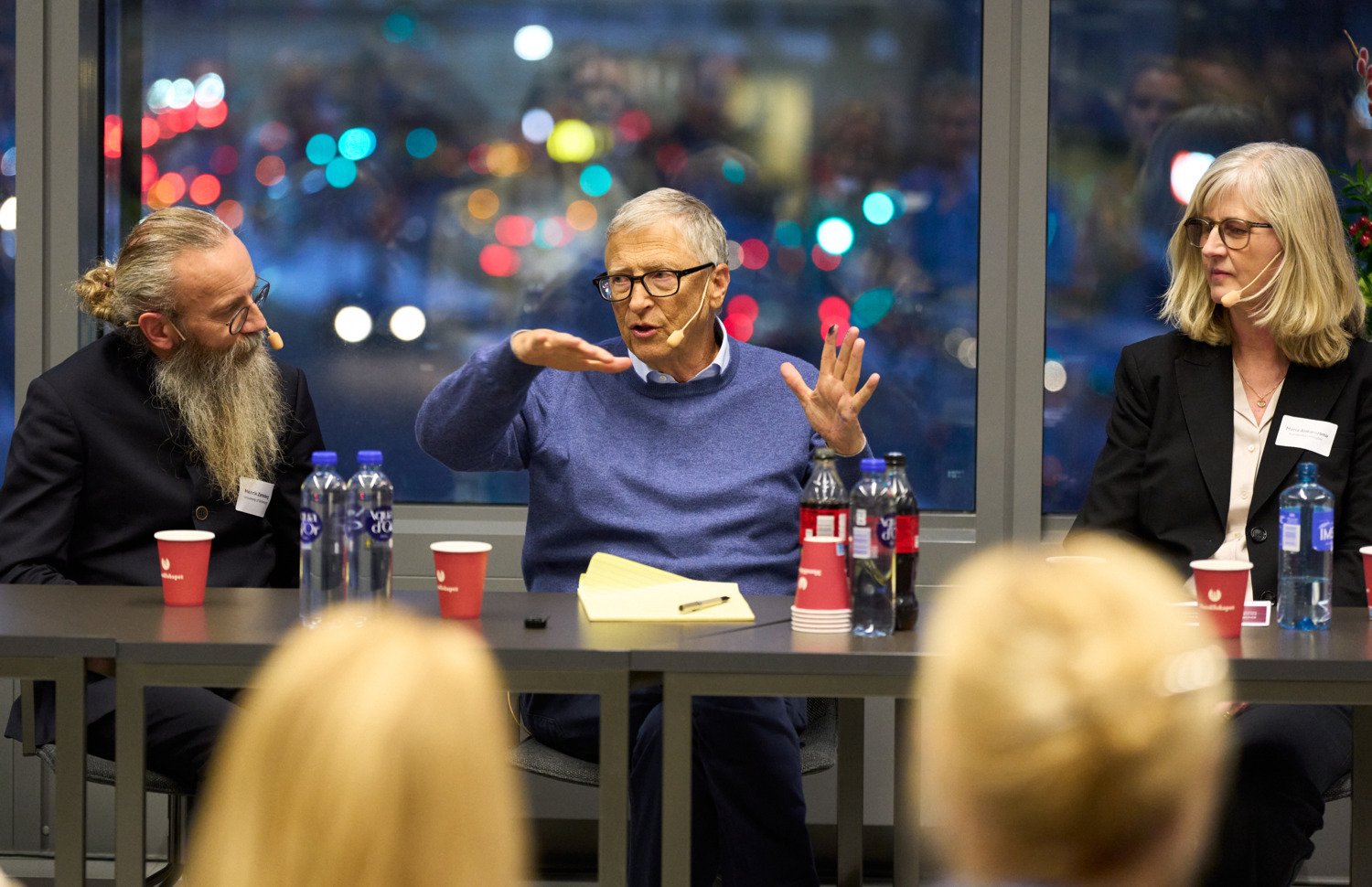
Bill Gates visited Karolinska Institutet and Karolinska University Hospital last Friday at his own initiative to discuss the latest advances in Swedish Alzheimer’s research, a field that interests him and that he supports.
The day was arranged by Professor Miia Kivipelto, who has long been in contact with Gates through her research. The meeting was also attended by Minister for Older People and Social Security Anna Tenje, who presented Sweden’s new dementia strategy.
For the past five years, Gates Ventures has been funding large projects in the Alzheimer’s field at KI, Karolinska University Hospital and the FINGERS Brain Health Institute.
“We feel blessed to be working with Gates Ventures,” said Miia Kivipelto, professor at the Department of Neurobiology, Care Sciences and Society, KI. “They act like a partner in our projects and provide us with a platform on which we can share data with other countries, which in turn can generate investment. Without them, we wouldn’t have the global FINGER research or our new combination study, in which we’re integrating lifestyle changes and drugs.”
During his visit, Gates talked to many of KI’s researchers, which gave him opportunities to ask them about the issues that interest him, including the use of biomarkers for the purposes of diagnosis and precision medicine, AI-driven research, new diagnostic imaging techniques, preventative interventions based on the FINGER study, antibody-based drug development, combination therapies and the practical implementation of research outcomes in healthcare.
Presentation of unique memory clinic
Gates was also shown around Karolinska University Hospital’s memory clinic, the first hospital in the world with a fast track that cuts cognitive assessments down to five days using new AI-supported tools and eye movement-based diagnostics.
This was not Bill Gates’s first visit to KI. He and his former wife Melinda Gates have been honorary doctors at KI since 2007 in recognition of the vital contributions to global health that they have made through the Bill och Melinda Gates Foundation.
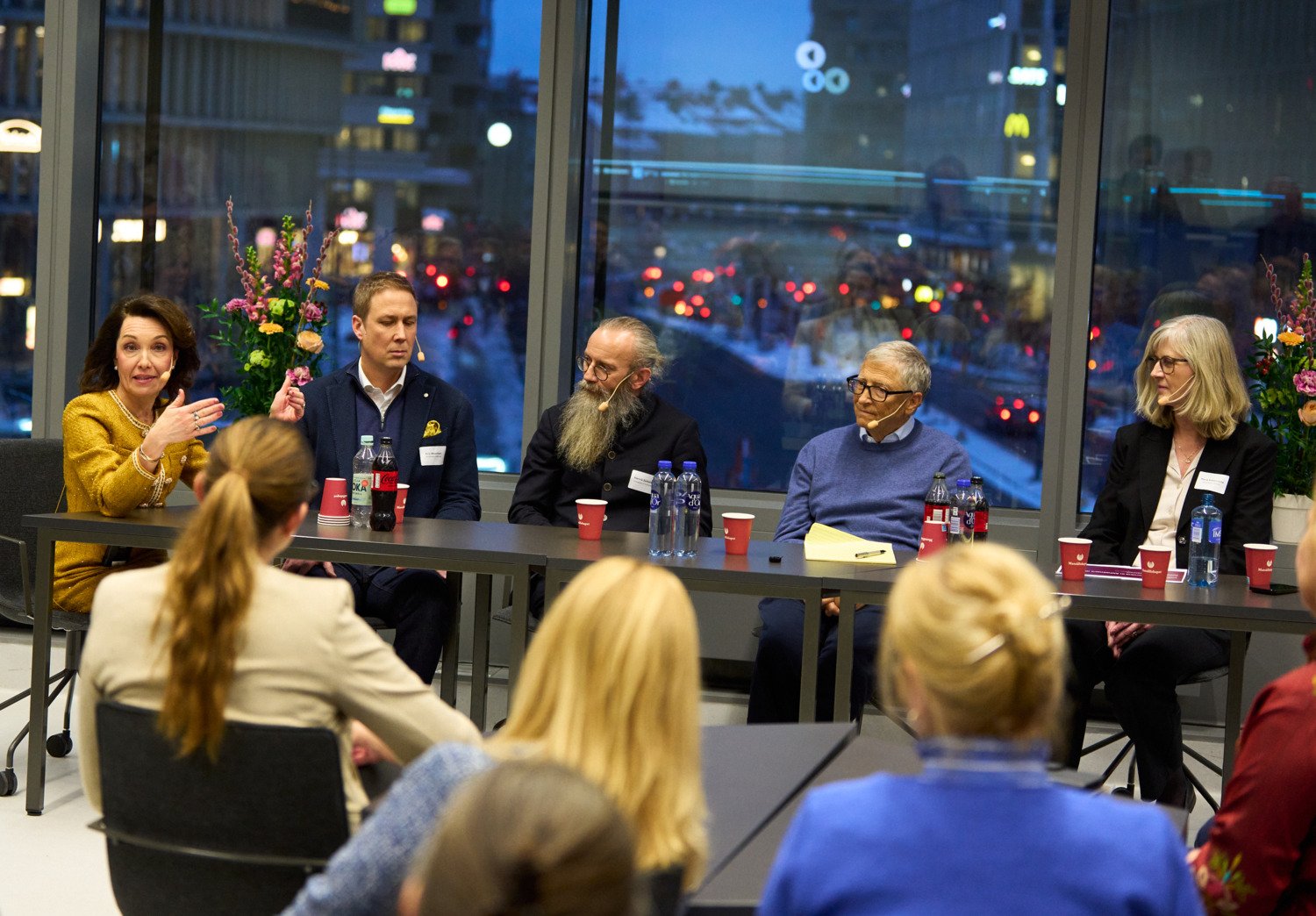
The visit concluded with an informal public discussion between Gates and some of Sweden’s leading experts in the Alzheimer’s field. On the panel were Miia Kivipelto, professor of clinical geriatrics at KI, Henrik Zetterberg, professor of neurochemistry at the Department of Neuroscience and Physiology at the Sahlgren Academy, Eric Westman, professor of neurogeriatrics at KI and Maria Ankarcrona, professor of experimental neurogeriatrics at KI. The discussion was moderated by Niranjan Bose from Gates Ventures. The event opened with a recorded word of greeting from Queen Silvia, who herself is engaged in dementia research and dementia care.
AI, a vital tool
The discussion began with the researchers each giving their review of the current status of Alzheimer’s research, including the development of new therapies, biomarkers and techniques. Many of them stressed the importance of sharing knowledge and working together to build a society that can offer better care to people with dementia.
Gates acknowledged the importance of AI.
“Our instruments for gathering data, including imaging data, genetic data, are just getting so much better,” he said. “And to find patterns in that data, AI is an incredible tool. Even in most imaging, the AI is often seeing things that just humans looking at these things might not see.”
The final question of the debate concerned whether Alzheimer’s disease is a single disease or a combination of diseases. The panel agreed that it is likely to be the latter, an interaction between underlying conditions and disorders.
Gates rounded off by saluting the cutting-edge knowledge in the field that exists in Sweden and underscoring the value of collaborations and partnerships to driving Alzheimer’s research forwards:
“I got to know Karolinska first through the work of the Gates Foundation, where you've been a fantastic partner. It's kind of amazing that the only other health thing I do, which is this Alzheimer's work, you've also ended up being one of the best partners in the world. So thanks for the great work here and the partnerships we have in multiple areas.”