

Study finds common health conditions can influence Alzheimer’s blood tests
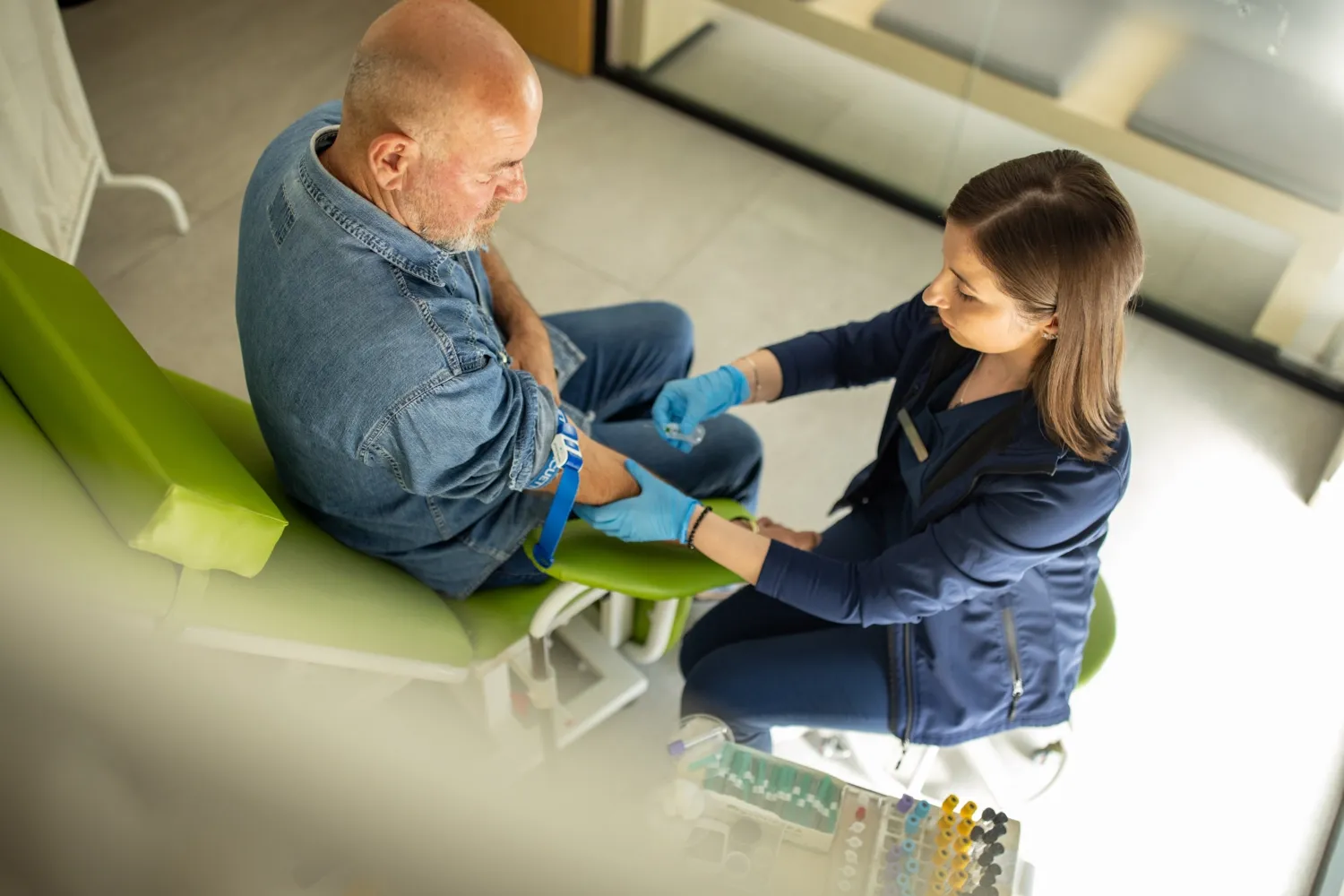
How do everyday health issues affect new blood tests for Alzheimer’s disease? A study from Karolinska Institutet, in Alzheimer's & Dementia, suggests that factors like kidney function, cholesterol, and diabetes can influence some of these biomarkers—though the most promising marker remains reliable.
Blood-based biomarkers (BBMs) for Alzheimer’s disease are now entering clinical practice, offering a simpler alternative to spinal fluid tests or brain scans. But many patients at memory clinics also have other health conditions. Could these affect the accuracy of the tests?
Researchers at Karolinska Institutet examined blood samples from 311 patients at the Karolinska University Hospital Memory Clinic using material and clinical data from Karolinska’s database and biobank, GEDOC. They looked at how common conditions—such as vascular problems, kidney function, and cholesterol levels—relate to Alzheimer’s biomarkers in blood.

“We found that several health factors were linked to changes in biomarker levels,” says Makrina Daniilidou, researcher, at the Department of Neurobiology, Care Sciences and Society, at Karolinska Institutet. “For example, diabetes and dyslipidemia influenced amyloid markers even after accounting for Alzheimer’s pathology, suggesting effects beyond the brain.”
One key finding: p-tau217, considered the most promising biomarker, remained highly robust despite these influences. However, some clinical cut-offs shifted when comorbidities were considered. In contrast, the Aβ42/40 ratio was more sensitive to systemic health factors.
Why does this matter? According to the researchers, most biomarkers still perform well, but interpretation can improve by considering a patient’s overall health profile.
“These tests are a big step forward,” says Makrina Daniilidou. “Our results show they are reliable, but also highlight the need for a more personalized approach.”
Next, the team plans to validate these findings in larger and more diverse populations, including cognitively healthy people with increased risk for dementia. The goal: integrate adjusted biomarker models into clinical workflows for more precise Alzheimer’s diagnosis. Senior co-authors of the study are Professor Miia Kivipelto and Associate Professor Anna Matton from Karolinska Institutet.
Main funding for the study
- Innovative Health Initiative Joint Undertaking (JU) -PROMINENT under grant agreement No. 101112145 with support from BioArctic
- Innovative Health Initiative Joint Undertaking (JU) AD-RIDDLE, under grant agreement No. 101132933
- Alzheimer’s Drug Discovery Foundation (USA)
Publication
Enhancing diagnostic precision in Alzheimer's disease: Impact of comorbidities on blood biomarkers for clinical integration. Daniilidou M, Öhlund-Wistbacka U, Hagman G, et al. Alzheimer's Dement. 2025; 21:e7093. doi.org/10.1002/alz.70931