
AI can detect pancreatic cancer better than radiologists
A new international study published in The Lancet Oncology shows that artificial intelligence (AI) can be more accurate than experienced radiologists in detecting pancreatic cancer on computed tomography (CT) scans. The study is a collaboration between Radboud University Medical Center in the Netherlands, Karolinska Institutet in Sweden, and the University of Bergen in Norway.
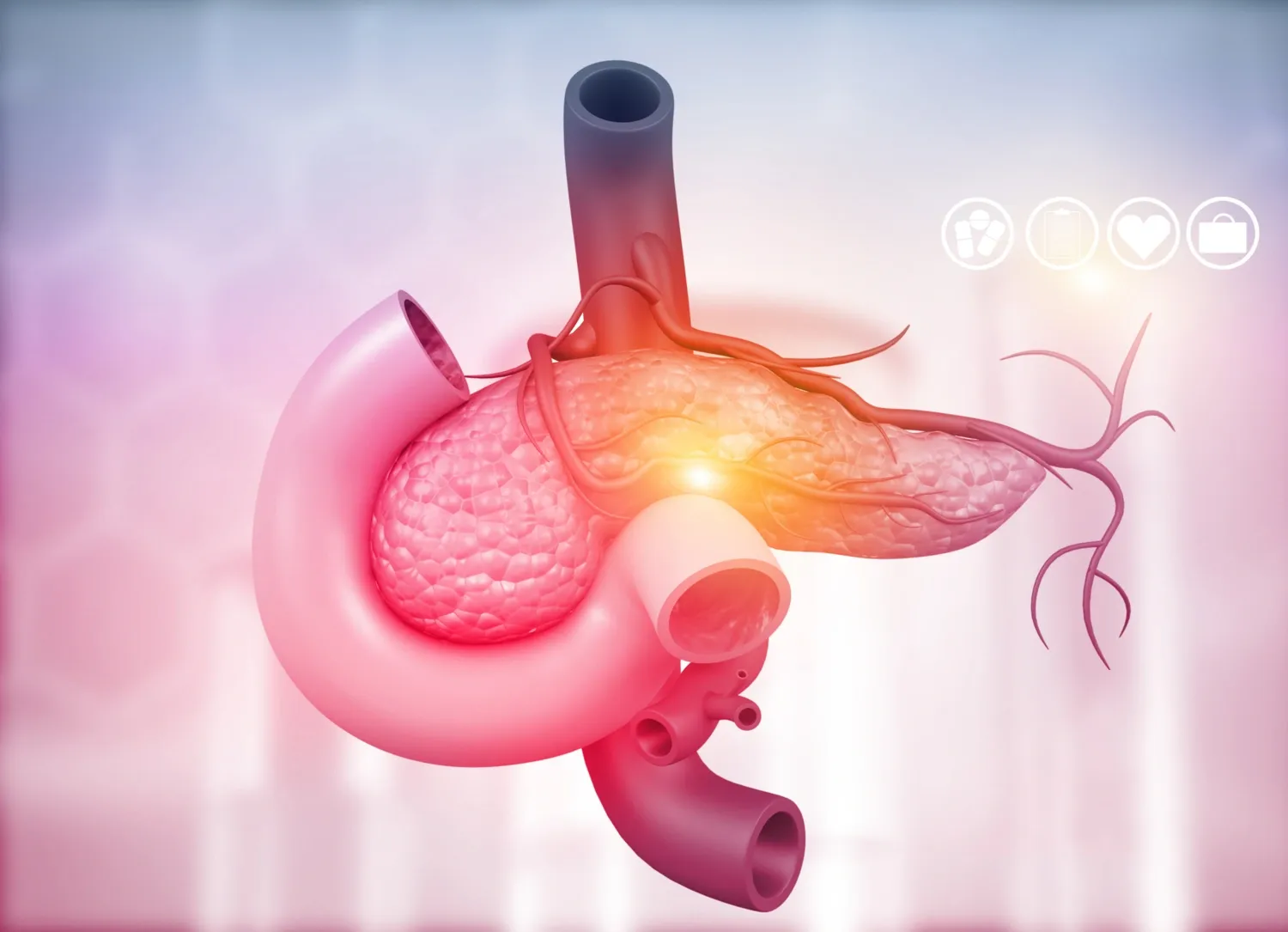
Pancreatic cancer is one of the most difficult cancers to diagnose. It is often detected late, meaning that fewer than ten per cent of patients survive more than five years after diagnosis. Early detection is crucial to enable surgical removal of the tumour and thereby increase survival chances. However, small tumours may be hidden by inflammation or surrounding structures in the abdomen, and indirect signs are easy to overlook even for skilled radiologists.
In the study, an AI system was compared with 68 radiologists from 40 institutions across 12 countries. In total, the study included 3,440 patients, and more than 430 AI developers from 46 countries contributed algorithms. The three best-performing algorithms were combined into a final system, which was tested on a separate group of 1,130 patients. The results showed that AI achieved an accuracy with an AUROC of 0.92, compared with the radiologists’ 0.88. The AI system detected more tumours and produced fewer false positive results.

“Our findings show that AI can be a valuable support for radiologists in the challenging task of detecting pancreatic cancer,” says Dawid Rutkowski, PhD student at the Department of Clinical Science, Intervention and Technology (CLINTEC).
The next step for the researchers is to explore how AI can be used in the follow-up of patients with cysts or precursors to pancreatic cancer. These patients are often monitored with regular check-ups and imaging, and AI could help improve assessments in this context.
“We now aim to move forward with prospective studies where the AI system is tested in clinical practice, but with great caution and care,” says Dawid Rutkowski.
The project also involved a wide network of international partners, including Cleveland Clinic, Mayo Clinic, Johns Hopkins University, Massachusetts General Hospital, National Taiwan University, University of Ulsan College of Medicine, German Cancer Research Center, and the University of Oslo.
The study was funded by the European Union and conducted without known conflicts of interest.
Publication
Artificial intelligence and radiologists in pancreatic cancer detection using standard of care CT scans (PANORAMA): an international, paired, non-inferiority, confirmatory, observational study Natalia Alves, Megan Schuurmans, Dawid Rutkowski, Anindo Saha, Pierpaolo Vendittelli, Nancy Obuchowski, et al. The Lancet Oncology, Online first November 20, 2025