

The Nobel Prize in Physiology or Medicine 2026

 Photo: Cecilia Odlind
The Nobel Prize to the pioneers of optogenetics Peter Hegemann, Georg Nagel and Karl Deisseroth
The Nobel Prize in Physiology or Medicine 2026 is awarded for optogenetics — a method that makes it possible to show how nerve cells shape memories, feelings and behaviours in the living brain. Peter Hegemann and Georg Nagel discovered a remarkable protein, channelrhodopsin, in a single-celled alga. Karl Deisseroth transformed the protein into a light-controlled switch for nerve cells. The laureates have laid the foundation of a new era in neuroscience.
 Photo: Johanna Gasslander
KI students came together to share the Nobel moment
When this year’s Nobel Prize in Physiology or Medicine was announced on 5 October, KI students came together to watch the exciting moment unfold. Refreshments were served as the live broadcast was shown on a big screen.
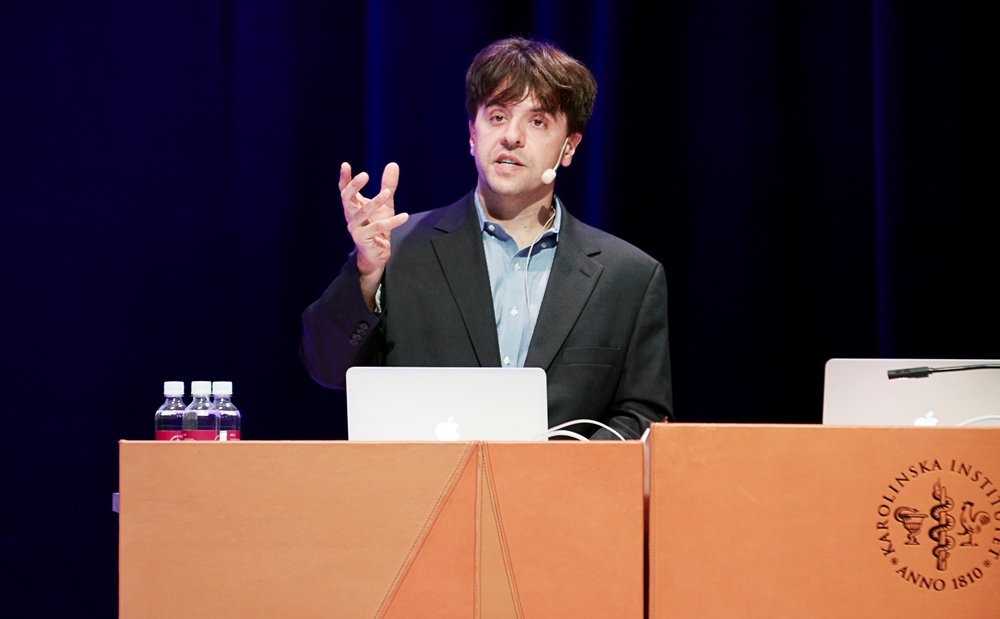 Photo: Christopher Hunt
News article about Karl Deisseroth from 2015: Clarity technique now at KI
Karl Deisseroth is a professor at Stanford, where his group has developed two spectacular scientific techniques – optogenetics and Clarity. He has also been working since 2013 at Karolinska Institutet, which has just invested in a Clarity facility.
 Photo: Erik Flyg
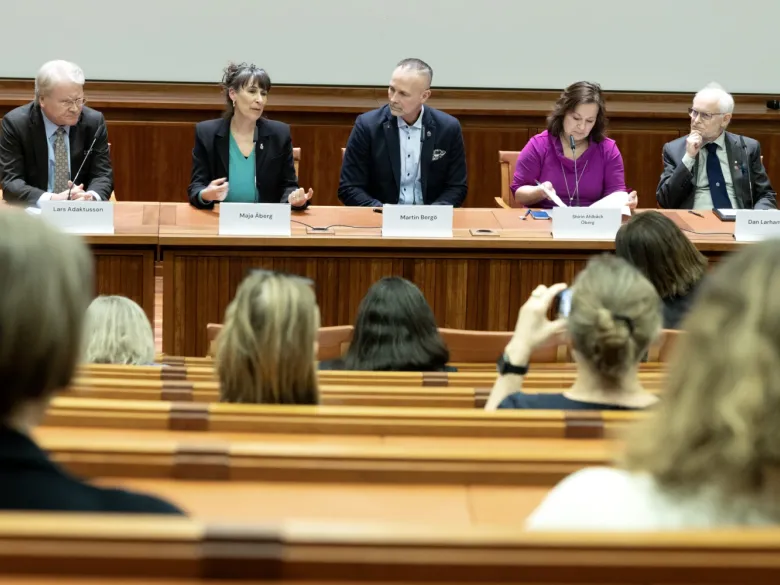
Thomas Perlmann: “Everyone is passionate about the Nobel Prize”


The Conversation

 Photo: Getty Images
What vegan and vegetarian diets can and can’t tell us about eating disorders
Many people worry that following a vegetarian or vegan diet may signal an eating disorder. But a systematic review found no clear overall association, suggesting that the reasons behind dietary choices matter far more than the diet itself. Read the article in The Conversation.
 Photo: Getty Images
Genetic research into autism raises ethical concerns
 Photo: Getty Images,Getty Images/iStockphoto
Women report worse sleep than men despite objectively better sleep quality
 Photo: Getty Images
More articles by KI researchers published in The Conversation
From cold-resistant genes to face masks, Karolinska Institutet researchers contribute to the global public discourse on a range of topics through our collaboration with the international news site The Conversation.










Selected top publications
No clear long-term benefit of no-touch technique in coronary bypass surgery
Ulrik Sartipy et al, JAMA Cardiology, September 2026
Study identifies inherited genetic risk factors in childhood leukemia
Ann Nordgren et al, Nature Communications, September 2026
New molecule protected against acute liver failure in study
Maurice Michel et al, Advanced Science, September 2026
Dizziness test should be used more selectively
Carl Sars et al, JAMA Neurology, September 2026
Recent advances in oesophageal cancer
Shaohua Xie et al, NEJM, September 2026
More high-impact publications