

How AI can accelerate drug development
Andreas Luttens has trained an algorithm that can explore the so-called chemical space – all conceivable combinations of atoms and bonds.
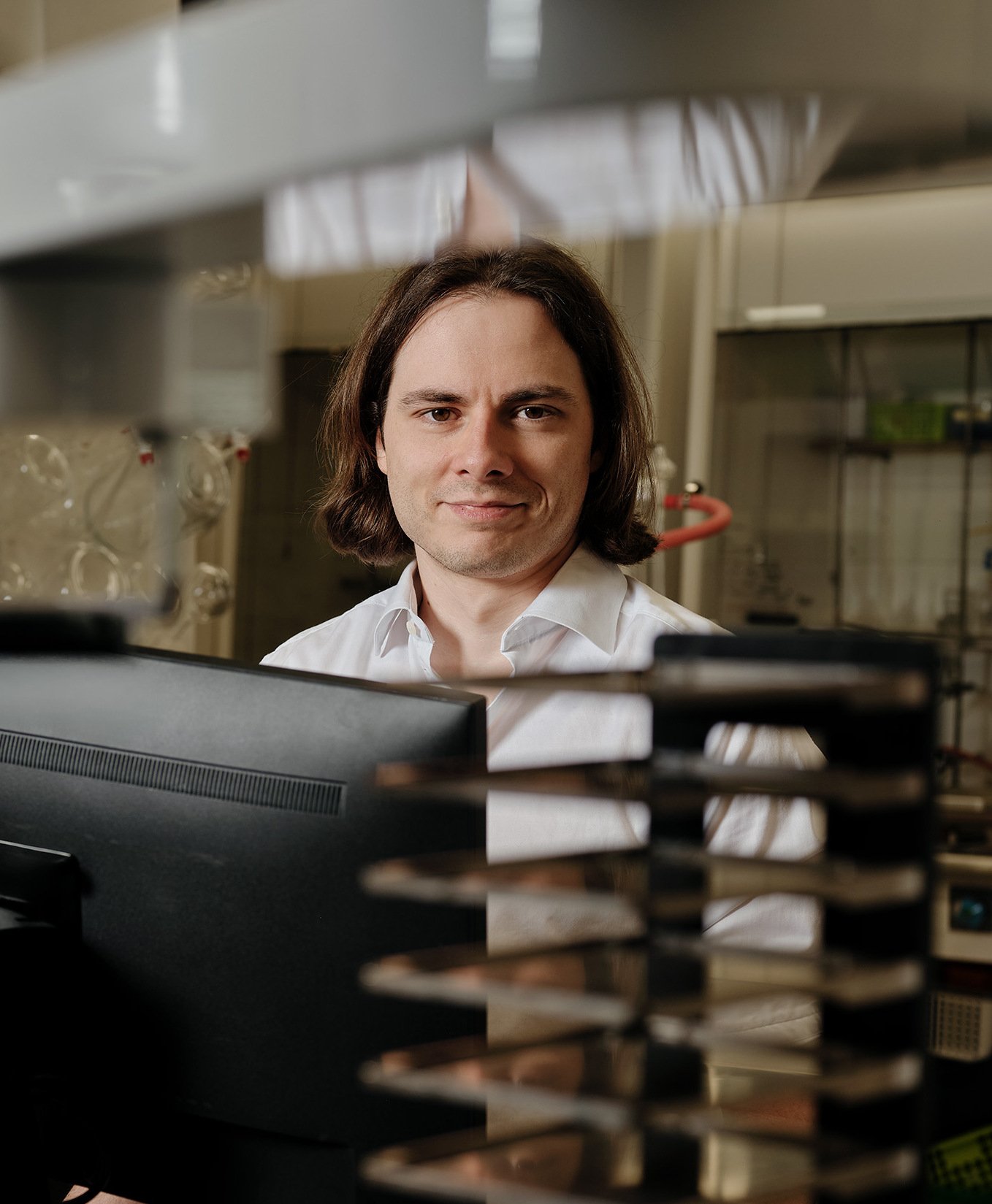
Text: Annika Lund, first published in Medicinsk Vetenskap nr 2 2026
“It involves several trillion molecules. It is hard to grasp just how many there are, even for us,” he says.
The algorithm helps researchers navigate this vast space and find new potential molecules that can do what the researchers want. The aim is to identify strong candidates for drug development. Their focus is on infectious diseases, where they are working on several viruses and antibiotic resistance.
In practice, the number of relevant molecules is far fewer than the astronomical quantity described above, but it is still staggeringly large. This is where the algorithm becomes crucial. The initial screening can be carried out digitally and across a larger part of the chemical space than was previously possible. This speeds up the process and improves quality, as more potential molecules are considered already at the initial selection stage.
“For example, we have used the algorithm to analyse which molecules could prevent a specific virus from replicating,” says Andreas Luttens.
This can speed up the development of drugs against existing viruses, but also against new ones that have not yet emerged. It is an important precaution for future pandemics.
The subsequent steps are the same as before: the most promising molecules must be synthesised and tested in a laboratory.
“I am fascinated by the fact that the algorithm suggests molecules that no one has seen before. We have had some of them synthesised and seen that they work.”
About Andreas Luttens
Occupation: Researcher at the Department of Medical Biochemistry and Biophysics and SciLifeLab.
Research focus: How to use AI to develop new antiviral drugs and antibiotics.