

Wheelock Lab expands capacity for mass spectrometry imaging
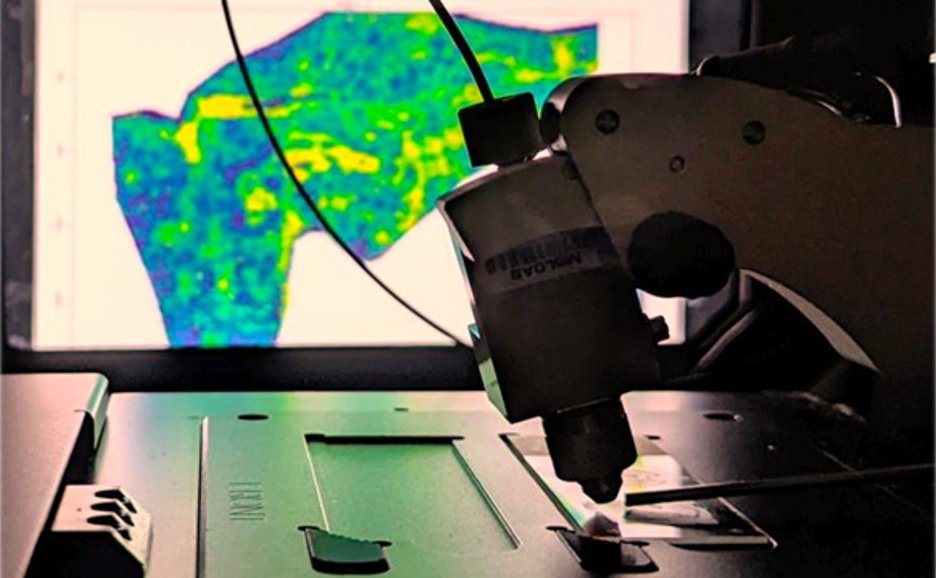
The research group led by Craig Wheelock at the Institute of Environmental Medicine (IMM) has recently enhanced its analytical capabilities with the acquisition of two new mass spectrometers. With a total of six instruments now operational, the Wheelock Lab has become one of the most comprehensively equipped mass spectrometry facilities in its field.

One of the newly acquired platforms introduces advanced mass spectrometry imaging (MSI), significantly expanding the laboratory’s capabilities in the rapidly evolving field of spatial biology. This cutting-edge technology enables researchers to map the spatial organization and interactions of molecules within their native biological environments. By directly imaging metabolites within tissue samples, the platform provides powerful chemical insights that allow scientists to visualize the distribution of small molecules and better understand their roles in complex biological processes.

Postdoctoral researcher Matt Smith is spearheading the development of innovative mass spectrometry imaging (MSI) workflows in collaboration with Waters Corporation at the Solna Campus, with support from National Bioinformatics Infrastructure Sweden (NBIS). These advanced approaches enable the direct imaging of metabolites and environmental pollutants from tissue sections using mass spectrometry, while preserving the integrity of the samples for subsequent analyses such as spatial transcriptomics. By allowing multiple imaging modalities to be applied to a single tissue section, the platform empowers researchers to investigate spatial organization across diverse biological layers with unprecedented depth and precision.
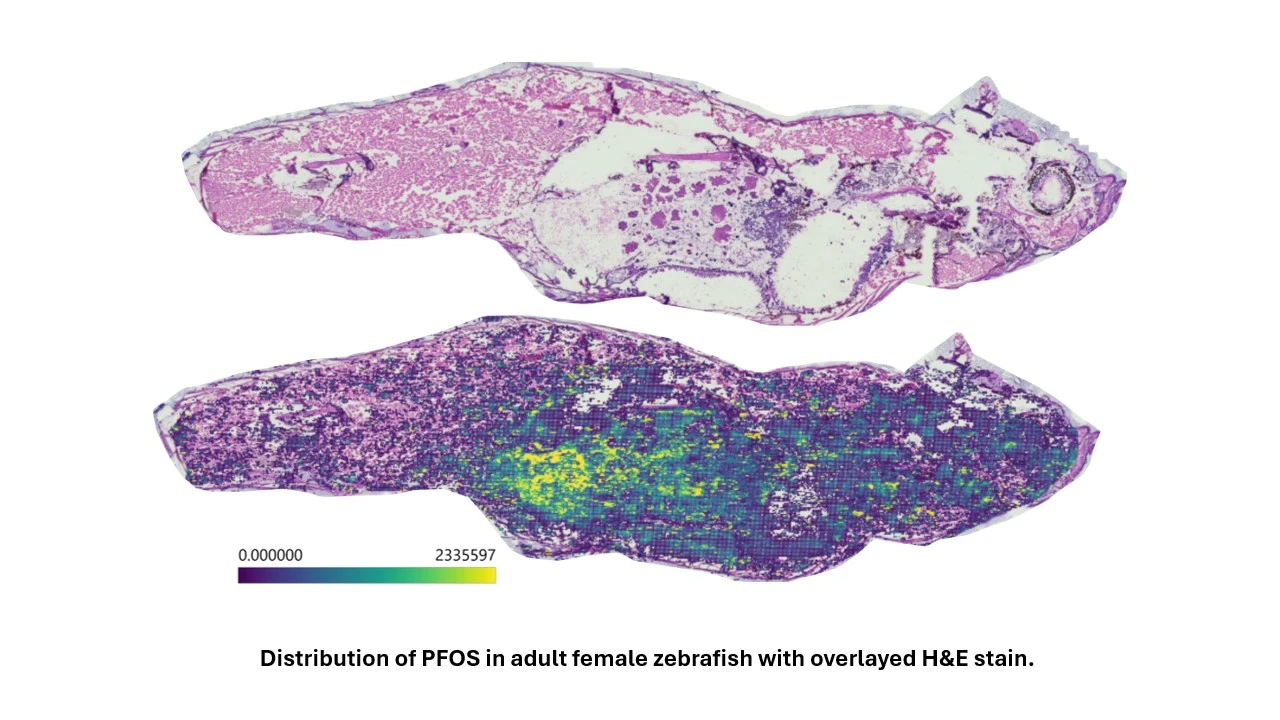
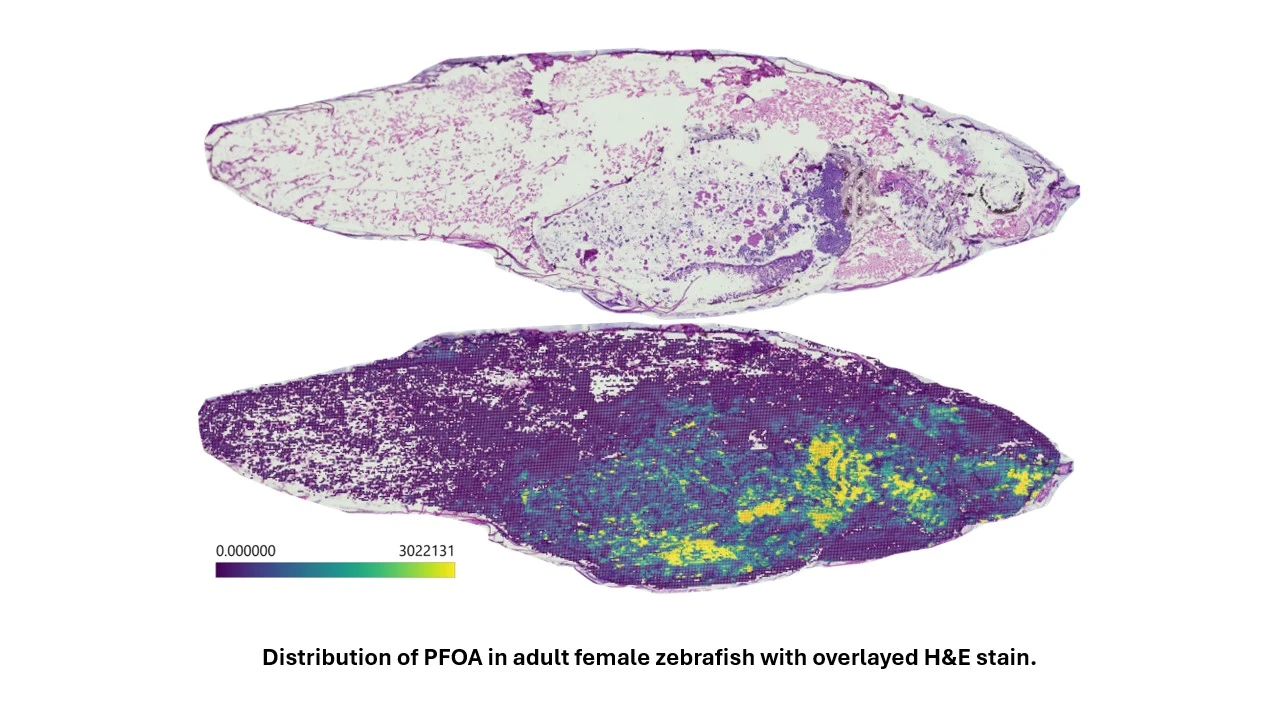
These methods are currently being applied to investigate the roles of lipid mediators, including prostaglandins and leukotrienes, in inflammatory lung diseases. By combining histological analysis and spatial transcriptomics from the same tissue section, the team is uncovering the specific tissue microenvironments that drive lipid-mediated inflammation in asthma. The Wheelock Lab is also using MSI to visualize environmental chemicals within tissues. In recent work, the group examined the uptake and distribution of PFAS compounds in a zebrafish model, revealing metabolic perturbations associated with chemical exposure at high spatial resolution. The team was able to show that the individual PFAS species (in this case PFOS and PFOA) exhibit different spatial distributions in a zebrafish, suggesting that the compounds could exhibit organ-specific effects [see figure below].
Wheelock also leads the Small Molecule Mass Spectrometry Core Facility (KI-SMMS), which provides expert support in metabolism, experimental design, and data analysis. Whether researchers require metabolomics, lipidomics, targeted fluxomics, or other LC-MS–based analyses, KI-SMMS develops tailored solutions to match specific scientific objectives. The recent instrument investments strengthen both the core facility’s service capacity and the Wheelock Lab’s research capability advancing IMM’s mission to understand how environmental chemicals influence human health.