
Thesis on hyper- and hypothyroidism
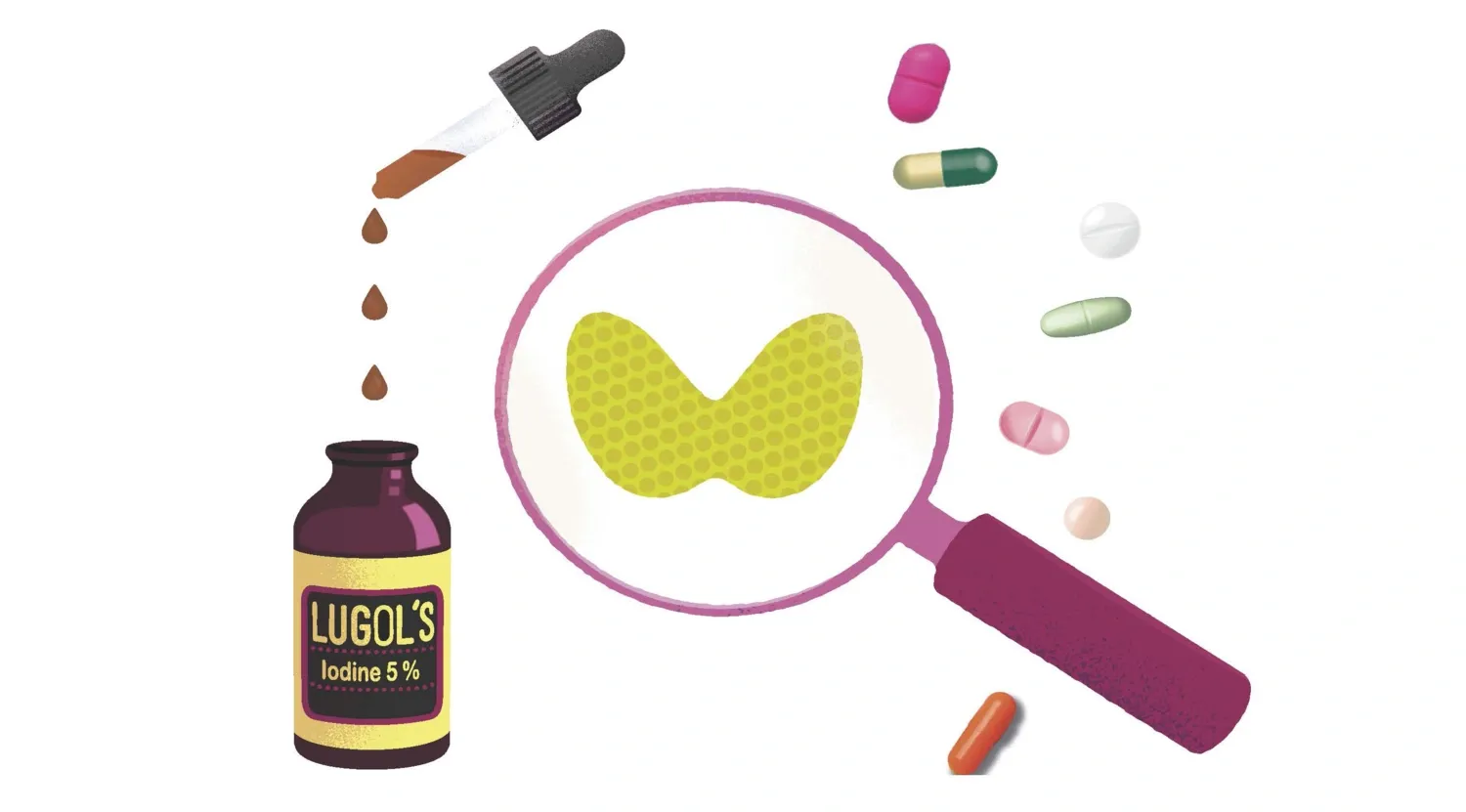
Most people with thyroid disease benefit from established treatments, but not all. In his thesis, Fredric Hedberg has studied treatments used when standard therapy is insufficient in hyper- and hypothyroidism; iodine solution (Lugol’s solution) and combination therapy with the thyroid hormone T3. The results contribute to increased knowledge about these treatments.
“In the treatment of hyper- and hypothyroidism, we can in most cases rely on well-established therapies. However, in our clinical practice, we sometimes encounter patients for whom standard treatment is not sufficient, says Fredric Hedberg, doctoral student in the research group for experimental and clinical neuroendocrinology, Department of Molecular Medicine and Surgery, Karolinska Institutet, and associate senior physician at the Department of Endocrinology, Karolinska University Hospital.
“In the thesis, we have therefore studied non-standard treatments in thyroid disease, with a focus on iodine solution (Lugol’s solution) in hyperthyroidism and add-on treatment with T3 hormone (liothyronine) to T4 therapy (levothyroxine) in hypothyroidism”, he continues.
What are the most important results?
“In the first study, we investigated the risk of postoperative hypocalcemia in patients who had undergone thyroidectomy due to Graves’ disease. We compared those who had been pretreated with Lugol’s solution in a rescue setting with those who received standard preparation. We found an increased risk of hypocalcemia in patients pretreated with Lugol’s solution. Previous studies comparing these two groups have been small and have not been able to demonstrate any differences in the risk of surgical complications”.
“However, in toxic nodular goiter, the use of iodine solution before surgery is discouraged due to concerns about worsening hyperthyroidism, despite a lack of evidence. In an exploratory study, we showed that a short course of iodine solution was tolerable and led to improved thyroid hormone levels without deterioration in clinical status or thyroid-specific quality of life”.
“The latter part of the thesis focused on combination therapy with T3 and T4 in autoimmune hypothyroidism. Combination therapy may be considered in patients with persistent symptoms such as reduced vitality and quality of life despite adequate and stable T4 treatment. Prescribing of T3 has increased dramatically over the past two decades”.
“In two observational studies, we found that patients with a history of psychiatric morbidity prior to the diagnosis of hypothyroidism have a higher likelihood of later receiving T3 treatment. We also observed an association between T3 treatment and subsequent psychiatric diagnosis or prescription of psychiatric medications”.
How can this knowledge benefit people?
“Our results contribute new knowledge about non-standard treatments in thyroid disease. The increased risk of hypocalcemia in subacute surgery in Graves’ disease indicates a need for increased postoperative vigilance in these patients”.
“In toxic nodular goiter, our results suggest that iodine solution may be a possible treatment option in selected cases, for example prior to thyroid surgery when standard treatment to optimize thyroid hormone levels is not tolerated or is contraindicated”.
“Regarding hypothyroidism and T3 treatment, our findings highlight the importance of recognizing mental health issues, both those present before the diagnosis of hypothyroidism and those occurring during treatment. This may contribute to a more comprehensive assessment: helping physicians and patients to jointly create realistic expectations of treatment and to better understand and manage persistent symptoms”.
What are your goals for the future?
“My short-term goal is to defend my thesis. After that, I want to continue combining clinical work with research that has direct patient benefit”.
“I also want to remain engaged in teaching, both as a clinical assistant in the medical program at Karolinska Institutet and by contributing to continuing education, for example in the form of specialist training courses,” says Fredric Hedberg.
Dissertation
The doctoral thesis has been supervised by Henrik Falhammar. The dissertation seminar will be held on April 17th, 2026 at 09:00, Skandiasalen, Karolinska University Hospital.
Thesis
Hedberg, Fredric (2026). Treatment of hyper- and hypothyroidism : Lugol’s iodine and liothyronine. Karolinska Institutet. Thesis. https://doi.org/10.69622/30665984.v1