
Thesis contributes to personalized surveillance for hereditary cancer syndrome

Genetic markers may be the key to more precise surveillance programs for individuals with the hereditary cancer syndrome Li-Fraumeni. In a new doctoral thesis from Karolinska Institutet, Alexander Sun Zhang shows how tailored follow-up strategies can reduce the burden on patients, particularly children. These findings have already influenced the Swedish national guidelines.
We asked Alexander Sun Zhang at the Department of Oncology-Pathology to tell us more about his thesis.
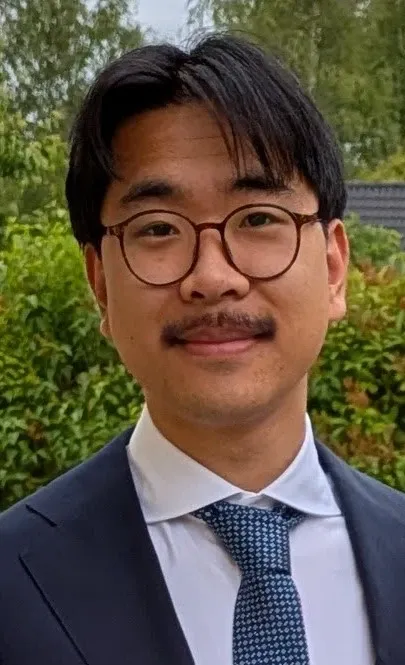
“My thesis focuses on a hereditary cancer syndrome called Li-Fraumeni syndrome (LFS). It is caused by inherited mutations in a gene called TP53. Individuals with LFS have an extremely high risk of developing cancer, and it is one of the most common causes of childhood cancer. In my research, we have investigated how to improve clinical management and surveillance protocols of individuals with LFS.”
Which are the most important results?
“We have identified genetic markers in individuals with LFS that can help tailor surveillance and clinical management. Previously, most individuals with LFS underwent essentially the same “one-size-fits-all” surveillance, which was demanding and time-consuming, especially for children. Our results show that certain genetic subgroups may benefit from more targeted surveillance, such as focused breast and prostate cancer surveillance in adults, while some children may not require the same intensive surveillance protocols.”
How can this new knowledge contribute to the improvement of people’s health?
“Some of our findings have already been incorporated into the Swedish national guidelines for LFS, enabling more personalized surveillance strategies. We have also established a nationwide Swedish LFS registry, which provides an important resource for identifying additional genetic markers and improving care in the future. Furthermore, our research highlights challenges in current pediatric surveillance protocols that may help inform future guideline development.”
What are your future ambitions?
“I plan to continue combining clinical work with research and to further develop as a clinician-scientist. I am particularly interested in strengthening collaboration between patients, clinicians, and researchers, and in building international research partnerships between Sweden and other countries.”
Doctoral thesis
Dissertation
Friday February 27 at 9:00 in CCK Lecture hall, R8:00, Visionsgatan 56.