
SWEDBO Award for KI doctoral thesis on the development of the inner ear
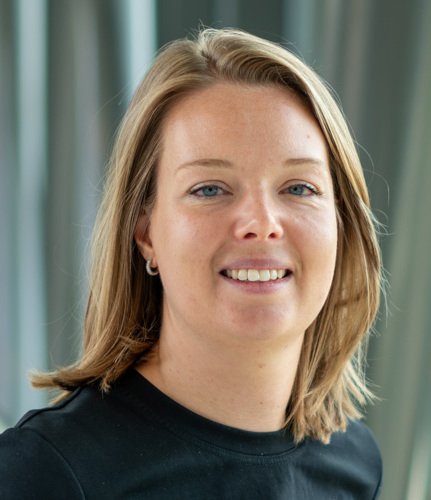
The Swedish Developmental Biology Organization (SWEDBO) has awarded Sandra de Haan at Karolinska Institutet its prize for the best doctoral thesis. The thesis focuses on how the inner ear develops and provides new knowledge about how cells in the cochlea are organised.
Sandra de Haan completed her PhD in Emma Andersson's lab at the Department of Cell and Molecular Biology, Karolinska Institutet. She receives the award for her monograph doctoral thesis on the development of the inner ear. In her work, she studied how different cell types in the cochlea—the part of the inner ear essential for hearing—are formed and separated during development.
Using a method in which cells are labelled with genetic “barcodes” during fetal development, she was able to follow how individual cells develop over time. The results reveal previously unrecognised limitations in the types of cells that can arise from the same progenitor cell, as well as a clear compartmentalisation of the cochlea into distinct cellular regions.
In parallel, the thesis also examined the inner ear in a mouse model of Alagille syndrome. These studies identified novel cellular and molecular changes that affect inner ear development. According to SWEDBO, the findings together contribute to an increased understanding of both normal development and disease-related changes in the inner ear, and may in the long term be relevant for research on treatments for congenital and acquired hearing loss.
"The doctoral work focused on understanding how cells in the inner ear are organised and which biological rules govern their development," says Sandra de Haan.
Sandra de Haan is currently working as a postdoctoral researcher at Leiden University Medical Center. Her current research mainly uses spatial transcriptomics to study muscle diseases.
Since 2021, SWEDBO has awarded a personal prize every two years to the best doctoral thesis in developmental biology in Scandinavia. The prize recognises research in developmental biology, stem cell biology, cell and tissue regeneration, or related fields. The doctoral research must have been conducted at a university in Sweden, Norway, or Denmark.