

New expert review raises concerns about health risks when working near aircraft
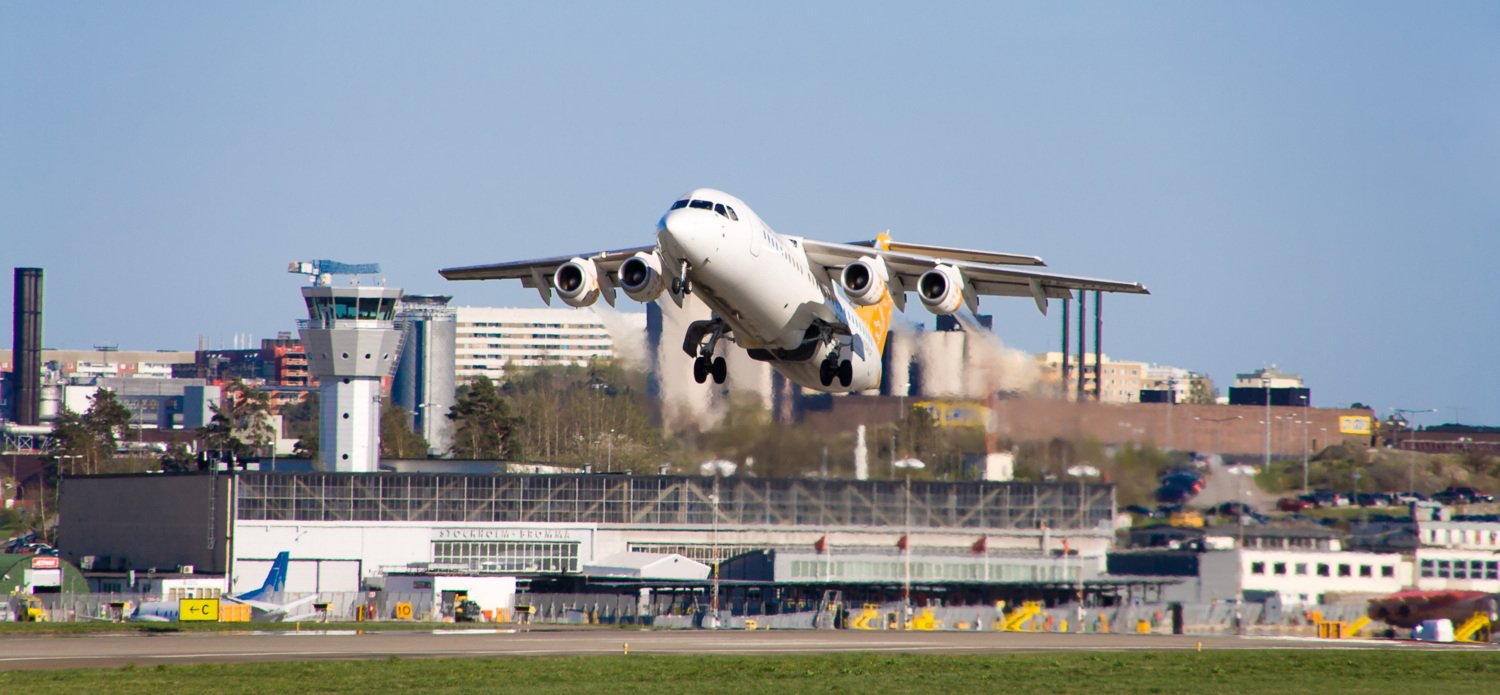
Exhaust emissions from kerosene‑powered aircraft contain ultrafine particles and several substances that are known or suspected to be carcinogenic. They should therefore be classified as presumed carcinogenic to humans.
This is shown in a new scientific assessment from the Nordic Expert Group for Criteria Documentation on Chemical Health Risks (NEG) and the Dutch expert committee DECOS, in which researchers at the Institute of Environmental Medicine (IMM) have played a leading role.
Aircraft exhaust contains very small particles that can penetrate deep into the lungs. The exhaust also contains polycyclic aromatic hydrocarbons (PAHs), metals and other substances that are known or suspected to be carcinogenic.

“There are still relatively few studies of aircraft exhaust specifically, but taken together the research shows that exposure may pose health risks. Aircraft exhaust also has many similarities to diesel exhaust, which has long been classified as carcinogenic to humans,” says Professor Gunnar Johanson at the Institute of Environmental Medicine, Karolinska Institutet.
The expert groups therefore considers that aircraft exhaust should be classified as presumed carcinogenic to humans (EU cancer category 1B) and as suspected mutagenic.
“Above all, the results are important for people who work close to aircraft at airports, such as baggage handlers, technicians and refuelling staff. This knowledge is needed to assess risks and strengthen work environment efforts,” says Gunnar Johanson.
However, there is not yet sufficient evidence to establish a health-based limit value for aircraft exhaust in the work environment. For the time being, it is therefore recommended that existing limit values for diesel exhaust, PAHs and other health-hazardous substances found in aircraft exhaust be applied.