
Meis Omran awarded a fellowship for research on hereditary cancer
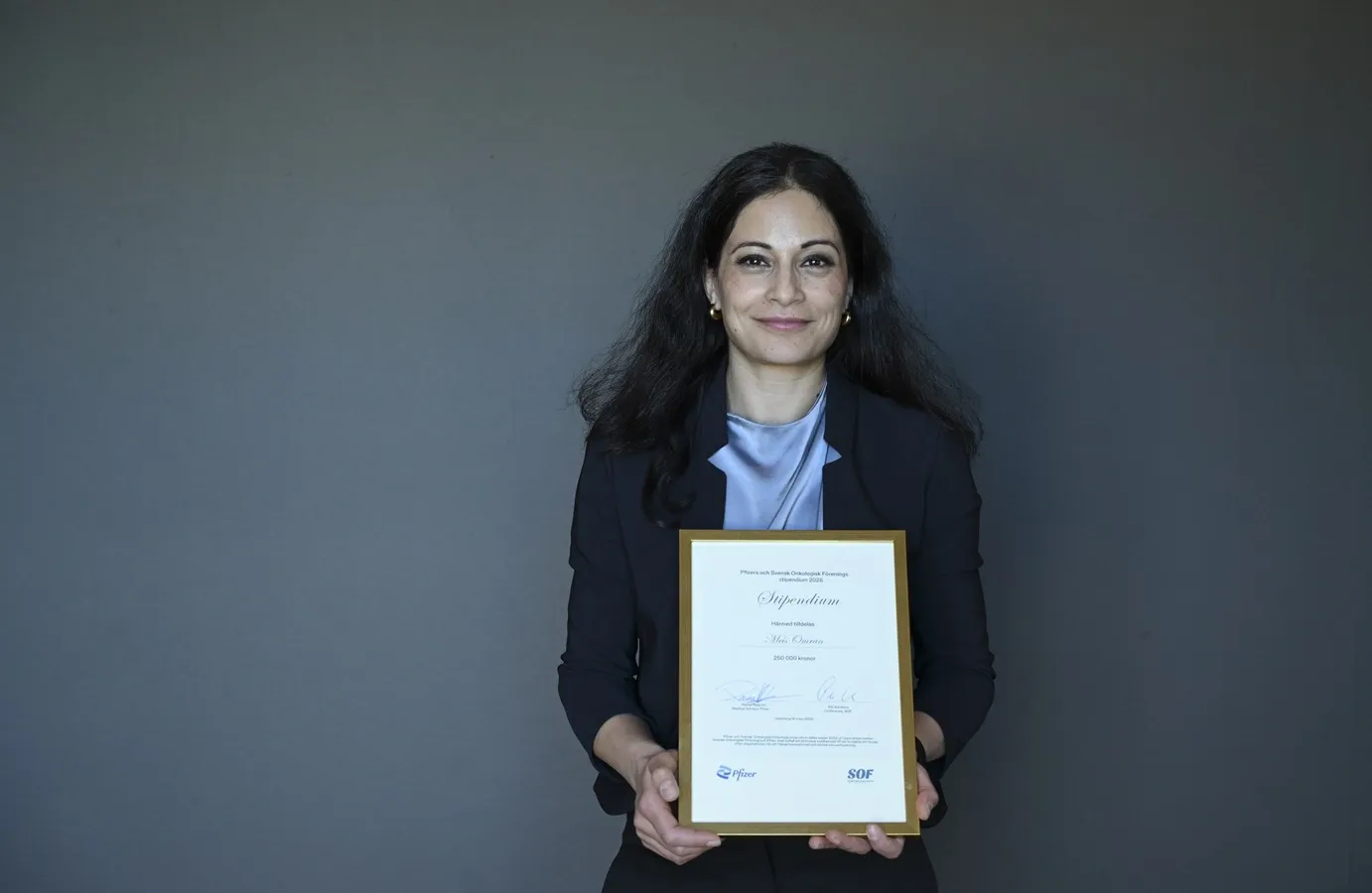
Meis Omran has been awarded the Pfizer and Swedish Society of Oncology (SOF) postdoctoral research fellowship. The SEK 250,000 award supports her study exploring how patients with a hereditary risk of cancer experience the transition from paediatric to adult healthcare.
The fellowship was established in 2022 to encourage more members to continue their research after completing their PhD, thereby strengthening translational and clinical cancer research.
Meis Omran is a postdoctoral researcher at the Department of Oncology‑Pathology at Karolinska Institutet and a specialist in oncology at Karolinska University Hospital. This year’s fellowship was presented during SOF’s annual meeting in Gothenburg on 19 March.
About the study
Hereditary tumour‑predisposition syndromes account for around ten per cent of all cancer cases in children and adolescents. These patients are therefore often followed in dedicated surveillance programmes to enable early detection and reduce the risk of severe disease. The study includes, among others, patients with Li‑Fraumeni syndrome, a condition linked to mutations in the TP53 gene and associated with a very high lifetime risk of several cancers.
Through interviews with patients, parents, and healthcare professionals, the study examines how the transition from paediatric to adult care is experienced and what support or structures are needed. The project was carried out at university hospitals in Toronto, Canada, and is now being completed in Sweden.
Towards more patient‑centred care transitions
The findings may help to develop more integrated care pathways and strengthen follow‑up for patients with a hereditary risk of cancer.
“Patients with hereditary tumour‑predisposition syndromes often require lifelong follow‑up, as the risk of developing cancer can persist throughout their lives. We still know relatively little about how the transition from paediatric surveillance programmes to adult follow‑up is experienced by patients and healthcare professionals", says Meis Omran.
She continues:
"We aim to increase understanding of how this transition can be organised in a more coherent and patient‑centred way. The fellowship enables me to complete the project and also represents an important step in my continued development as a researcher in hereditary cancer, with a long‑term goal of leading clinical studies that can improve care for patients with hereditary breast cancer.”
This text is based on a press release from the Swedish Society of Oncology.