

Mapping the diversity of chronic lymphocytic leukemia at single-cell resolution
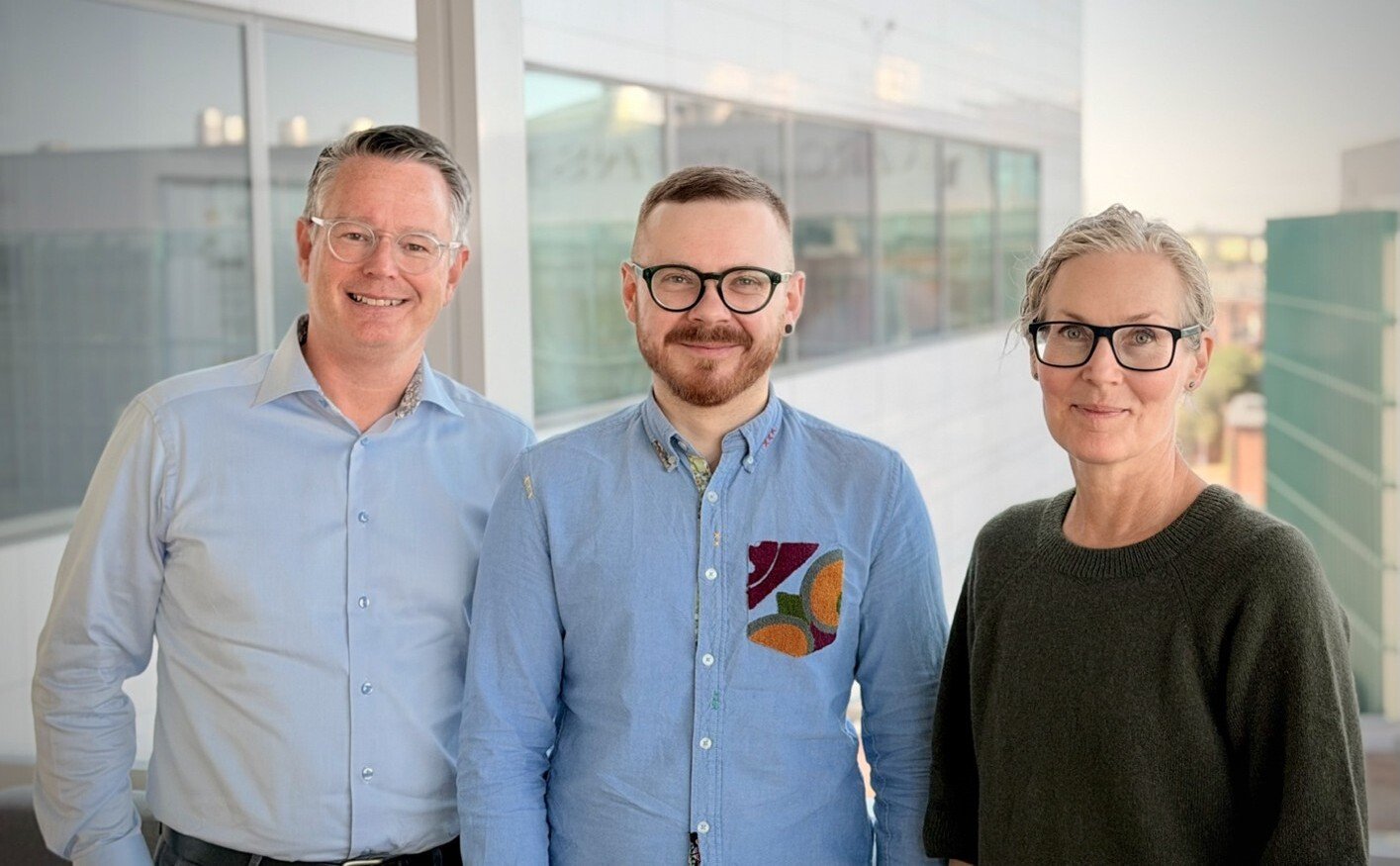
Two patients with chronic lymphocytic leukemia (CLL) can face very different futures. One may live for decades without needing treatment, while another may develop rapidly progressing disease. In a new study from Karolinska Institutet, published in the journal Blood Neoplasia, American Society of Hematology, researchers map what distinguishes the two patient groups.
Some of these differences are reflected in distinct groups of patients defined by expressing highly similar B-cell receptors, known as stereotyped subsets. In the study, researchers at Karolinska Institutet and international collaborators uses single-cell sequencing to investigate what distinguishes these subsets at the cellular and molecular level.
Profiling leukemia one cell at a time
Researchers from the Clinical Genetics research group at the Department of Molecular Medicine and Surgery, together with colleagues in the United States, Greece and the Czech Republic, profiled 48,557 individual cells from 13 untreated patients with CLL. The patients represented the clinically aggressive stereotyped subsets #1 and #2 and the indolent subset #4.
Each subset showed a distinct molecular profile. Subset #1 was characterized by stress- and survival-related programs, subset #2 by increased metabolic and growth-related activity, while subset #4 showed a more quiescent profile, in line with its generally indolent disease course.
Catching active leukemic cells in the blood
A particularly striking difference emerged in small populations of cells carrying molecular signs of recent activation and proliferation.
CLL cells primarily receive signals to grow and divide within supportive environments such as the lymph nodes, while most cells circulating in the blood are comparatively resting. Yet the researchers could identify cells in peripheral blood that retained the molecular signature of this more active state.
These “active-state” cells were present in every patient, but were considerably more frequent in the aggressive subsets, reflecting the higher cellular turnover associated with more progressive disease.
“We are essentially catching a small population of cells in the blood that still carries the molecular imprint of a more active state,” says Blaž Oder, first author of the study. “In bulk sequencing, their distinct molecular profile can easily be diluted in the average, while single-cell sequencing allows us to identify these cells individually”, he continues.
Diversity within the leukemia
The study also revealed diversity within individual leukemic clones. In 11 of the 13 patients, cells had accumulated additional mutations in the genes encoding their B-cell receptors, providing evidence of ongoing diversification.
“CLL is not simply a uniform population of identical cells,” says Cecilia Österholm Corbascio, joint senior author of the study. She continues: “By combining gene expression with B-cell receptor information at the single-cell level, we can see both the different cellular states among the leukemic cells and how the clone continues to diversify.”
Together, these findings reveal multiple layers of diversity in CLL: not only between stereotyped subsets, but also between cells belonging to the same leukemic clone.
“We have known for many years that patients belonging to different stereotyped subsets can have remarkably different clinical outcomes,” says Richard Rosenquist Brandell, Professor of Clinical Genetics and joint senior author. “This study brings us closer to understanding the cellular and molecular processes underlying those differences”, he continues.
Publication
Single-cell sequencing reveals transcriptional and immunogenetic diversity in stereotyped chronic lymphocytic leukemia Blaž Oder, Leily Rabbani, Teresa del Peso Santos, Sameer A. Parikh, Karla Plevova, Larry Mansouri, Anastasia Chatzidimitriou, Sarka Pospisilova, Neil E. Kay, Kostas Stamatopoulos, Cecilia Österholm and Richard Rosenquist. Blood Neoplasia (2026). doi.org/10.1016/j.bneo.2026.100282