

Heart rhythm monitoring with a smartphone could save healthcare resources
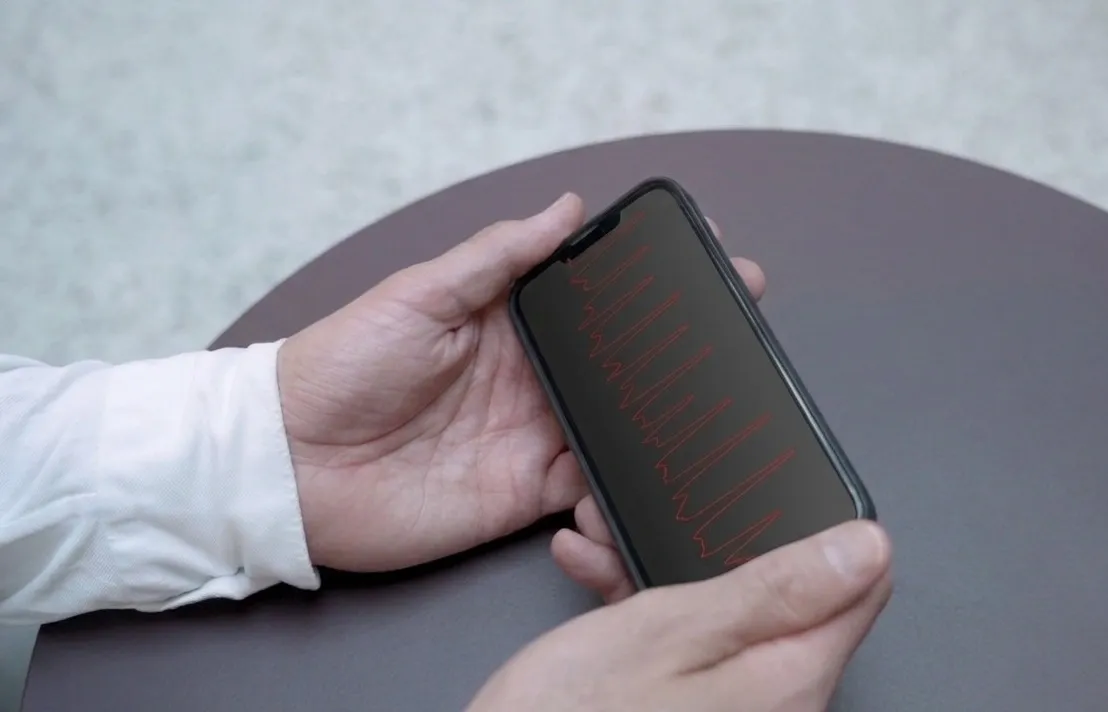
Smartphone-based heart rhythm monitoring from home can reduce same-day cancellations and help save significant healthcare resources ahead of planned electrical cardioversion in patients with atrial fibrillation. This is shown in a new study published in JAMA Cardiology by researchers at Karolinska Institutet and Danderyd Hospital.
Atrial fibrillation is the most common cardiac arrhythmia in adults. It causes the heart to beat irregularly, and often too fast. When medication is not enough to control symptoms, electrical cardioversion can be used to restore the heart’s normal rhythm. During the procedure, the heart receives a controlled electrical impulse while the patient is under brief general anaesthesia.
It’s an established treatment but requires skilled staff and careful patient preparation. A practical challenge is that many patients spontaneously return to normal heart rhythm ahead of treatment, without realising it. If this is not detected until the day of the procedure, the cardioversion must be cancelled at short notice, and the allocated resources go unused.
Blood flow in the fingertip
The randomised clinical trial was conducted between 2022 and 2025 at Danderyd Hospital in Stockholm, Sweden, and included patients scheduled for electrical cardioversion for atrial fibrillation. The researchers investigated whether daily heart rhythm monitoring at home using a smartphone could reduce these late cancellations.
The technology, called CORAI, is based on photoplethysmography, or PPG, in which the phone’s camera is used to measure small changes in blood flow in the fingertip. Based on these pulse waves, heart rhythm can be assessed with high accuracy.
Patients in the active monitoring group recorded their heart rhythm twice daily using a smartphone for one to two weeks ahead of their planned cardioversion. If the recordings showed that a patient had spontaneously returned to normal heart rhythm, the patient was contacted, the rhythm was confirmed with a standard ECG, and the cardioversion could be cancelled in advance. The control group represented standard care.
Fewer late cancellations
206 patients were randomised to either active heart rhythm monitoring with a smartphone or no monitoring. In the monitored group, 4.8 percent of cardioversions were cancelled on the same day, compared with 23.2 percent in the control group. When looking specifically at late cancellations caused by spontaneous return to normal heart rhythm, the difference was even greater: 1.0 percent in the intervention group compared with 18.2 percent in the control group, corresponding to a relative risk reduction of 94.7 percent.

“We are pleased to see that the method could help avoid unnecessary healthcare visits, and that so many patients were able to record their heart rhythm independently from home using a smartphone,” says Jonatan Fernstad, a physician, engineer and researcher in cardiology at the Department of Clinical Sciences, Danderyd Hospital, Karolinska Institutet who has developed the technology.
Early detection is important
In the control group, many patients had recordings showing normal heart rhythm before cardioversion, but only three contacted their healthcare provider to discuss cancelling their planned procedure. This shows that objective heart rhythm monitoring at home can provide healthcare providers with information that might otherwise be missed.

“Among the patients who participated in the study, 99 percent owned a smartphone even though the median age was 70 years. This means that smartphone-based heart rhythm diagnostics has the potential to improve access to heart rhythm assessment more generally,” says Johan Engdahl, professor of cardiology at Karolinska Institutet and senior consultant at the Department of Cardiology, Danderyd Hospital.
“This is important because untreated atrial fibrillation increases the risk of stroke and heart failure. In upcoming research projects, we will study how effective the method is at detecting previously unknown atrial fibrillation compared with current methods used in healthcare,” he continues.
The research was funded by Vinnova and the Swedish Heart-Lung Foundation. Jonatan Fernstad is the founder of Corai Medicinteknik AB. Some of the authors have received fees and grants from pharmaceutical/medtech companies. Full disclosure of all authors’ interests is available in the scientific article.
Publication
“Precardioversion Heart Rhythm Monitoring Using Smartphone Photoplethysmography – The SMARTBEATS Randomized Clinical Trial”, Jonatan Fernstad, Emma Svennberg, Peter Åberg, Johan Engdahl, JAMA Cardiology, online 3 June 2026, doi: 10.1001/jamacardio.2026.1269.