
Four rapid fire questions for the Centre for Health Crises’ new expert coordinators in primary care
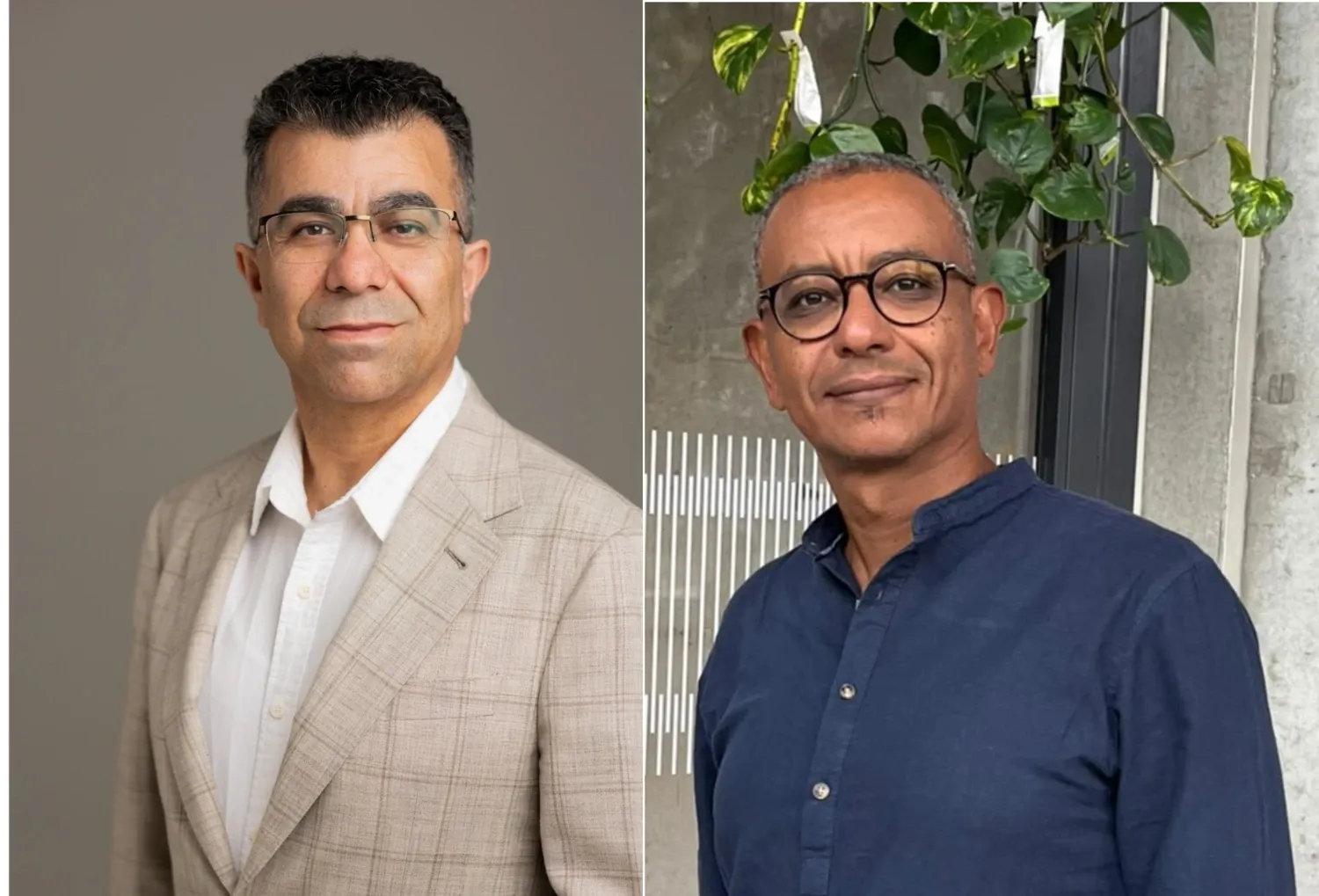
From 1 September, the Centre for Health Crises is strengthening its expertise in the important field of primary care in health crises through the appointment two expert coordinators in the area. Faraidoun Moradi and Hani Khalifa are both specialist doctors in general medicine and have on a range of issues related to general medicine and crises, disasters, and particularly vulnerable groups for a long time. They are now looking forward to becoming part of the Centre’s work.
Hi Faraidoun, tell us a bit more about yourself
I am a flexible and attentive GP who enjoys working collaboratively and welcoming different perspectives and experiences. I divide my time between working as a GP at a primary care clinic in Gothenburg and as a researcher affiliated with the Centre for Disaster Medicine at the University of Gothenburg, and now also my role as expert coordinator here at the Centre for Health Crises at KI. I also have a background as a pharmacist and I have a master’s degree in pharmaceutical science from the University of London.
What is the most important thing you bring with you into your new role?
I believe that many of my previous experiences, as well as who I am as a person, will shape how I approach this role. In particular, my long and broad experience in primary care, especially in community-based healthcare, as well as my multilingualism and ability to understand people from different backgrounds and their perspectives. Moreover, I have both worked clinically and conducted research in disaster-stricken areas and with vulnerable groups.
One concrete experience of working during in a health crisis that I bring with me is that during the COVID-19 pandemic I initiated and was responsible for the Corona hotline. It was a telephone service where people could call and receive advice and support in several different languages. The hotline was staffed by healthcare professionals and began as an initiative in the Västra Götaland Region before later becoming national.
Why is it important to include primary care as a perspective in issues related to health crises and preparedness?
Because primary care is the form of healthcare closest to the population. We are geographically closest, we meet people most often, and we know them best. That is true in everyday life, and it is also true in a crisis. As a form of health care, we also have both staffing and logistical resources, but I believe the ability to mobilise them quickly plays a decisive strategic role in a health crisis and in preparedness.
What are you most looking forward to in your new role at the Centre for Health Crises?
There are three issues that I am particularly looking forward to working on:
Contributing to strengthening the role of primary care in health crises. My goal is for primary care not only to be seen as an implementer during a crisis, but also as a stakeholder in the planning, coordination and development of health crises preparedness.
I am also looking forward to promoting more coherent and clearer management and coordination structures at national, regional and local level during health crises and within preparedness. In addition, I want to contribute to research that identifies and fills knowledge gaps regarding the role, function and needs of primary care during health crises and other societal disruptions.
Hi Hani, tell us a bit about yourself:
I am a specialist in general medicine and work as a senior consultant and medically responsible physician at the urgent care centre (närakut) in Järva, Stockholm. In addition to that, I have been teaching epidemiology here at KI for several years, in collaboration with the Centre for Health Crises, including for KI’s research school, master’s students and students taking executive and professional courses before going on to work for humanitarian aid organisations. And since 1 September, I have also been an expert coordinator at the Centre.
Another important experience I have is working with Médecins Sans Frontières in several crises and disasters, ranging from epidemic response to health interventions during natural disasters, wars and conflicts. I have also worked with the World Health Organization’s, WHO’s, global response operation, and during the COVID-19 pandemic I was a medical expert in the Swedish National Board of Health and Welfare’s special organisation.
In general, I would say that I am a curious and open person with a strong commitment to collaboration.
Why is primary care an important issue in health crises and preparedness?
Just as Faradouin said, primary care is a form of healthcare that is close to the population, and because of that it plays a central role in maintaining continuity of care, even during a crisis, especially for particular risk groups.
Primary care therefore needs to be able to adapt quickly during a health crisis, which includes being able to prioritise, triage and collaborate with other parts of the healthcare system and society at large.
What is the most important thing you bring with you into your new role?
My experience that no two crises are the same. I know that because I have worked in so many different types of crises, both in Sweden and internationally. At the same time, that experience has also taught me that there are always lessons to be learned from previous crises in preparation for the next one. Ensuring that lessons from previous crises are not lost in preparedness for future ones is something I want to bring into the work I will do at the Centre.
I also bring with me my ambition to build bridges between research, other forms of knowledge development and the practical realities of healthcare. In that work, the Centre for Health Crises is an important arena.
What are you most looking forward to in your new role at the Centre for Health Crises?
Overall, I am looking forward to continuing to explore the role of universities as an independent knowledge base in emergency preparedness, together with my new colleagues. It is an area where I know the Centre is already doing work, so it will be interesting to become part of that.
Furthermore, I want to help develop collaboration between “my areas”: academia, primary care and community healthcare. How the experiences and conditions of primary care can become a clearer part of health crises preparedness, and what roles primary care and other community healthcare services can play in different crises, are questions I look forward to working with.