

Conferences and symposiums StratNeuro/Wenner-Gren Guest Lecture with Professor David J. Anderson
Welcome to the StratNeuro/Wenner-Gren Guest Lecture: "Neural circuits and population dynamics controlling innate social behaviors and their associated internal states" with Professor David J. Anderson (Caltech, USA). The lecture will take place on Thursday, September 24th, at 14:00 in the Wallenbergsalen, Nobel Forum (Campus Solna).
Title: "Neural circuits and population dynamics controlling innate social behaviors and their associated internal states"
Innate survival behaviors such as fighting, mating and predator defense are associated with affective or emotion states. Finding neural representations of such states using supervised analyses is challenging due to a lack of direct state measures. To overcome this limitation, we have performed unsupervised modeling of single-trial neural data acquired during naturalistic social behaviors, using recurrent Switching Linear Dynamical Systems (rSLDS). rSLDS learns a dynamics matrix based on latent factor activity in a state-space approximated by a set of linear substates, yielding a probabilistic model of neural dynamics. When used to model single-trial calcium imaging data recorded from hypothalamic “attack” neurons during aggressive encounters, rSLDS discovered an approximate line attractor that represents the intensity and duration of a scalable and persistent state of aggressiveness. I will discuss features of this representation, evidence for its local instantiation in the hypothalamus, mechanistic implementation and generalization to other social behaviors. Together, these results extend the potential role of line attractor dynamics beyond the representation of cognitive variables, to the representation of affective internal states. They also identify a tractable experimental platform to investigate how circuit-level mechanisms give rise to emergent network dynamics at the manifold level in the mammalian brain.
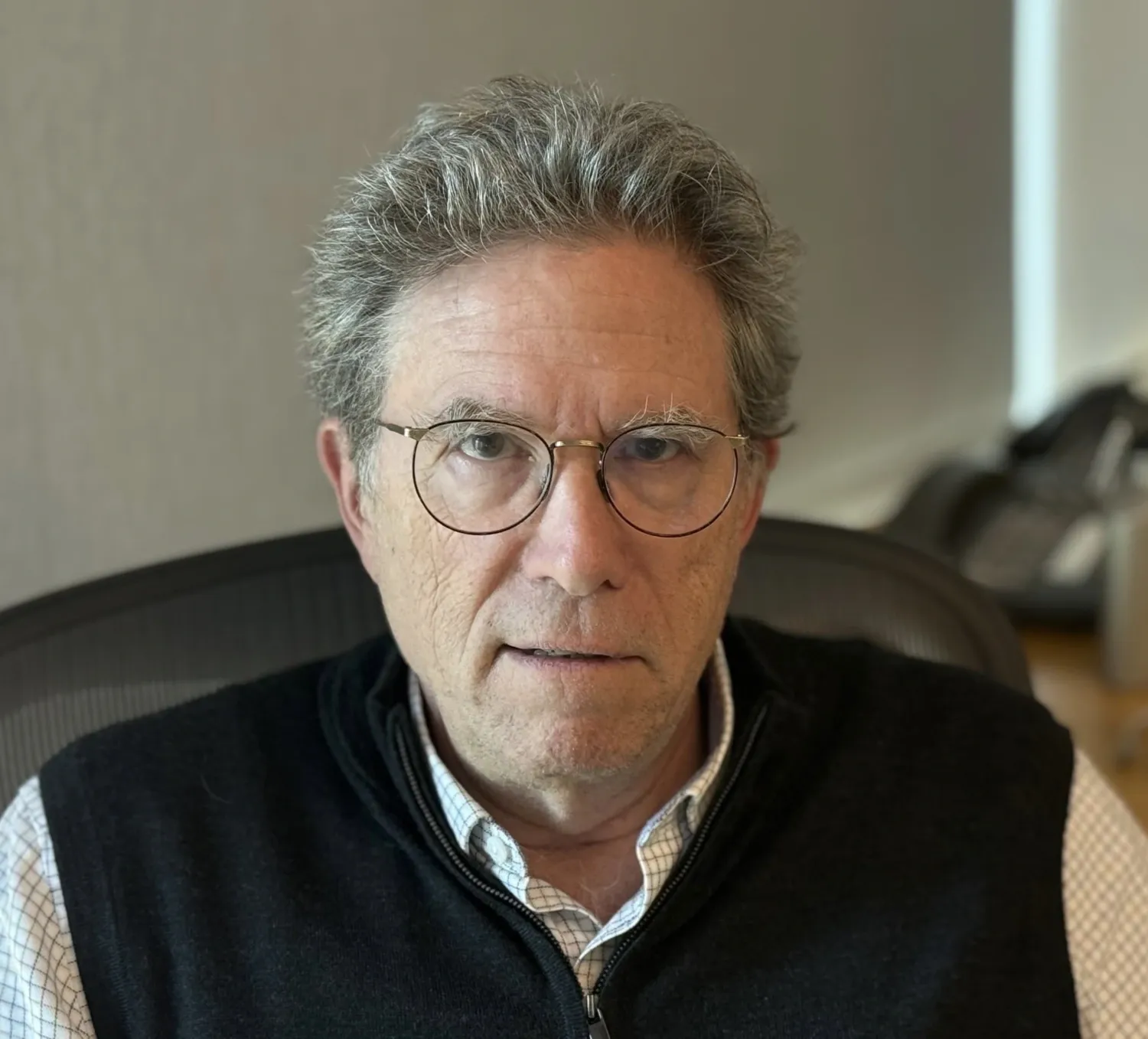
About the speaker
David J. Anderson has been a member of the faculty in the Division of Biology and Biological Engineering at the California Institute of Technology in Pasadena since 1986. He is currently the Director of the TianQiao and Chrissy Chen Institute for Neuroscience at Caltech, and an Investigator of the Howard Hughes Medical Institute. Dr. Anderson received his AB from Harvard College in 1978, did his PhD training with the late Günter Blobel, a Nobel Laureate at The Rockefeller University, and his postdoctoral work with Richard Axel, a Nobel Laureate at Columbia. He is an alumnus of the 1979 MBL Neurobiology Course. Dr. Anderson's research career has spanned multiple topics in neuroscience, from the study of neural crest stem cells that generate the developing peripheral nervous system, to the neural circuits that mediate innate emotional behaviors, such as fear and aggression.
Dr. Anderson has published over 225 primary research articles and is the co-author with Caltech colleague Ralph Adolphs of The Neuroscience of Emotion: a New Synthesis (2018, Princeton University Press). Dr. Anderson has trained over 50 PhD students or postdoctoral fellows. He received the W. Alden Spencer Award in Neurobiology from Columbia University in 1999, has been elected to the American Academy of Arts and Sciences (2002), the US National Academy of Sciences (2007), and is a recipient of the 2017 Perl-UNC Neuroscience Prize and the 2018 Edward M. Scolnick Prize in Neuroscience from MIT. Dr. Anderson played a key role as an adviser to the late Paul Allen in the founding of the Allen Institute for Brain Sciences and the creation of the Allen Brain Atlas, and continues to serve as an adviser to that Institute. He has also served on two working groups for the NIH's BRAIN (Brain Research through Advancing Innovation in Neurotechnology) Initiative.
Dr. Anderson has engaged in the public communication of science through several channels. He published an OpEd in the New York Times, The Alchemy of Stem Cell Research (July 15, 2001), has delivered a TEDx talk ("Your Brain is More than a Bag of Chemicals, " 2013) which has received almost 1.5 million views, has appeared on NPRs TED Radio Hour to discuss the talk, the National Edition of NPRs All Things Considered with Jon Hamilton (2019), and two episodes of Charlie Rose's Brain Series hosted by Nobel Laureate Eric Kandel. His work on aggression in fruit flies has been profiled in the NY Times ("To study aggression, a fight club for flies," Feb. 3rd 2014). He has published two books, The Neuroscience of Emotion: A new synthesis (2018) with Ralph Adolphs, and The Nature of the Beast: How emotions guide us (2022).