
Hope for protecting and restoring fertility of childhood cancer survivors
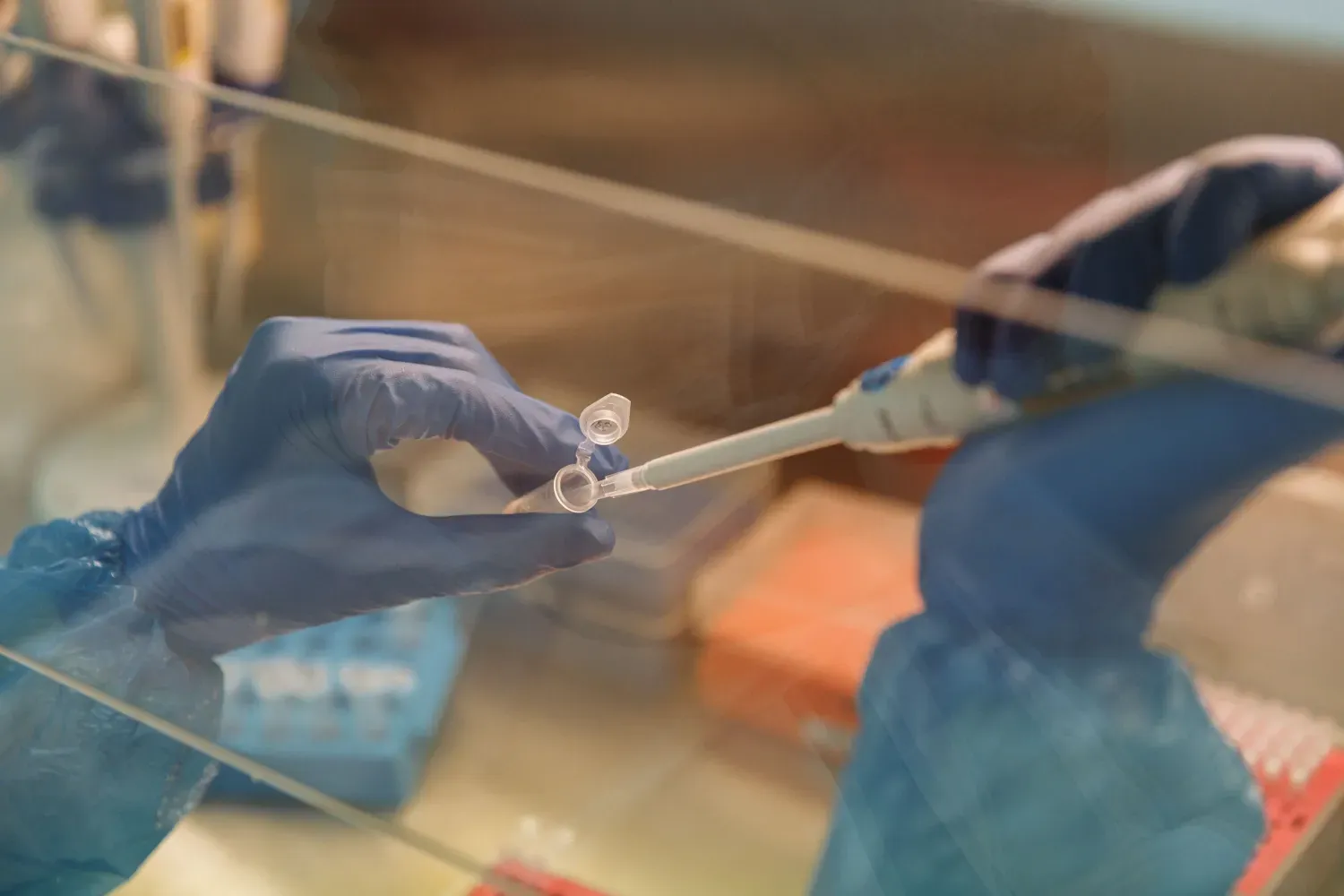
Researchers at Karolinska Institutet have demonstrated that it is possible to create early germ cells from preserved testicular tissue of young boys facing cancer therapy. The study, published in the journal Human Reproduction Open, may eventually contribute to new ways of protecting and restoring fertility after childhood cancer.
Some children undergoing intensive cancer treatments are at risk of becoming infertile because these therapies can also damage the cells that will later form sperm. In the current study, researchers investigated whether other remaining cells in the testicle can be used to recreate these sperm precursors.
The researchers used frozen testicular tissue from two prepubertal boys who had been treated for cancer and had very few remaining germ cells. The remaining supporting cells were isolated from the tissue and reprogrammed into so-called induced pluripotent stem cells, cells that can develop into many different cell types. These were then directed to become early germ cells, known as primordial germ cells.
A crucial proof-of-concept
“Our results show that it is possible to generate induced pluripotent stem cells to produce early germ cells from frozen testicular tissue, even when these samples are severely affected by cancer treatment,” says the first author Tiago Macedo, researcher at the Department of Women's and Children's Health, KI.
The researchers used a clinically compatible reprogramming protocol that facilitates future translational applications. The reprogrammed stem cells passed standard quality checks and were further directed into early germ cells using two different methods with a relatively high efficiency.
This is a proof-of-concept study, which means that it shows that the methods and experimental pipeline are possible, but not that it is ready for use in healthcare. More studies are needed to ensure the robustness of the results, to further mature the germ cells obtained here, and to comprehensively validate safety before any clinical application.
Long term vision for regenerative medicine
“In the short term, the findings will contribute to understanding how cancer treatment affects germ cells and the regenerative potential of the preserved tissues, helping us to develop protective strategies. In the long term, it could pave the way for new regenerative treatments to restore fertility in cancer survivors,” says the leading author João Pedro Alves-Lopes, researcher at the same department.
The study was conducted in collaboration with the NORDFERTIL consortium, Karolinska University Hospital, and other Universities and Hospitals in Sweden, Finland and Belgium. The research was funded by, among others, the Birgitta and Carl-Axel Rydbeck’s Research Grant for Paediatric Research, the Swedish Research Council, the Swedish Childhood Cancer Foundation and several international research programs. The researchers state that there are no conflicts of interest.
Publication
"Human iPSCs derived from cryopreserved testicular somatic cells enable germline regeneration in childhood cancer survivors", Tiago Macedo, Claudia De Guidi, Leah Nic Aodha, Nageswara Rao Boggavarapu, Maja Piechocka, Xuan Ye, Francesca Mastropasqua, Victoria Keros, Ulrika Norén Nyström, Per Frisk, Pia Johansson, Kristiina Tammimies, Yoni Baert, Kirsi Jahnukainen, Jan-Bernd Stukenborg, João Pedro Alves-Lopes. Human Reproduction Open, online 3 June 2026, doi: 10.1093/hropen/hoag054.