
Grant to explore nasal drug delivery for Alzheimer’s disease

A researcher at Karolinska Institutet has been awarded a three-year fellowship from the US Alzheimer’s Association to study a new, non-invasive way of delivering potential treatments to the brain in Alzheimer’s disease.
Muhammad Faisal, postdoctoral fellow at the Division of Clinical Geriatrics, NVS, has received funding from the Alzheimer’s Association Research Fellowship (AARF). The grant amounts to USD 199,695 and will support the project “Non-Invasive Intranasal Delivery of Painless NGF for Alzheimer’s Disease” during the period 2026–2029.
Alzheimer’s disease is the most common cause of dementia. It damages brain cells through processes such as the build-up of amyloid‑β plaques and tau tangles, leading to memory loss and other cognitive problems. Current treatments can ease symptoms to a limited extent, but they do not stop the disease or restore lost brain function.
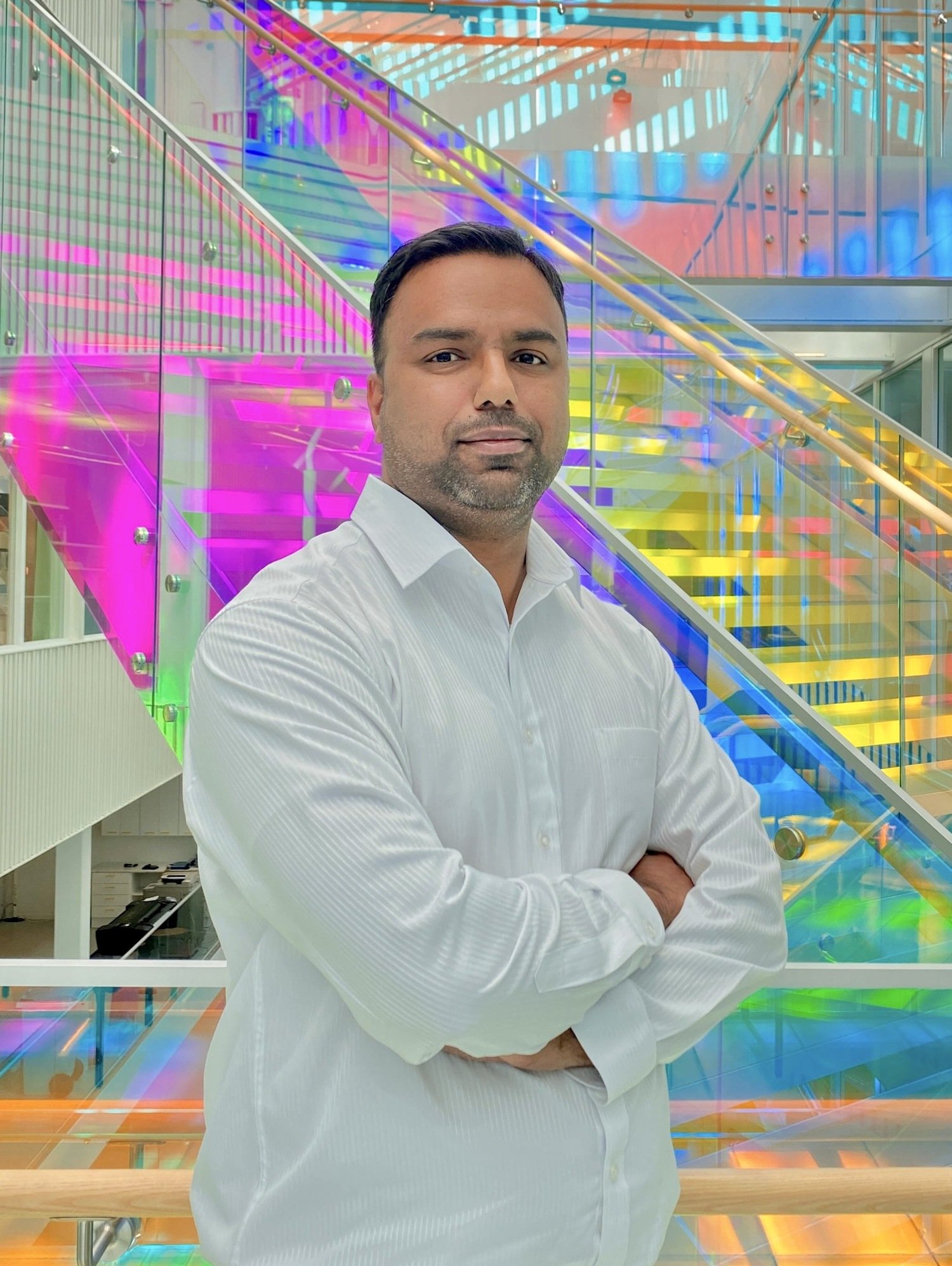
“One of the main challenges is that many treatments cannot reach the brain effectively,” says Muhammad Faisal at the Department of Neurobiology, Care Sciences och Society. “That creates a strong need to explore alternative delivery methods.”
The project focuses on nerve growth factor, or NGF – a protein that supports the survival and function of certain nerve cells that are especially vulnerable in Alzheimer’s disease. Previous clinical studies by the research group have shown that NGF can improve brain function when delivered using implanted devices. However, NGF given through the bloodstream cannot pass the blood–brain barrier, which protects the brain from harmful substances but also blocks many medicines.
More patient-friendly
To address this, the new project will develop two types of nasal delivery systems. One uses tiny fat-based particles, called liposomes, to transport NGF protein through the nose to the brain. The second uses lipid nanoparticles carrying NGF messenger RNA, which could allow brain cells to produce NGF over a longer period.
“What I am most looking forward to is developing a non-invasive way to deliver therapeutic proteins to the brain,” Muhammad Faisal says. “Using the nasal route could be more patient-friendly and help overcome one of the biggest obstacles in Alzheimer’s research.”
The study is supervised by Sumonto Mitra, research specialist, and mentored by Maria Eriksdotter, professor and senior physician, both at the Department of Neurobiology, Care Sciences and Society at Karolinska Institutet. The interdisciplinary project combines expertise in neuroscience, geriatrics and drug delivery, with the long-term goal of improving future treatment strategies for people with Alzheimer’s disease.
Reflecting on receiving the grant, Muhammad says: “It was a strong motivation to see the project recognised. For me, research is about creating something that can make a real difference in people’s lives.”