

Lectures and seminars What we saw in Gaza – Attacks on Health Care and Other Challenges
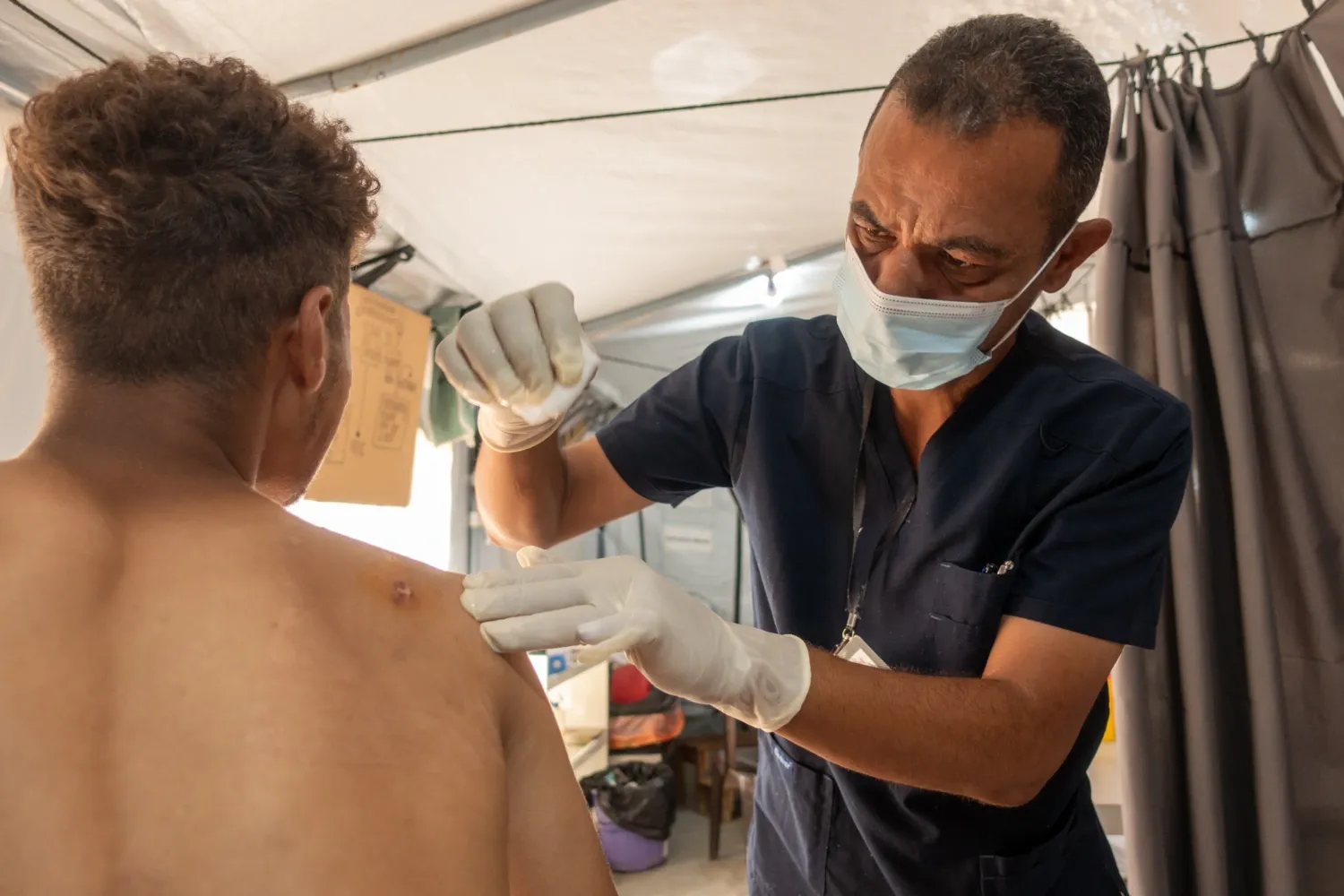
The Centre for Health Crises and the research group Global Disaster Medicine - Health Needs and Response welcome you to a seminar exploring the realities of delivering healthcare in Gaza, as well as other wars, conflicts and humanitarian emergencies. We will hear from medical staff that have recently returned from, or are still working in, Gaza. They will share their insights and reflect on the many challenges, operational, ethical and otherwise, of delivering medical care in Gaza.
Please note that the venue for this seminar has changed. It will be held in the Andreas Vesalius hall, in the Berzeliuslaboratoriet building (Berzelius väg 3, KI campus Solna)
About the seminar:
In Gaza, the humanitarian situation is dire. Widespread destruction, severe shortages of food, medicine, and fuel, and escalating civilian casualties are placing extraordinary strain on an already devastated health system.
There, just like in many places around the world, health care is being delivered in places where there is an ongoing war, conflict and/or humanitarian emergency. Even though they are protected under humanitarian international law hospitals, clinics, ambulances, patients, and healthcare workers are increasingly being targeted and it is becoming more difficult, and more dangerous, to help those in need. Gaza is among the places in the world where these challenges are being felt most acutely.
Drawing on their extensive experience of working with delivering humanitarian health care in war, conflicts, as well as their recent insights from Gaza and their research and other academic work, our panellists will share their experiences and reflect on the ethical and operational challenges, and human dimensions, of providing health care in Gaza at the moment, and in conflicts in general. What are the consequences of destroying a health care system? How local health care workers in non-functional health systems can be supported? And not least, how can we keep helping those in need, in spite of the risks?
About the panelists and what they will speak on:
Luca Pigozzi, MD, MPH, has worked as a medical team leader and medical coordinator for Médecins Sans Frontières (MSF) in multiple complex emergencies, such as in Syria, Sudan Afghanistan and Congo DRC. For the past years he has been the sub-national Health Cluster Coordinator for the WHO in Ukraine, and most recently he is working as an Emergency Medical Team leader in Gaza.
In his presentation, Dr Pigozzi will share insights on how to coordinate emergency medical responses in active conflict zones and reflect on the operational and ethical challenges you face.
Martina Gustavsson, PhD, is a registered nurse, currently working as a postdoctoral researcher at the Department of Global Public Health. She has worked with MSF in places such as South Sudan, the Democratic Republic of the Congo, Haiti, and with UK-Med in Ukraine. Dr Gustavsson has recently come back from working with UK-Med in Gaza.
Drawing on her experiences of clinical work in conflicts, and her research about ethical dilemmas and moral distress among health care personnel, she will talk about the professional responsibility in situations where healthcare systems are under direct threat.
Buster Sandgren, MD, PhD is an orthopedic surgeon working at the Artro Clinic, Sofiahemmet, Stockholm. He has had several assignments for MSF since 2015, in places such as Haiti and the Central African Republic, and has recently returned from Gaza.
In his presentation, he will focus on high energy, open injuries to extremities, describing the different stages orthopedic trauma and particularly on the situation for the 24 000 (according to unvalidated figures from WHO) patients in need of advanced surgery in Gaza.
The panel will be moderated by Märit Halmin, MD, PhD. She is specialised in anesthesia and intensive care, affiliated to the research group Global Disaster Medicine - Health Needs and Response and an expert coordinator in critical care with limited resources at the Centre for Health Crises, both at KI. Dr Halmin has worked in humanitarian missions with MSF and the WHO, in places such as Afghanistan, Yemen, Syria, Lebanon and Cameroon. This summer she worked in Gaza.
About the Centre for Health Crises:
The centre mobilises and coordinates interdisciplinary expertise and know-how with the aim of developing the role of universities in supporting society before, during and after health crises. By driving policy development, gathering and building expertise, developing educational activities and catalysing research collaborations, we build the next generation of health crisis experts, and work to ensure that knowledge and proven experience guide decision-making and preparedness.
About Global Disaster Medicine - Health Needs and Response
The group is an interdisciplinary research group in global disaster medicine, at the Department of Global Public Health at KI, led by Professor Johan von Schreeb. Their work involves research, teaching, policy advice, external monitoring, and field work in disasters. Their aim, across all the work they do, is to contribute to strengthening and improving Swedish and international health care response in the event of major disasters. The group is a WHO Collaborating Centre and a research centre for the Swedish National Board of Health and Welfare.
Register to attend:
Click here to register to attend.
Please note that the number of seats in the venue is limited. If you have registered to attend and are not able to, please email healthcrises@ki.se so that we can give your seat to someone else.