

Lectures and seminars Frontiers in Neural Circuits seminar series: with Thomas Südhof
Title: Towards understanding the molecular logic of synaptic connections. September 3 at 11:00 at Nobel Forum.
Welcome all members of Karolinska Institutet, as well as researchers and trainees from KTH Royal Institute of Technology, Stockholm University, and other universities in the Stockholm region. We warmly encourage students, postdocs, and faculty to attend and engage with our distinguished guest.
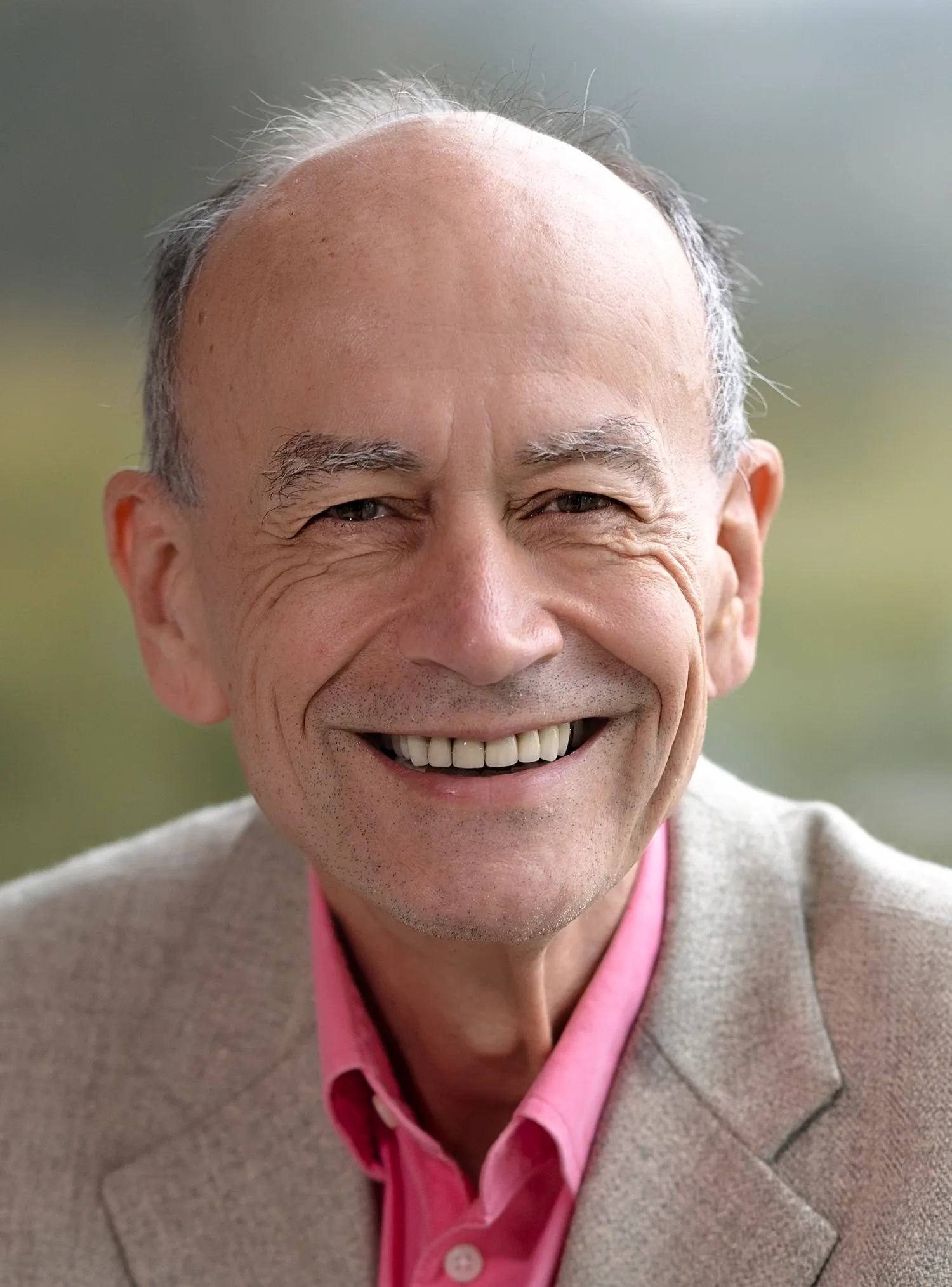
Speaker:
Thomas Südhof, Stanford University, USA
Time: 3 September, 11:00–12:00
Location: Nobel Forum, Nobels väg 1 in Solna
Title: Towards understanding the molecular logic of synaptic connections
Abstract:
Synapses constitute the fundamental computational unit of the brain that connect neurons into neural circuits and determine the information processing power of a given circuit. Neuroscience has achieved a basic understanding of presynaptic neurotransmitter release and postsynaptic neurotransmitter reception at synapses, but how synapses are formed and specified remains an enduring enigma. We hypothesize that the synaptic assembly of neural circuits is based on a molecular code that controls synapse formation and synapse specification. This logic is dependent on the interactions between pre- and postsynaptic recognition and signaling molecules. Understanding how synaptic recognition and signaling molecules build synapses and control their properties is one of the key open questions in neurobiology. Synapses are essentially intercellular junctions in which pre- and postsynaptic specializations are organized to mediate neurotransmitter release and neurotransmitter reception, respectively. As intercellular junctions, synapses are organized by synaptic adhesion molecules (SAMs) whose primary function is to mediate bidirectional trans-synaptic signaling processes, with little or any adhesion functions despite their names. Our recent studies uncovered a central role of multiple families of SAMs in synapse assembly, including neurexins and their ligands as well as the adhesion-GPCRs Latrophilins and BAIs and their ligands. In my talk, I will discuss our most recent findings on SAMs in synapse assembly to illustrate how the results of our and other laboratories’ studies on SAMs are not only significant for insight into how neural circuits are constructed but are also informative for neuropsychiatric and neurodegenerative diseases in which SAMs play a central role.
Recent papers:
Alternative splicing of latrophilin-3 controls synapse formation.
Wang S, DeLeon C, Sun W, Quake SR, Roth BL, Südhof TC
Nature 2024 Feb;626(7997):128-135
The cortical amygdala consolidates a socially transmitted long-term memory.
Liu Z, Sun W, Ng YH, Dong H, Quake SR, Südhof TC
Nature 2024 Aug;632(8024):366-374
Reconstitution of synaptic junctions orchestrated by teneurin-latrophilin complexes.
Zhang X, Chen X, Matúš D, Südhof TC
Science 2025 Jan;387(6731):322-329
Refreshments
Sandwiches and coffee will be provided.
Registration
No registration is needed.