
Welcome Andri Lemarquis, new Assistant Professor at Labmed
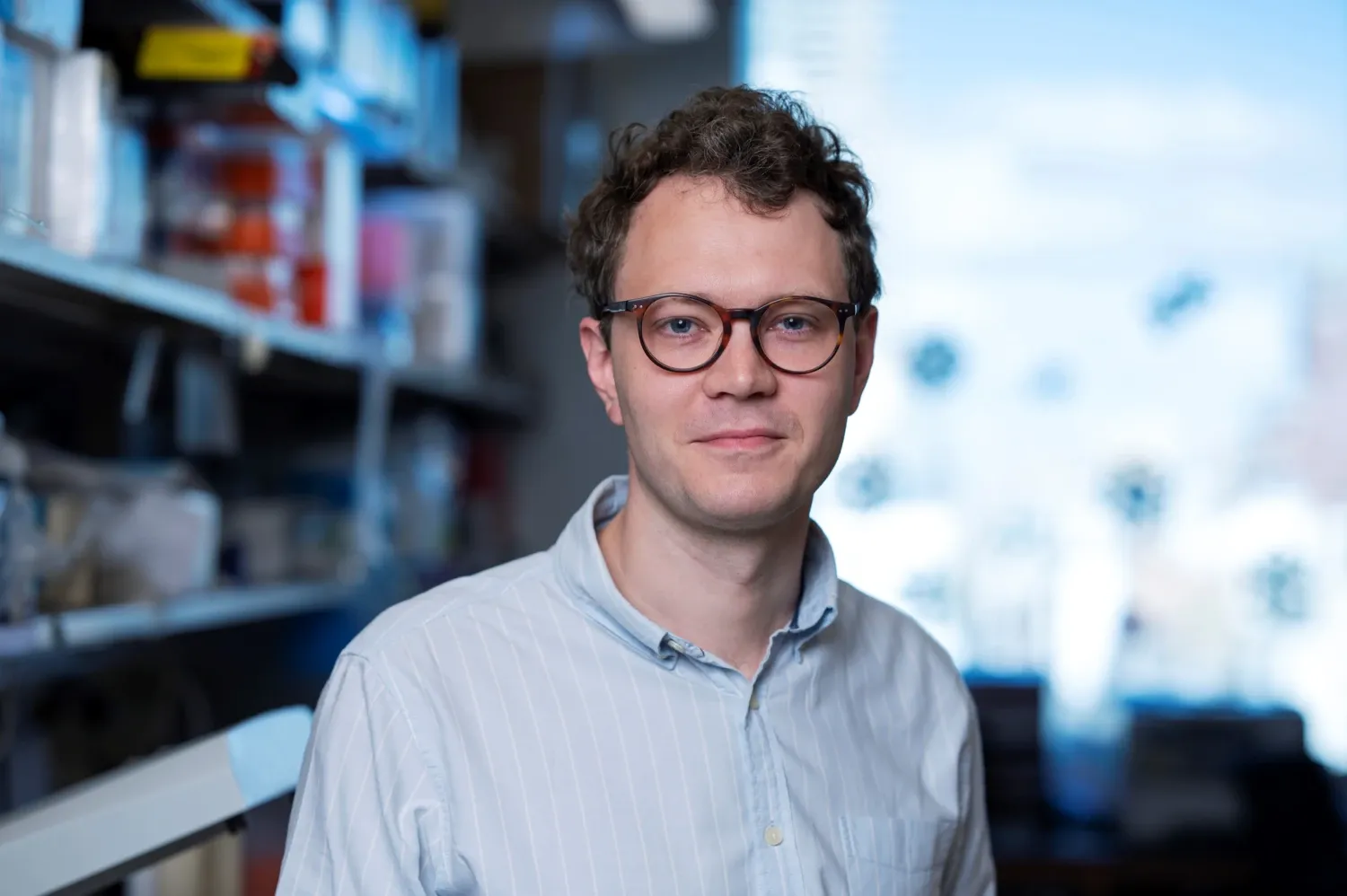
Andri Lemarquis is a new Assistant Professor at Labmed since 1 July and the candidate selected by Labmed in KI’s major call for Assistant Professors last year. With a background from Iceland, Sweden and the USA, he studies how the thymus and T cells can repair the immune system after cancer treatment and other immunological damage.
What is your academic background?
"I'm a physician-scientist of Icelandic and French descent. I've lived in Iceland, France, the Netherlands, Sweden and the US. I did both my MD and my PhD at the University of Iceland, with part of the PhD carried out in the Netherlands and afterwards trained in pediatrics at Sahlgrenska in Gothenburg. During my clinical training I encountered too many patients whose immune systems was failing. While I did some research along with my clinical duties, it became clear to me that the therapies to repair immunity were missing and I needed dedicate time to investigate it. That’s what pulled me to New York for postdoctoral training in the van den Brink lab at Memorial Sloan Kettering. I worked on regulatory T cells and how they mediate immune regeneration after cancer therapy. Two years later I was offered a team leader position at City of Hope in Los Angeles, where I spent the last two years leading a group of amazing people focusing on immune regeneration, with a particular focus on a beautiful organ called the thymus!"
What will be the main focus of your research at Labmed?
"Regenerating immunity in patients undergoing cancer therapies. As an immunologist, my biggest scientific love is the organ that produces our T cells: the thymus. It is remarkably fragile: chemotherapy, radiation, infection, pregnancy, stress, and simple ageing all damage it. It also has one of the most impressive capacities to regenerate of any organ in the body. And that regeneration rebuilds our adaptive immune response. Some of the factors driving that regeneration are known, but the cells that emerge from a regenerating thymus remain poorly understood. My group studies how the thymus repairs itself after injury, focusing specifically what the first T cells, called recent thymic emigrants, do in the blood as well as in tumors or other injured tissues. In the lab we combine lineage-tracing models, sequencing and spatial transcriptomics on human tissue, coupled to simple biomarkers of recent thymic emigrants that lets us assess thymic output directly in healthy individuals and in patients. Ultimately, the long-term aim is to make thymic function something we can measure clinically, and understand when to treat it, in patients recovering from immune injury."
What attracted you to Karolinska Institutet and our department?
"First and foremost, Karolinska is an extraordinary place. It has an incredible history, spanning times when giants walked the earth and Astrid Fagraeus and others were establishing the existence of an immune system… all the way to modern times where we have a place with an incredible number of discoveries and therapies from a single institution. A plethora of discoveries given to modern medicine and human health. Together with the unique research environment Sweden has to offer, from population-level resources, large-scale biobanking and a genuinely collaborative translational culture it is a great place to be. Labmed attracted me because of its proximity to the clinic: CAST, the ATMP, GMP facilities, access to human thymic tissue, and the people here who really want to work across the preclinical to clinical boundary. Having translational medicine, technologies, and clinical diagnostics under one roof is unusual. In addition, moving back to the Nordics after several years in the US was a welcome part of the decision too for my family."
What goals or ambitions do you have for your research and research group in the coming years?
"I see a lab as three things: a) a therapeutic catalyst that creates new options for patients, b) a scientific enterprise that produces knowledge, and c) a talent hub that trains the next generation… and maybe I get to tag along and have some fun with nice people.
For the therapeutic goal, I think we need to move from describing immune regeneration to intervening in it: establishing thymic output as a clinical biomarker and using objective values to test whether we can accelerate T-cell recovery rather than simply waiting for it. Scientifically, I want to redefine how we think about the bridge between where a T cell is conceived and the peripheral compartment it enters. And on the talent side, a lab is an incubator for people, given the right environment, they grow. For me that means building a group with the right mix of mechanistic immunology, computational biology and clinical collaboration, and following what people are genuinely curious about."
When you are not working, what do you enjoy doing in your free time?
"I have three children, aged 2, 9 and 14, and they take up most of my non-working hours. My oldest son says I always have three obsessions running at a time, so this answer may vary, but right now it is being out with the kids on an old sailboat in the archipelago. I can also always be convinced to have fun cooking or eating some good food, reading some good literature, watching some arthouse cinema, travelling, running, and spending time with friends and family."