
"We are looking for new ways to treat cancer and autoimmune diseases"
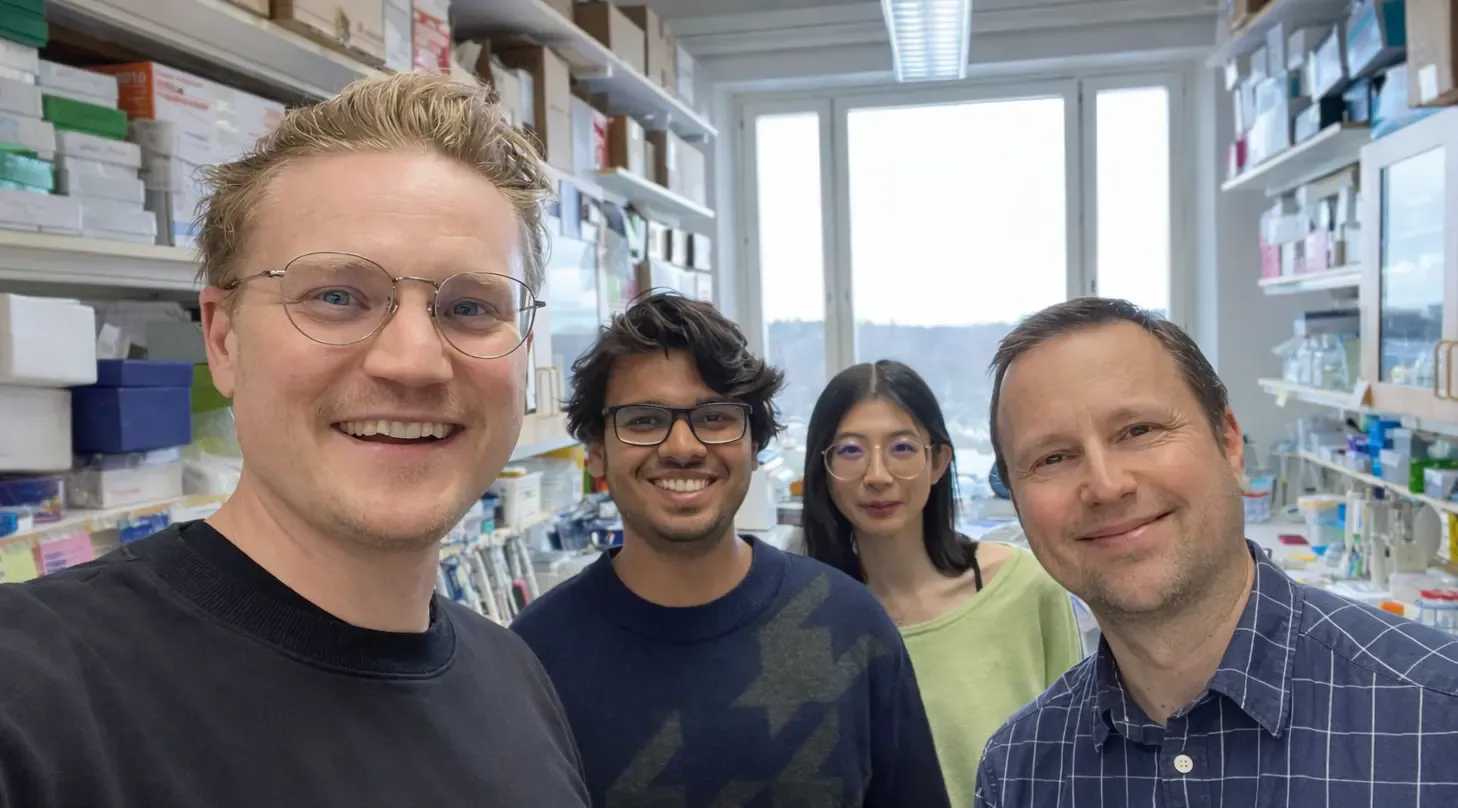
Meet Fredrik Wermeling, Research Group Leader at the Division of Rheumatology, Depatment of Medicine, Solna.
Our group develops and applies CRISPR-based methods to identify genes that drive disease processes in immune cells and cancer cells. The overarching goal is to find new potential drug targets: genes and signaling pathways that could serve as starting points for future treatments and diagnostics in cancer and autoimmune diseases.
White blood cells can fuel autoimmune disease
A major current focus is on neutrophils and their role in autoimmune disease, given their aggressive and often destructive properties. We believe that neutrophils can fuel a vicious inflammatory cycle that drives disease flares, excessive tissue damage, and disease progression. We have performed a genome-wide CRISPR screen in neutrophils and identified many genes that affect neutrophil migration. We are now validating these candidates to identify new ways to limit neutrophil-driven tissue damage (without rendering individuals excessively susceptible to infections).
We also have a PET project where we, together with Olof Eriksson and Gunnar Antoni (Uppsala University), as well as Aikaterini Chatzidionysiou and Cidem Gentline at the Rheumatology Clinic in Solna, are evaluating a PET tracer that can track neutrophil localisation in a living organism. We use this in animal models of autoimmune joint inflammation and in patients with rheumatoid arthritis to understand neutrophil dynamics during disease development. We also have active collaborations with other colleagues within the Division of Rheumatology (MedS), including the groups of Per-Johan Jakobsson, Vivianne Malmström, Bruno Raposo, Lars Klareskog, and Alexander Espinosa.
Seeking new ways to combat drug resistance
Our second focus is to identify new ways to treat cancer and to counteract drug resistance. Here we use, among other approaches, CRISPR screening in combination with drugs to find strategies that make cancer cells more sensitive to treatment and reduce the risk of resistance development. In this area, we collaborate with the groups of Joakim Dahlin (MedS), Liv Eidsmo (MedS), Hans Grönlund (CNS), Richard Rosenquist Brandell (MMK), and David Lane (MTC).
Collaborations in an active research environment
The group is located at the Center for Molecular Medicine (CMM), floor 3, where we are surrounded by wonderful colleagues in a highly active research environment. Soham Deolankar (PhD student) focuses on understanding drug resistance in melanoma, Zhaojun Li (PhD student) is our neutrophil star, and Zsolt Kasza (lab manager) is the backbone of the lab and is involved in many projects, including a novel cytokine-based cancer immunotherapy. We also have other researchers and students who actively contribute to our current projects (Sanjay Boddul, Long Jiang, Paulina Fehring, Lilly Wallace).
Beyond research, we enjoy creating accessible web applications and YouTube content focused on analyzing and designing CRISPR screening experiments. Correlate latest web application and we have a CRISPR-relaterade YouTube-kanal.
About CRISPR
CRISPR (clustered regularly interspaced short palindromic repeats) is a genetic engineering technique also known as 'gene scissors'. The method has made it possible to influence, control and change the genetic code inside cells, which has opened up new possibilities for treating serious genetic diseases.