
We are developing novel tools to study infection and immunity
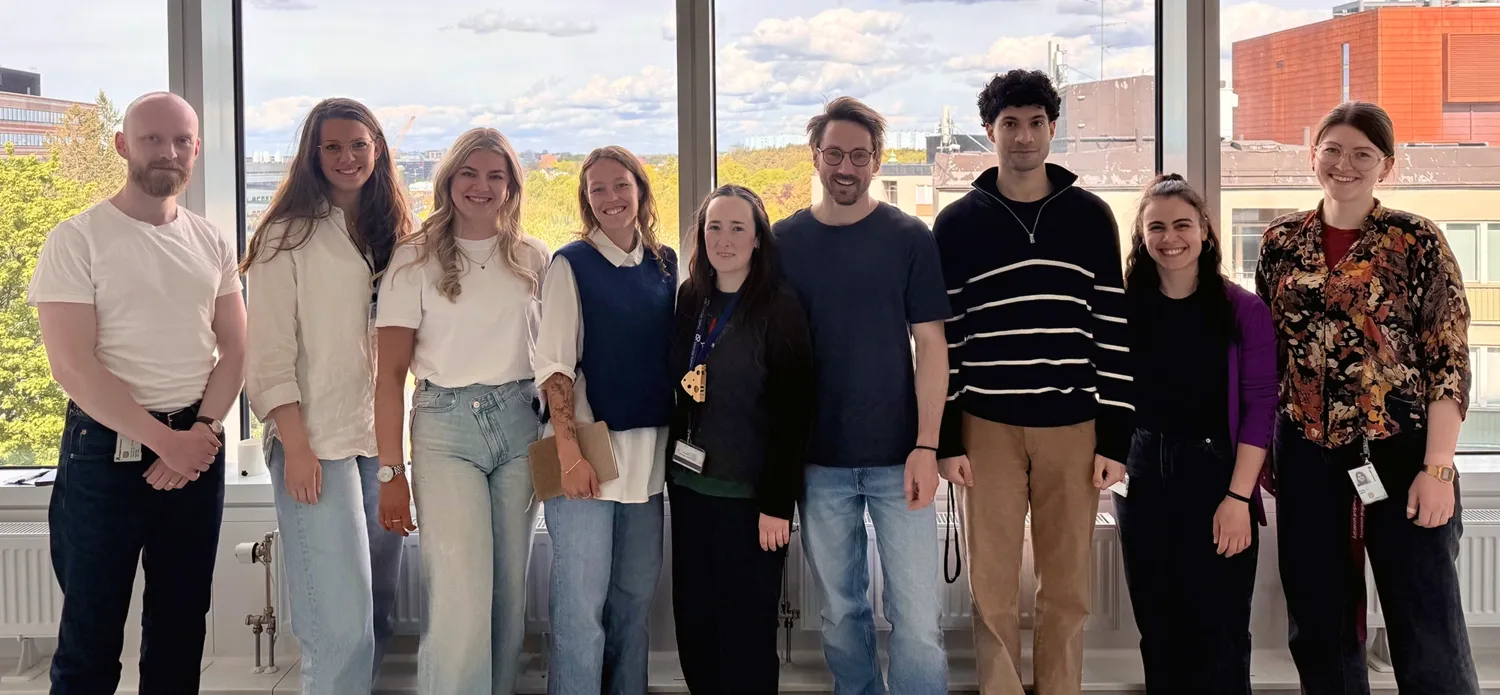
Meet Leo Hanke, Research team leader at the Division of Infectious Diseases at the Department of Medicine, Solna.
Our research team is broadly interested in pathogens and the immune responses against them, with a particular focus on highly pathogenic viruses with pandemic potential. A central part of our work is the development and application of new molecular tools to study fundamental mechanisms of infection and immunity.
Camelid nanobodies
Much of our work is based on a unique property of the immune system of camels and alpacas. In addition to conventional antibodies, these animals produce heavy-chain-only antibodies, which can be reduced to a small, stable fragment called nanobody. Nanobodies are only 10 percent the size of a conventional IgG antibody, but retain similar specificity and affinity, making them exceptionally versatile molecular tools.
In our lab, we use nanobodies in many different ways:
- • as large “swarms” to systematically explore viral surfaces
• as engineered, multivalent inhibitors to block viral infection
• as tools to rewire or redirect immune responses
• as chimeric antigen receptors (CARs) expressed on immune cells
• and as small tissue-penetrating probes for imaging and detection.
Linking structure, function, and immunity
To gain a molecular understanding of how our nanobodies work, we combine functional analysis with structural biology. Using cryo electron microscopy (cryo-EM), we study how nanobodies engage their targets, capture transient molecular states, and reveal functionally important regions. These structural insights are integrated with cell based assays and immunological measurements to link molecular mechanism with biological function.
Our overarching aim is to translate such mechanistic insight into improved vaccine antigens and antiviral strategies.
Lab location and collaboration
Our lab is located on the 7th floor of BioClinicum and part of the Division of Infectious Diseases. We actively engage in many local collaborations in nanobody discovery and protein engineering and participate in the EU consortium SHIELD where we contribute our expertise on Nipah and Lassa viruses and collaborate on the development of novel antivirals.
The projects are driven by three postdocs and three PhD students. Mirte Pascha develops tools to study Lassa virus infection, Iris Rocamonde Lago (KIRI postdoc joined with Erik Benson lab) is our biophysics expert and creates DNA origami patterns to probe viral entry mechanisms, Carl Johan Hagströmer, together with PhD student Anna Králová is building the structural biology unit in our team, Avadhoot Jadhav engineers nanobodies to redirect immune responses, and Amanda Borgenstam investigates functional aspects of Nipah virus entry.
Our lab also benefits greatly from the contributions of master’s thesis students, including Fares Elsaid (Hasselt University), Lea Braeckow (Heidelberg University), and Aliki Popidou (KI).