
Skull collection provides clues to historical Finnish eating habits
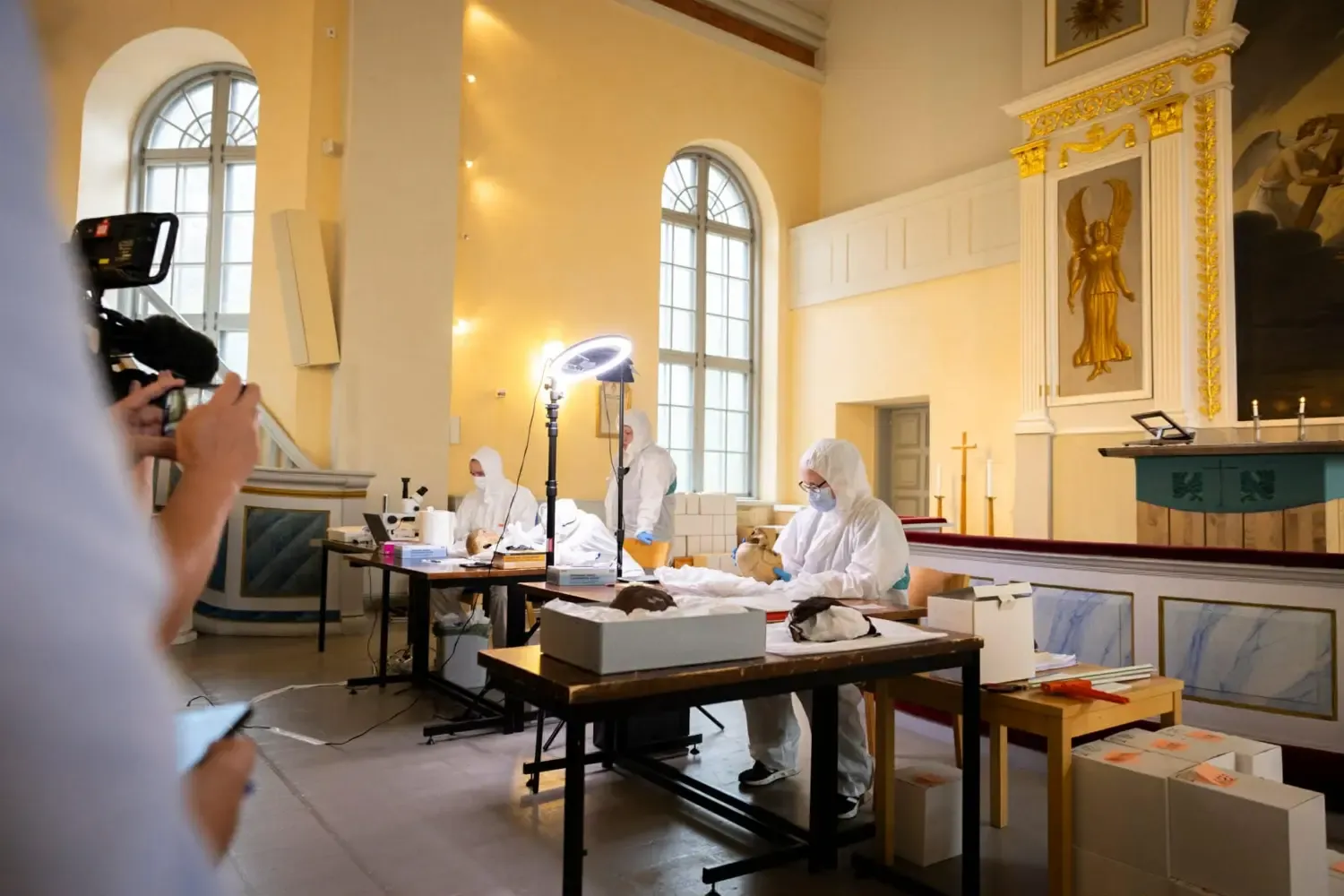
A research team from Finland has presented the initial findings from the sampling carried out in connection with the return of skulls from 82 Finnish individuals by Sweden and the Karolinska Institutet two years ago.
Researchers collected samples from Pälkäne Church, including DNA, isotope and protein samples, as well as soil and textiles. These analyses may provide important information about the history of the Finnish population and historical dietary habits and health. The researchers are also attempting to identify the burial sites of individuals of unknown origin and piece together their life stories.
The Finnish remains arrived in Sweden in 1873, having been brought back from abandoned cemeteries in Finland by the Swedish researcher Gustaf Retzius and two colleagues. Retzius‘ research was at the time within the fields of physical anthropology and “craniology“, and the Finnish remains became part of KI‘s anatomical collection.
Most of the skulls returned in 2024 had been collected from the Pälkäne ruins cemetery, though some came from other burial sites in Finland. Some originated from the Department of Anatomy in Helsinki and were gifts from Finnish researchers to Anders Retzius, the father of Gustaf Retzius.
Some of the skulls belonged to convicted prisoners who died while serving their sentences at Suomenlinna Fortress. From a historical perspective, the remains are not particularly old; the oldest date from the 15th century, and the youngest from the early 19th century.
Responsible research
The repatriation has attracted much attention, particularly in Finland.
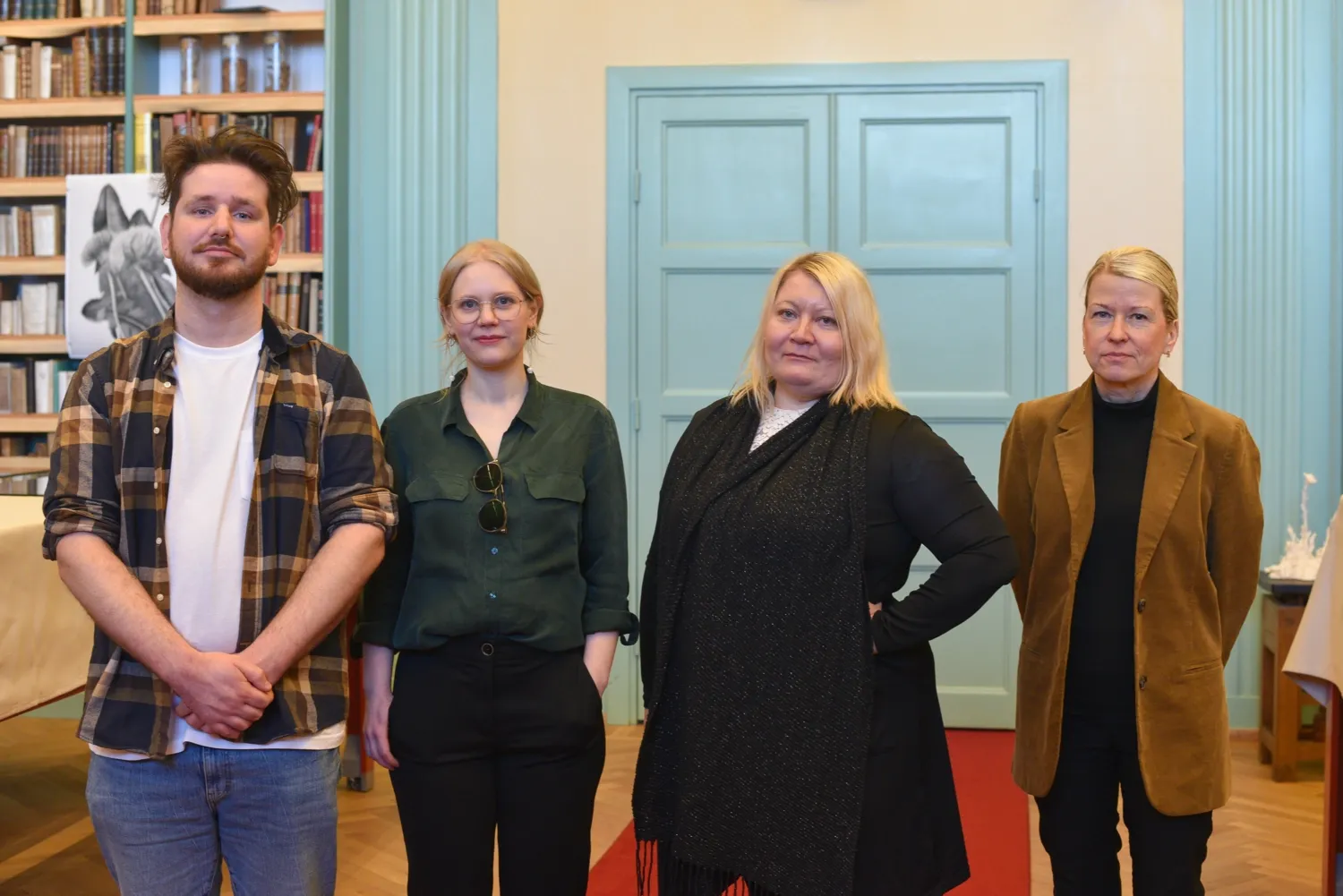
“I hope that our research project will demonstrate the value of this type of collection. Although such material is often considered problematic and challenging, it is possible to conduct responsible research. Through research, we can try to transform even difficult history into something positive,” says Ulla Nordfors, a bioarchaeologist at the University of Turku.
She considers the discovery of milk proteins in the samples taken from the Pälkäne churchyard ruins to be the most interesting finding so far. There are signs that the individuals were buried inside the church as they were mummified. An analysis of the proteins in their dental calculus also shows that they drank milk.
“To drink milk became common first in the late 19th century, so finding evidence of milk consumption dating back to the 18th century is truly fascinating,” she says.
DNA from the petrous bone
Finland’s population history is unique due to so-called bottlenecks in population development, resulting in small, fairly isolated population groups. This has resulted in certain characteristics becoming evident in the genetic material. As the population was small, few remains have been preserved.
“The fact that we now have genetic material from ancient individuals from north-eastern Finland is virtually unique,” says Sanni Peltola, a geneticist and postdoctoral researcher at the University of Turku.
The researchers expect that the information they can extract from the samples will provide the basis for several years of research. At Pälkäne Church, the petrous bone was recovered. This part of the skull contains the auditory bones and is an excellent source of ancient DNA. In some cases, teeth have also been recovered. The results are not yet final, but preliminary data indicate that the ancient DNA is of good quality.
Ancient DNA is special
Ancient DNA differs from that of living organisms. The moment a person dies, their DNA begins to break down into shorter chains because all repair processes stop. When someone is buried in the ground, decomposition by microorganisms also takes place.
“The long biomolecules in a living organism are therefore fragmented into ever shorter pieces of DNA,” explained Ronan O’Sullivan, a geneticist and postdoctoral researcher at the University of Turku, at a seminar at Karolinska Institutet on 17 March.
Historical DNA samples are also special because the proportion of genetic material from the ancient human may be as little as 0.1 per cent. The rest comes from the environment: bacteria and viruses in the soil or DNA from the person who excavated the remains. However, this does not mean that all other genetic material is uninteresting.
“We can also detect DNA from pathogens, which may indicate that an individual had certain diseases. Teeth are a particularly good source because they have a rich blood supply, and pathogens often travel in the blood,” said Ronan O’Sullivan.
Facial reconstructions
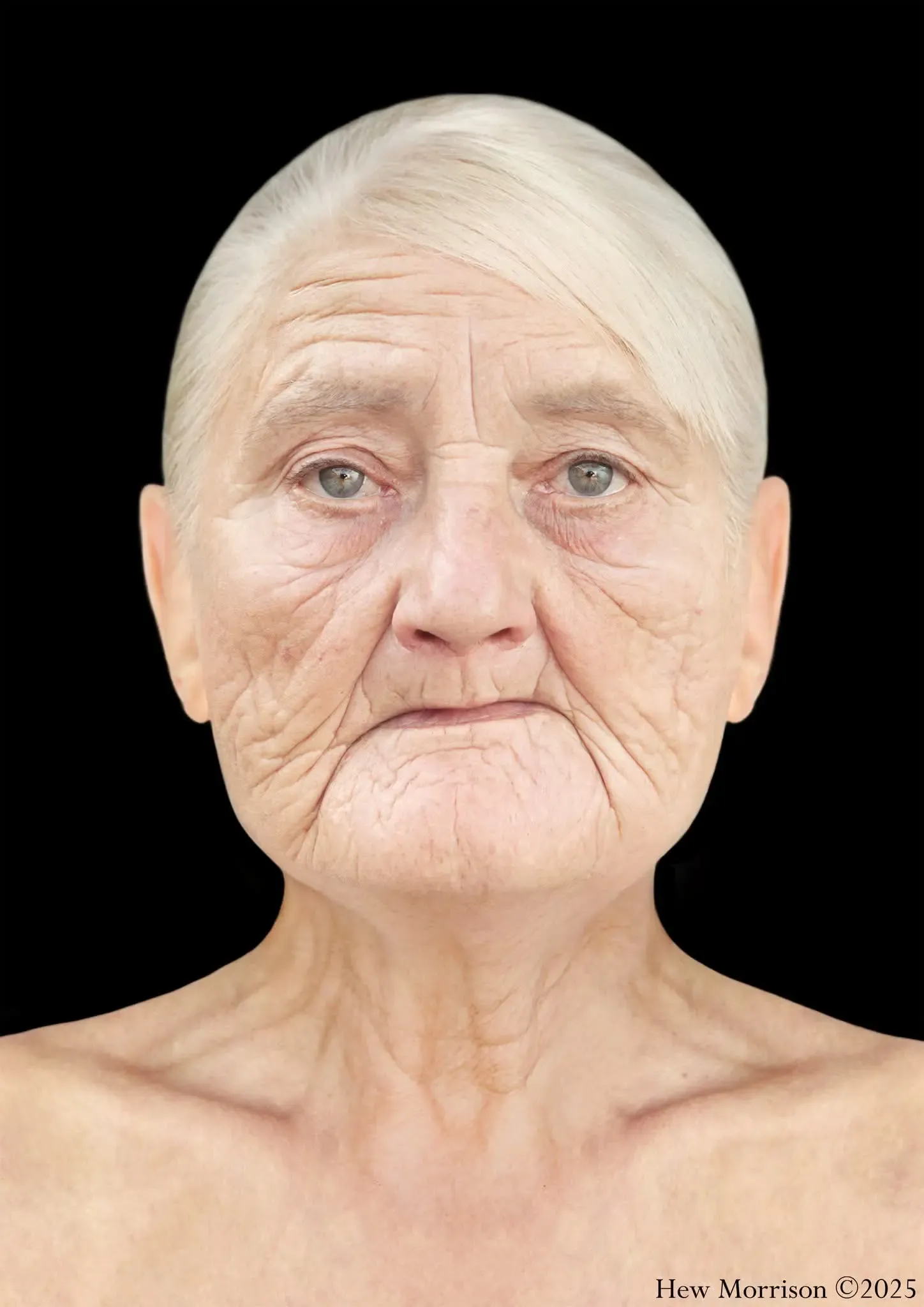
Forensic techniques have also been used to create a few facial reconstructions based on the skulls. These have been carried out by the forensic artist Hew Morrison, who usually works alongside police and crime scene investigators to reconstruct the appearance of unidentified individuals.
One of the images produced by the researchers depicts an elderly woman from Pälkärne Church who lost almost all her teeth during her lifetime. DNA samples indicate her probable eye and hair colour. Testing has also shown that she suffered from malnutrition, infection or chronic illness during her childhood.
Images of this kind are based on artistic interpretation, but reactions from relatives to police reconstructions have shown that they can be realistic. Therefore, it is possible that relatives of these individuals would recognise them, even if the images are not entirely accurate, said Ulla Nordfors at the seminar.
Follow the Finnish historical KAROL project on their Facebook page (in Finnish).