

New knowledge could make cancer immunotherapy more effective
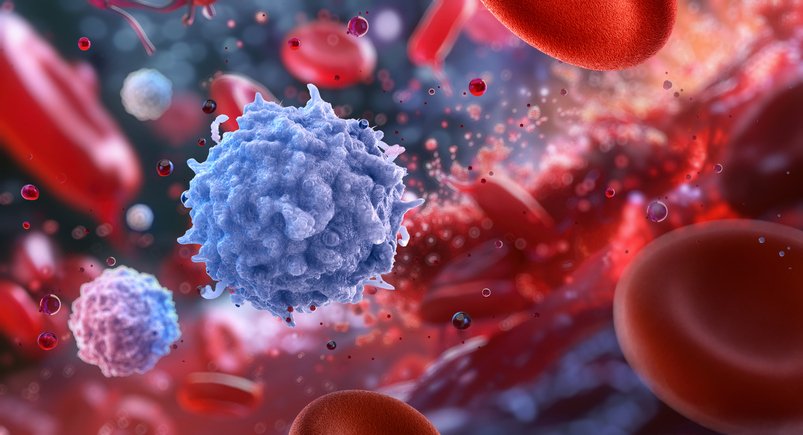
Immunotherapy that targets tumour-associated macrophages, a type of immune cell in the tumour microenvironment, only works if the cells have a functional system of molecules that enables them to respond to the treatment. This is shown in a new study from Karolinska Institutet, published in the journal Nature Communications. The findings may help identify which tumours could respond to the treatment and open up new combination therapies for cancer.
Immunotherapy has improved treatment for many cancer patients, but not everyone responds to treatment. To develop better therapies, greater knowledge is therefore needed about the mechanisms that determine whether a treatment works or not.
In the current study, the researchers investigated an immunotherapeutic strategy that targets macrophages in the tumour microenvironment. Macrophages can either support or counteract the body’s defence against cancer depending on how they are programmed. The treatment aims to alter the function of the macrophages so that they instead help the immune system fight the tumour.
The researchers found that the treatment depends on a group of receptors known as endosomal Toll-like receptors, particularly TLR9. When these receptors were absent, the macrophages remained in an immunosuppressive state, and the treatment did not affect tumour growth.

“Without these receptors, the treatment is ineffective. This knowledge makes it possible to investigate whether tumours are sensitive to this type of treatment, and it also paves the way for new combination therapies,” says Mikael Karlsson, Professor at the Department of Microbiology, Tumour and Cell Biology at Karolinska Institutet.
Enhanced effect
The study also shows that the effect of the treatment could be enhanced when the researchers combined the immunotherapy with substances that activate TLR9. The results therefore suggest that TLR9 could be used to boost the response and make the treatment more effective.
The researchers also analysed data from human tumour samples and observed links between the expression of the treatment target MARCO and TLR9 in breast cancer, among other cancers. This suggests that the mechanisms may also be relevant in humans.
The study was conducted at Karolinska Institutet in collaboration with the University of Toronto, Rockefeller University, and clinical departments at the university hospital. The researchers mainly used mouse models to investigate how different immunotherapies are affected by the receptors in question.
The next step is to use the new knowledge to develop and test new treatment strategies for cancer, including combinations of immunotherapies that could increase effectiveness in patients whose tumours are currently difficult to treat.
Publication
Cancer immunotherapy targeting murine myeloid cells requires endosomal pattern recognition.
Pan Y, Pei S, Liang H, Westberg K, Nitschke L, Chen X, Yu Y, He N, Lin Q, Lei L, Gisterå A, Hartman J, Ravetch JV, Mak TW, McGaha TL, Karlsson MCI
Nat Commun 2026 Jul;17(1):