
Johan Askling awarded scholarship for patient-centred research
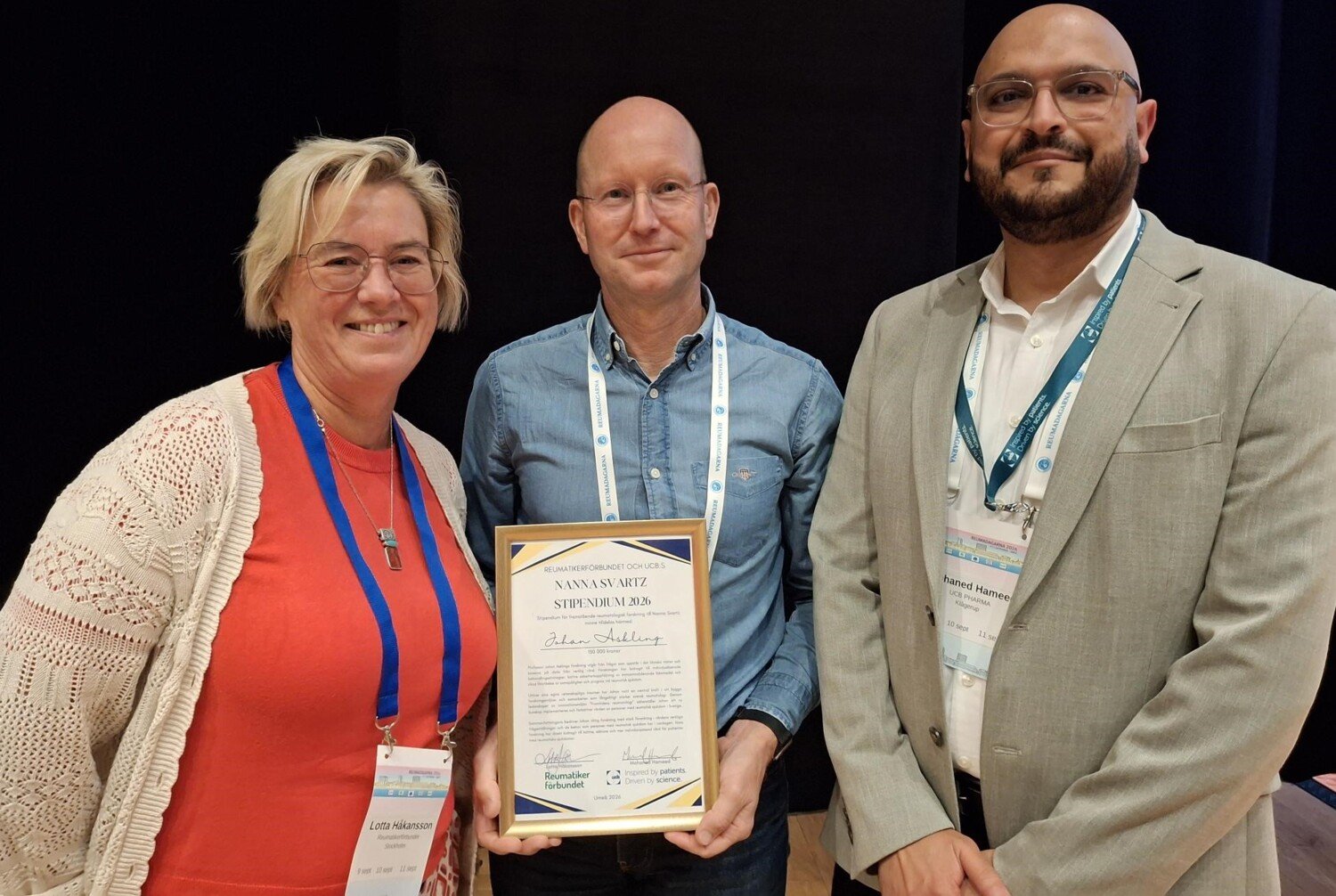
The 2026 Nanna Svartz Scholarship has been awarded to Johan Askling at Karolinska Institutet. He has been awarded the scholarship for his patient-centred research, which contributes to safer and more personalised care for people with rheumatic diseases.
Johan Askling is a professor of rheumatology and the epidemiology of rheumatic diseases at the Department of Medicine, Solna, at Karolinska Institutet, and a senior consultant at Karolinska University Hospital. He receives the grant of SEK 150,000, which is jointly awarded by the Swedish Rheumatism Association and the pharmaceutical company UCB in honour of Nanna Svartz (Sweden’s first female professor of medicine).
Research rooted in clinical practice
Johan Askling’s research is based on data from real-world clinical practice and on issues that arise in the interaction between patient and healthcare provider. Among other things, his research has contributed to more personalised treatments, safer monitoring of medicines and increased knowledge of other conditions that may occur alongside rheumatic diseases.
“All research into rheumatic diseases is, in one way or another, about minimising the risk of falling ill and maximising the chance of a good quality of life for those who have fallen ill,” says Johan Askling.
New knowledge to improve healthcare
The award citation also highlights his work in building research environments and collaborations. Through the ‘Framtidens reumatologi’ (Rheumatology of the future) innovation environment, he is working to ensure that new research findings are translated into clinical practice.
“To succeed in this, we must collaborate with the healthcare sector, and here the patient – that is, the individual – is at the focus,” says Johan Askling.
The scholarship was awarded on 9 September during the Rheumatology Days in Umeå.
This article is based on a press release from the Swedish Rheumatism Association.
About the Nanna Svartz Scholarship
The award was established to honour Sweden’s first female professor of medicine, Nanna Svartz, who developed one of the world’s first anti-inflammatory drugs for rheumatism. The aim of the scholarship is to encourage patient-centred research in Sweden, as well as to contribute to increased interest in and awareness of rheumatological research amongst healthcare professionals, decision-makers and the general public.