
Hoping to improve care for the most seriously ill patients
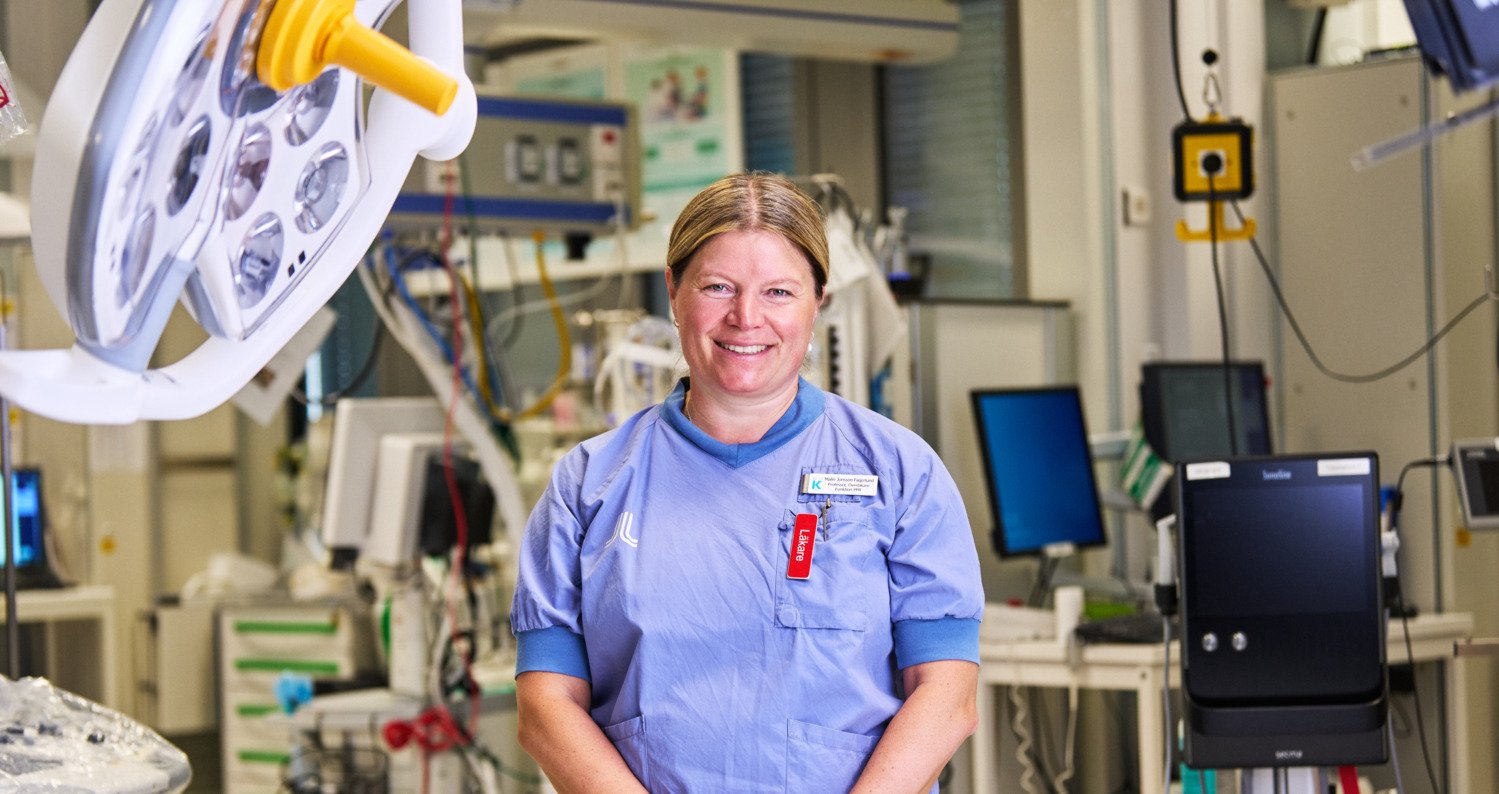
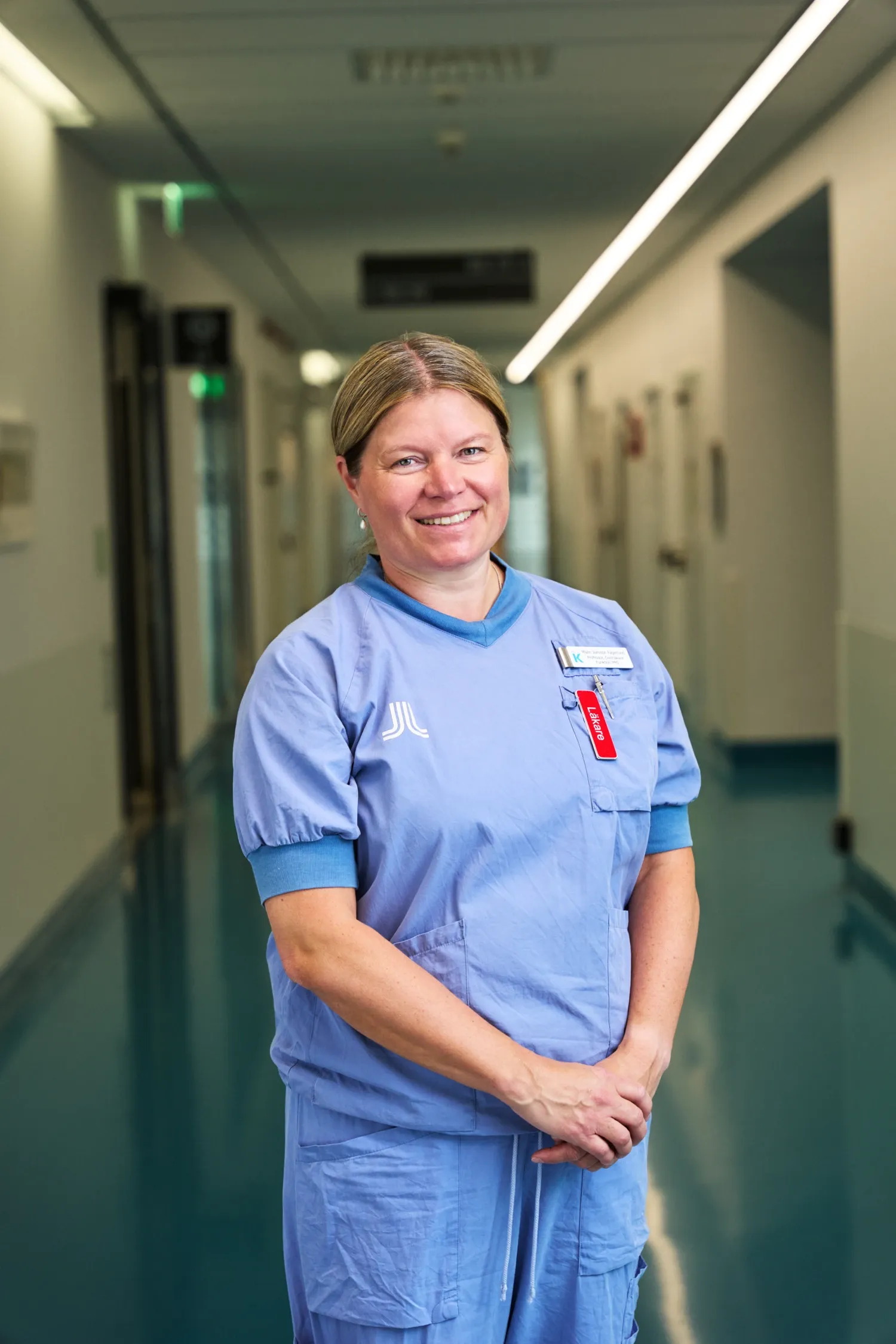
How can the healthcare services save more lives after trauma and cardiac arrest? Malin Jonsson Fagerlund’s research group intends to find out. Meet one of the new professors of Karolinska Institutet who will participate in this year's installation ceremony at Aula Medica on 8 October.
Text: Karin Tideström, for KI’s installation ceremony booklet 2026
Malin Jonsson Fagerlund researches how complications can be reduced and survival improved in the most seriously ill patients. One important focus is to prevent oxygen deficiency – a common cause of serious complications during anaesthesia and emergency care.
Amongst other things, her research group investigates new techniques to help patients obtain sufficient oxygen in connection with anaesthesia and surgery.
“The technique we are using can oxygenate patients for up to 30 minutes without their needing to breathe,” she says.
The researchers are also examining if the heart-failure drug levosimendan can improve survival after cardiac arrest. To test this, they are leading a unique pilot study in prehospital care with patients who suffered a cardiac arrest outside hospital.
Her research also includes patients with severe traumatic injury and haemorrhaging. Using clinical studies and laboratory research, she examines how the body reacts to life-threatening conditions and how treatments can be made more effective.
About Malin Jonsson Fagerlund
Professor of Anaesthesiology and Intensive Care at the Department of Physiology and Pharmacology as of 1 September 2025
Malin Jonsson Fagerlund was born in Umeå in 1974. She graduated with a medical degree in 2000, earning her PhD from Karolinska Institutet in 2006. She combines the post of professor with that of senior physician at Karolinska University Hospital’s Perioperative Medicine and Intensive Care unit in Solna.