

Lectures and seminars AI-Driven Experimental Science: From Robotic Life Sciences to Polymer Biointerfaces
We are happy to invite you to a seminar on AI-driven experimental science. The talks will explore how AI, robotics, and large-scale data platforms are transforming life sciences, alongside foundation model–based approaches for predictive biointerface design. Join us for an engaging discussion on how automation and data-driven modeling are reshaping experimental research.
Host
Yusuke Sakai, Department of Medical Biochemistry and Biophysics, Karolinska Institutet
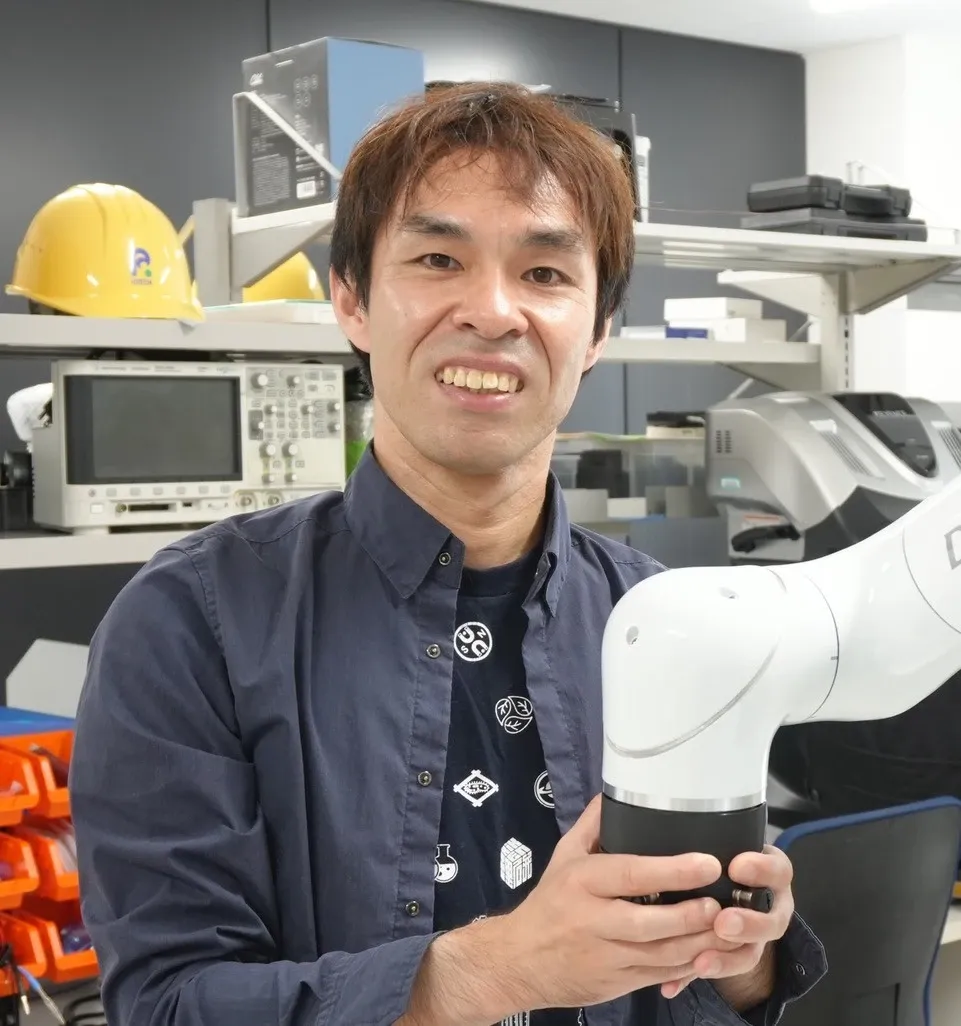
Talk 1. Dr. Nobuyuki Tanaka
RIKEN Center for Biosystems Dynamics Research, Japan
Title: Toward Computable Life Sciences: The Fusion of AI, Robotics, and the Data Foundry
Abstract: This presentation by Nobuyuki Tanaka, RIKEN Center for Biosystems Dynamics Research, Japan, proposes a paradigm shift towards "computable" life science through the integration of AI and robotics. As computational power continues to follow an accelerated Moore's Law, biological complex can now be addressed using high-expressivity AI models, including foundation models for molecules, cells, robotic physical actions. Central to this vision in the physical space is the "Data Foundry," a connected laboratory where industrial-grade robots execute large-scale experiments with precision that surpass human capabilities. Under the RIKEN TRIP-AGIS program, this framework aims to automate "mega-experimentation," enabling AI to navigate massive data spaces while humans provide strategic oversight. Ultimately, this fusion of HPC, AI, and robotics transforms biology into a computable, predictable, and controllable discipline.
Talk 2. Dr. Shiwei Su
RIKEN Center for Biosystems Dynamics Research, Japan
Title: Data-Driven Functional Materials: Exploring Polymer Interfaces for Bio-Applications
Abstract: The precise modulation of protein adsorption on polymer surfaces is fundamental to advancements in biomaterial design, including applications in antifouling materials, biosensors, cell culture, and drug delivery systems. In our previous work, we established quantitative structure-property relationships (QSPR) using conventional machine learning algorithms to accurately predict the physicochemical properties (water contact angle and zeta potential) and initial protein adsorption amounts of densely packed polymer brushes. However, despite these advancements, the intrinsic complexity of polymer-protein interactions and the scarcity of high-quality, standardized databases remain significant hurdles for the field. Existing predictive models frequently lack the generalizability required to characterize diverse polymer–protein systems within a unified computational framework.
To address these limitations, we present BB-EIT (Bio-interface BERT Encoder for Interaction Translation), a novel generalized model designed to accurately predict the adsorption of diverse proteins on polymer brush surfaces. BB-EIT utilizes the pretrained ChemBERTa large language model (LLM) architecture, employing SMILES strings for robust chemical representation. This approach facilitates efficient data augmentation via SMILES enumeration to enhance model performance on the small datasets characteristic of polymer informatics. The architecture integrates a specialized concatenated layer that incorporates a comprehensive suite of physicochemical and biochemical features. By adapting these, BB-EIT demonstrates state-of-the-art predictive accuracy and superior generalizability, successfully forecasting adsorption behaviors for previously unseen polymer–protein combinations.
As a subsequent phase of this research, we will implement experimental automation for the high-throughput synthesis and characterization of polymer brushes to iteratively refine model accuracy and expand the available chemical space. This research represents a significant advancement in establishing robust QSPR for complex biological interfaces and provides a framework for the data-driven design of functional biointerfaces with tailored properties.