
Successful PhD Defence on Infant Feeding Practices in Northern Nigeria
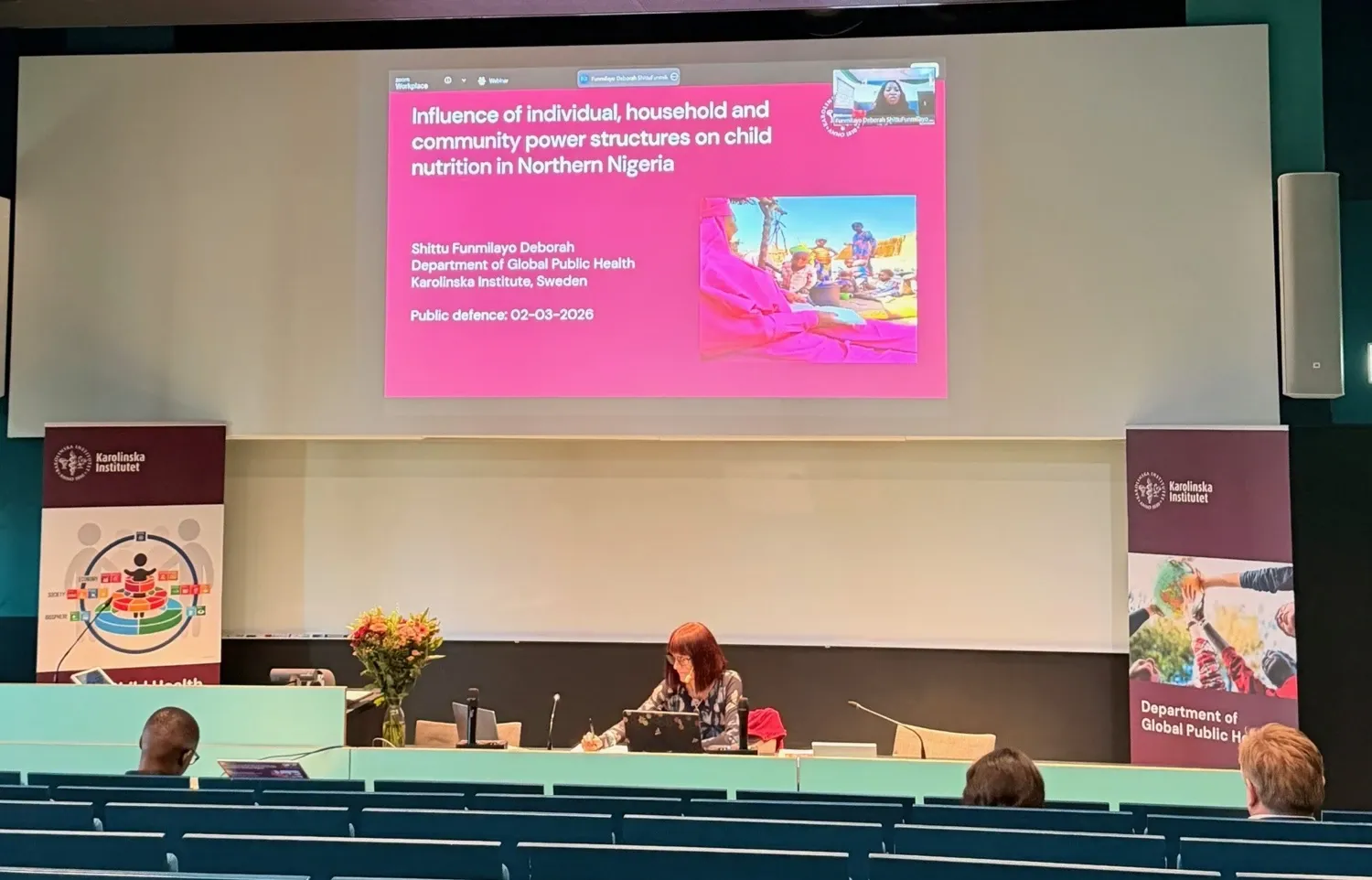
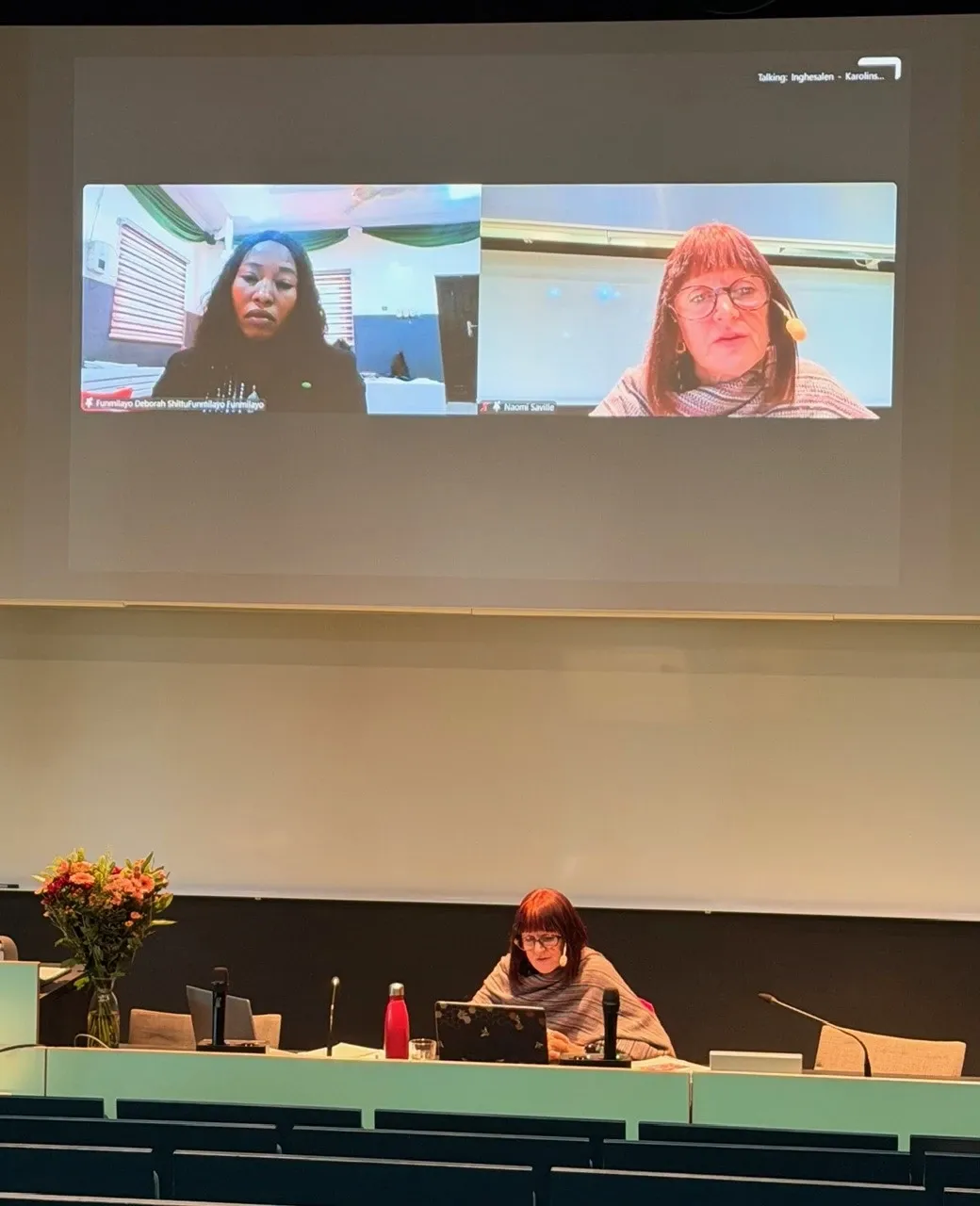
On 2 March, Funmilayo Deborah Shittu successfully defended her doctoral thesis on infant and young child feeding practices in Jigawa State, northern Nigeria. Due to being in the late stages of her own pregnancy, Shittu participated remotely from Nigeria, while the examination took place at Karolinska Institutet in Stockholm.
Opponent Dr. Naomi Saville of University College London, opened the defence with an inspiring and insightful overview of the broader research field, setting the stage for a rich academic discussion.
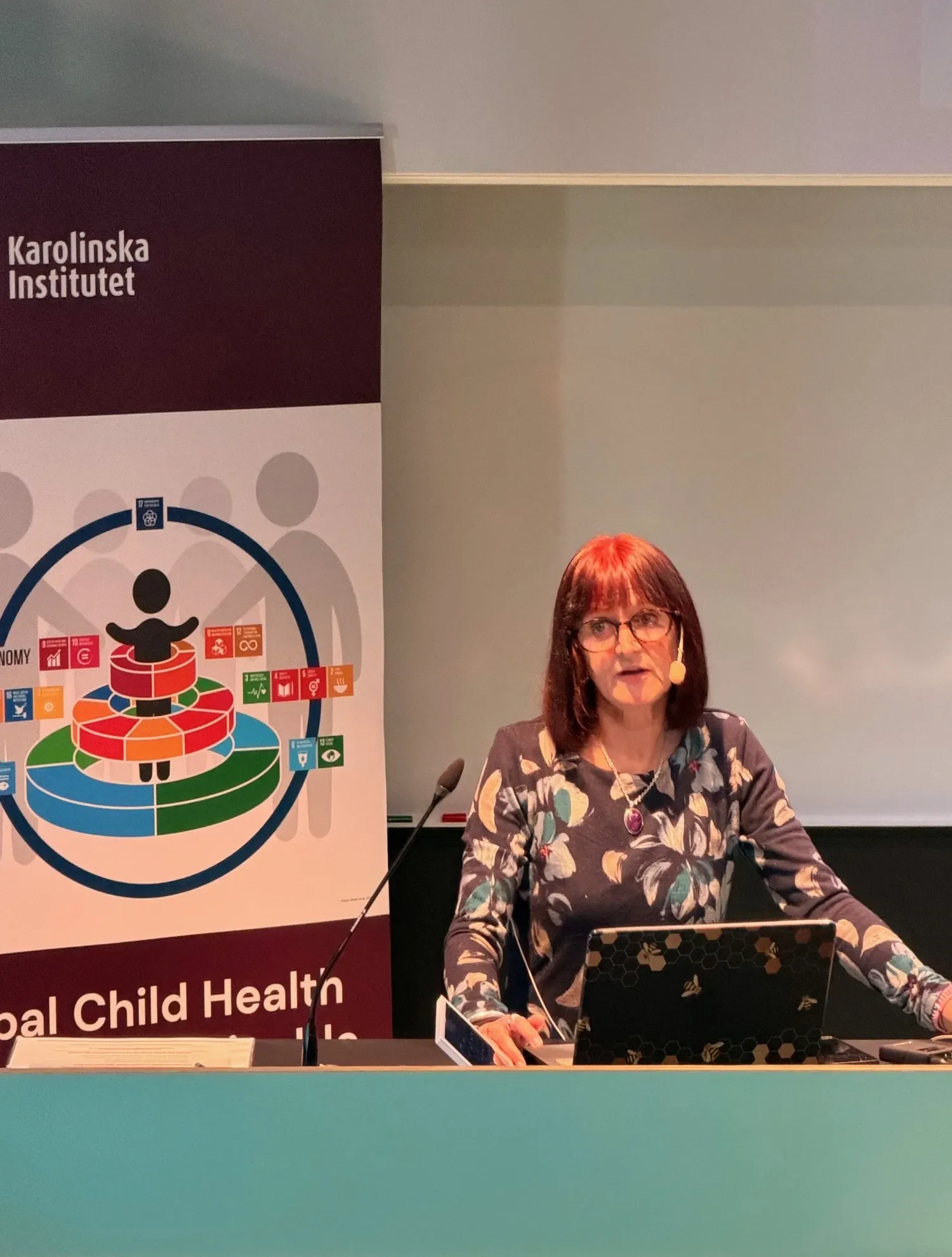
Funmilayo Shittu then presented her thesis, which addresses persistently high levels of child undernutrition and mortality in northern Nigeria, where exclusive breastfeeding (EBF) and complementary feeding practices are heavily influenced by household power structures and community norms. Drawing on a combination of quantitative and qualitative studies—including surveys, ethnographic interviews, and a secondary analysis of the INSPIRING trial (Integrated Sustainable childhood pneumonia and infectious disease reduction in Nigeria)—the research provides new evidence on how social dynamics shape feeding behaviours.
Among the key findings, the thesis shows that although reported EBF rates were higher than expected, local interpretations of EBF commonly included giving infants water, reflecting deeply rooted cultural beliefs. Household hierarchies, including the influence of fathers, grandmothers, and co-wives, were found to significantly affect mothers’ feeding decisions and autonomy. Complementary feeding quality remained low across age groups, with limited dietary diversity and very low consumption of animal-source foods.
The research concludes that improving infant and young child nutrition in settings like Jigawa requires interventions that engage not only mothers but entire households and communities. Addressing structural and social constraints—rather than focusing solely on individual knowledge—will be critical for achieving sustainable improvements in child nutrition.
Shittu’s work makes an important contribution to understanding the complex social systems that shape early child feeding and provides valuable guidance for designing more effective nutrition interventions in high‑mortality contexts.
Funmilayo Deborah Shittu successfully defended her thesis on 2 March 2026
Opponent at the defence was Naomi Saville, Principal Research Associate, Institute for Global Health, University College London, UK
Examination board members were
Docent Elin Larsson, GPH, Karolinska Institutet
Professor Mats Målqvist, Professor, Department of Women's and Children's Health, Uppsala University
Docent Shirin Ziaei, Department of Women's and Children's Health, Uppsala University
Funmilayo Shittu’s Main supervisor was Docent Carina King, GPH, Karolinska Institutet
Co-supervisors:
Docent Susanne Rautiainen Lagerström, GPH, Karolinska Institutet
Professor Rochelle A Burgess, Institute for Global Health, University College London, UK
Professor Adegoke G Falade, Oxygen for Life Initiative, University of Ibadan, Nigeria