
Start of autumn term 2026
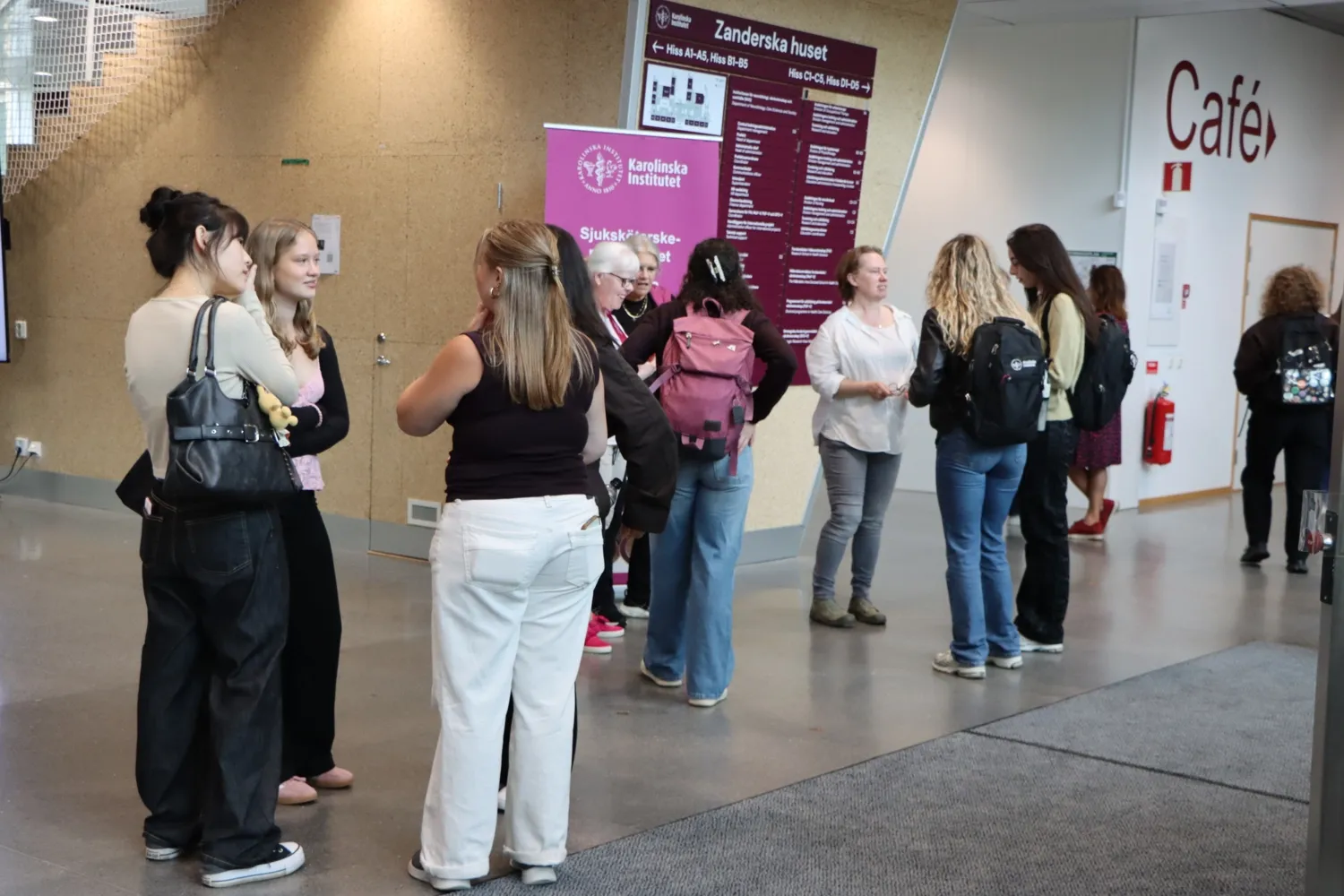
All NVS study programmes have now started a new term, and many new students have arrived to begin their studies. Two of the programmes offered are also introducing new curricula.
The Study Programme in Occupational Therapy
The Study Programme in Occupational Therapy traditionally began the term with the student association Artemis welcoming the new occupational therapy students with coffee and pastries before the roll call. Very popular! The new students then had a packed day, beginning with information from Programme Director Eva Lindqvist and Director of Studies Camilla Malinowsky. This was followed by a welcome from Head of Department Maria Ankarcrona. They also had the opportunity to get to know each other in groups. The day ended with an introduction to the library.
The Study Programme in Physiotherapy
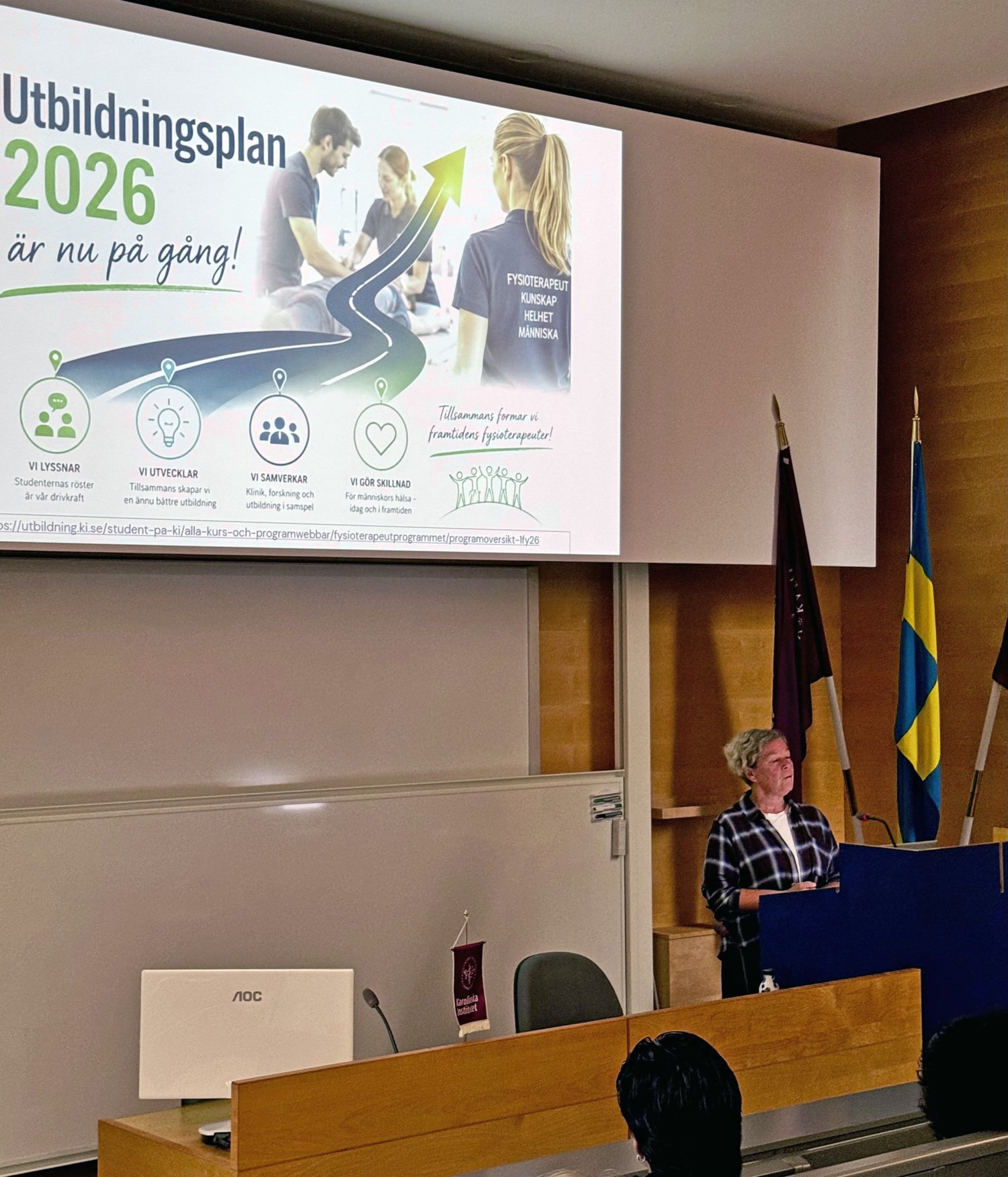
Nearly 90 physiotherapy students attended the roll call and programme introduction on August 31 at ANA 8. Programme Director Marie Halvorsen welcomed the students and provided information about what to expect over the next six terms. Study councelor, administrative officer and education administrator were also present to answer questions. Head of Department Maria Ankarcrona was invited to give a special welcome.
The student association's physiotherapy section were at hand to inform about the "kollo" orientation camp, which, according to long-standing tradition, takes place at the beginning of the first term. Kollo is a valuable part of the programme introduction and an opportunity for new students to get to know both each other and students from higher years.
New curriculum for the Study Programme in Physiotherapy
The Study Programme in Physiotherapy has a new curriculum with new courses, starting at the autumn term 2026, which was given particular attention during the introduction. New features include, for example, a longer introductory course in term 1 including theory of science, as well as an extended clinical placement course in rehabilitation in term 4. The interprofessional course KUA and the degree project course have been moved from term 6 and will now be offered in term 5. The shift between courses in terms 5 and 6 is also intended to create a larger window for exchange studies.
The Study Programme in Nursing
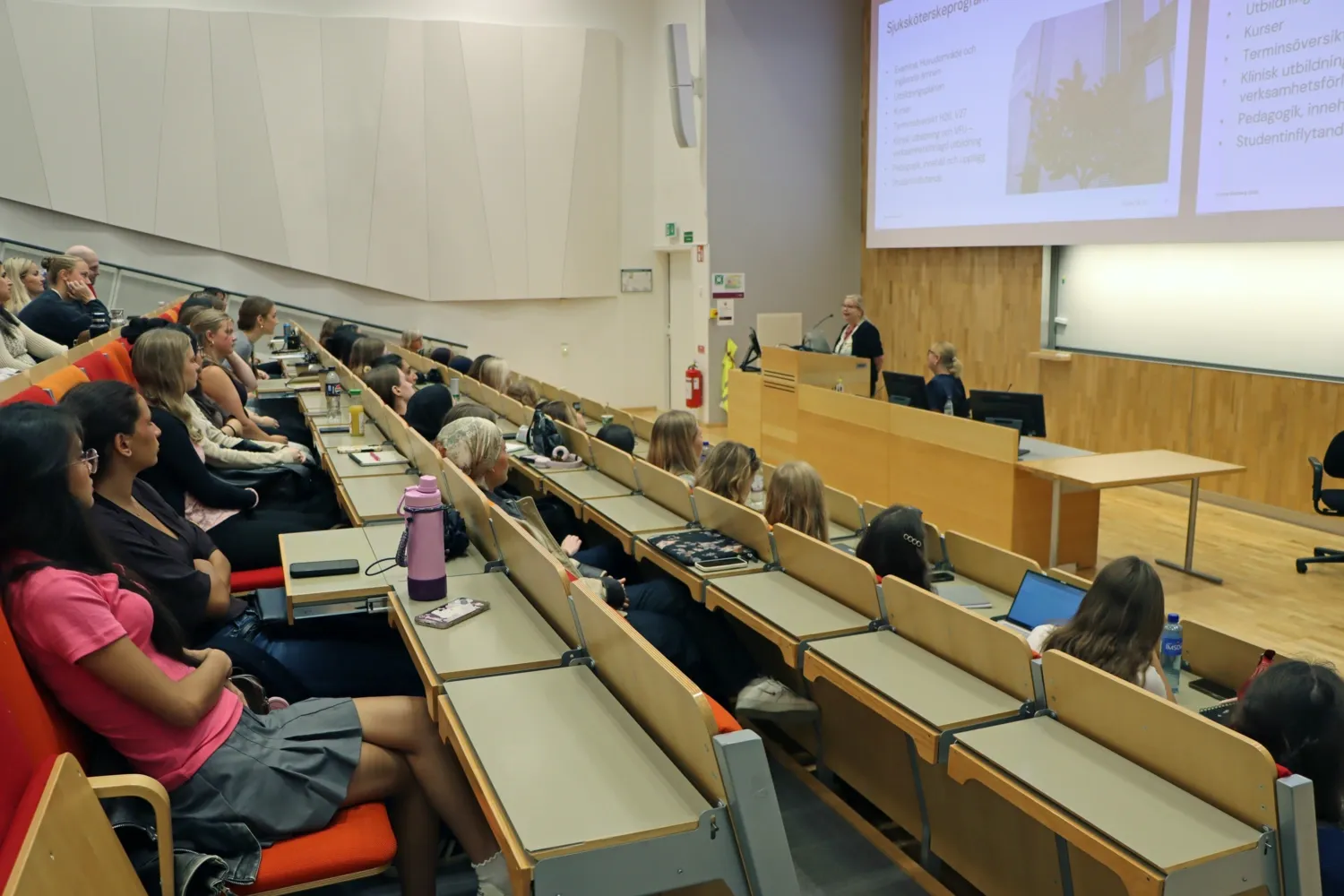
On Monday August 31, the Study Programme in Nursing held its introduction, this time with a new curriculum (1SJ26). Lecture hall H1 Red in the Zanderska building was full of expectant students. Programme director Kristina Gottberg, and Deputy programme director Carina Georg led the introduction and presented the programme and its courses, information about clinical placement training and the objectives for the qualifications: Bachelor of Science in Nursing and Bachelor of Medical Science. Head of Department Maria Ankarcrona and the student association (SSEK and “festis”) took part in welcoming all the new students.
New curriculum for the Study Programme in Nursing
The new curriculum includes a number of changes to the course content, with new courses being introduced, in addition to the major change that the distance-learning option will no longer be offered. The 180-credit programme includes more, but shorter, courses (worth a maximum of 15 credits each), newly developed courses in professional competence, and a course in paediatric nursing care. The degree project course has been moved from semester 6 to semester 5. The new programme also includes an increased amount of clinical training with VFU, in line with the EU Professional Qualifications Directive.
The Study Programmes in Specialist Nursing
There was a strong turnout of around 270 students at the joint web-based introduction for all specialist nursing programmes. The introduction began with Head of Department Maria Ankarcrona welcoming the students and speaking about KI. This was followed by presentations on internationalisation, IPL, patient safety, and more. The programme concluded with the student association explaining how it can support students and the types of activities they offer. After the joint introduction, the students split into groups and met the lecturers responsible for their respective specialisations within each programme.