
New thesis highlights promising therapeutic strategy for neurodegenerative diseases
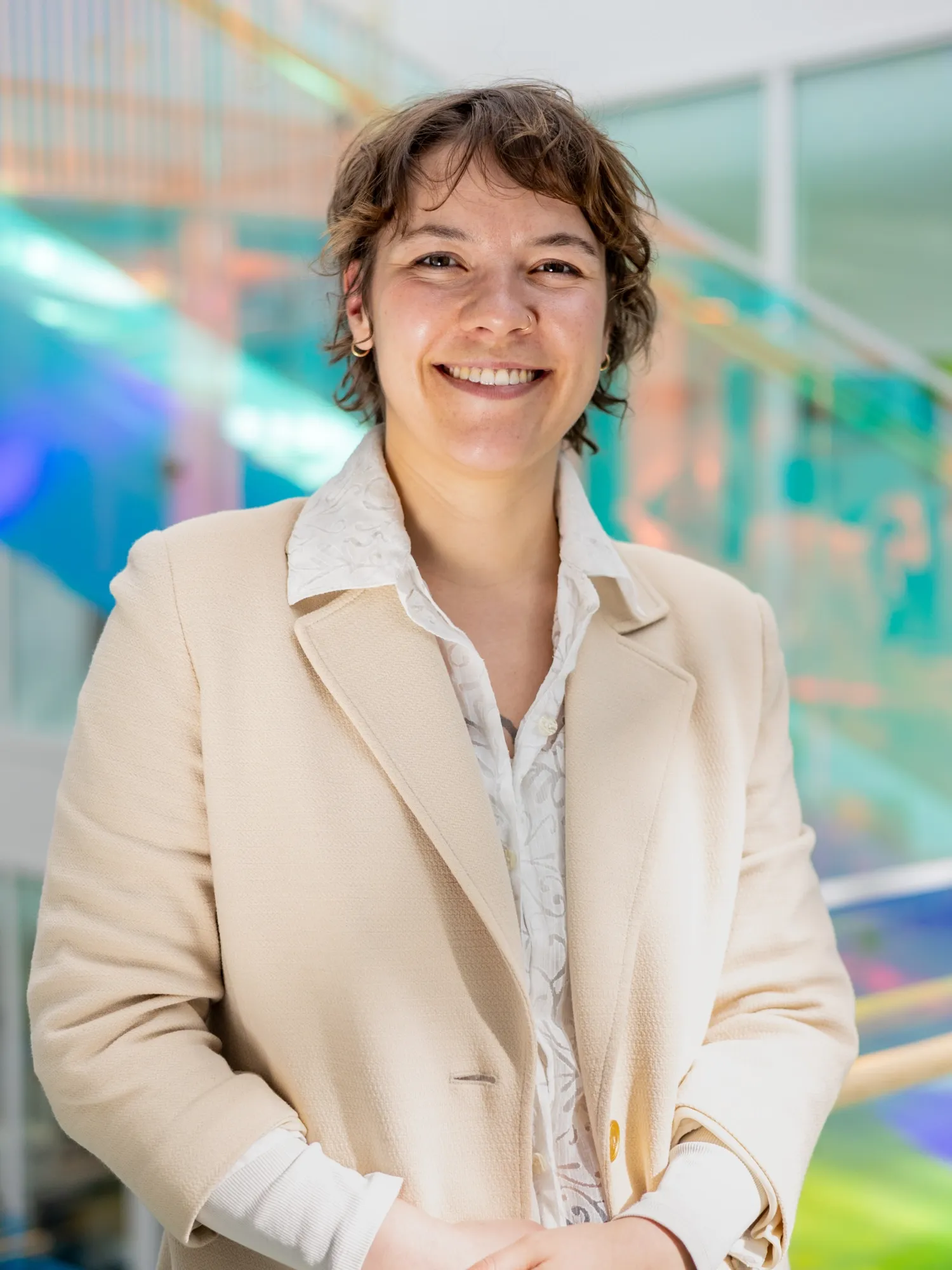
Laurène Adam from the Center for Reproduction, Metabolism and Molecular medicine (CeRM) at the Department of Medicine, Huddinge (MedH), defends her thesis titled "Molecular insights into Bri2 BRICHOS and copper modulation of α-synuclein in Parkinson’s disease", on 12 June 2026. Main supervisor is Axel Abelein.
What is the main focus of your thesis?
"My thesis overall explores the therapeutic potential of the BRICHOS protein domain in Alzheimer’s and Parkinson’s diseases. It focuses on understanding how certain proteins in the brain can lose their normal shape and stick together, forming harmful clumps that are strongly linked to these conditions."
"I studied a process called secondary nucleation, where existing protein clumps can trigger the formation of new potentially toxic particles, accelerating disease progression."
"A central part of my work investigates how the BRICHOS domain acts as a molecular “caretaker,” preventing this harmful protein aggregation and, in contrast, how copper ions accelerate this event."
Which are the most important results?
"My work shows that the BRICHOS domain can protect not only against Alzheimer’s-related proteins (amyloid-b, previously published), but also against α-synuclein, the protein involved in Parkinson’s disease."
"I found that BRICHOS slows down the formation of the potentially toxic protein species and contributed to identify where it binds on amyloid-b fibrils. Another key finding is that BRICHOS is highly flexible, which likely allows it to interact with different types of disease-related protein clumps."
"Copper ions, in contrast, accelerate α-synuclein aggregation by changing the structure of α-synuclein molecules. These results help us understand how secondary nucleation works at a molecular level and how it can be blocked."
How can this new knowledge contribute to the improvement of people’s health?
"Neurodegenerative diseases such as Alzheimer’s and Parkinson’s currently have no cure, and treatments that slow disease progression are urgently needed."
"By showing how BRICHOS can inhibit secondary nucleation, a toxic process, my research highlights a promising strategy for therapeutic intervention in these devastating diseases."
What are your future ambitions?
"My immediate goal is to complete and wrap up the research projects I have initiated during my PhD. After this, I plan to move outside of academia and begin a new chapter of my career."
"I am particularly motivated to work in roles where science communication is central, such as scientific liaison or scientific mediation in laboratories or research focused environments."
Dissertation
Friday 12 June, 09:30, Jan-Åke Gustafssonsalen, Neo, Blickagången 16, Flemingsberg
Thesis
Molecular insights into Bri2 BRICHOS and copper modulation of α-synuclein in Parkinson’s disease