
Nandita Perumal strengthens maternal and child health research at KI
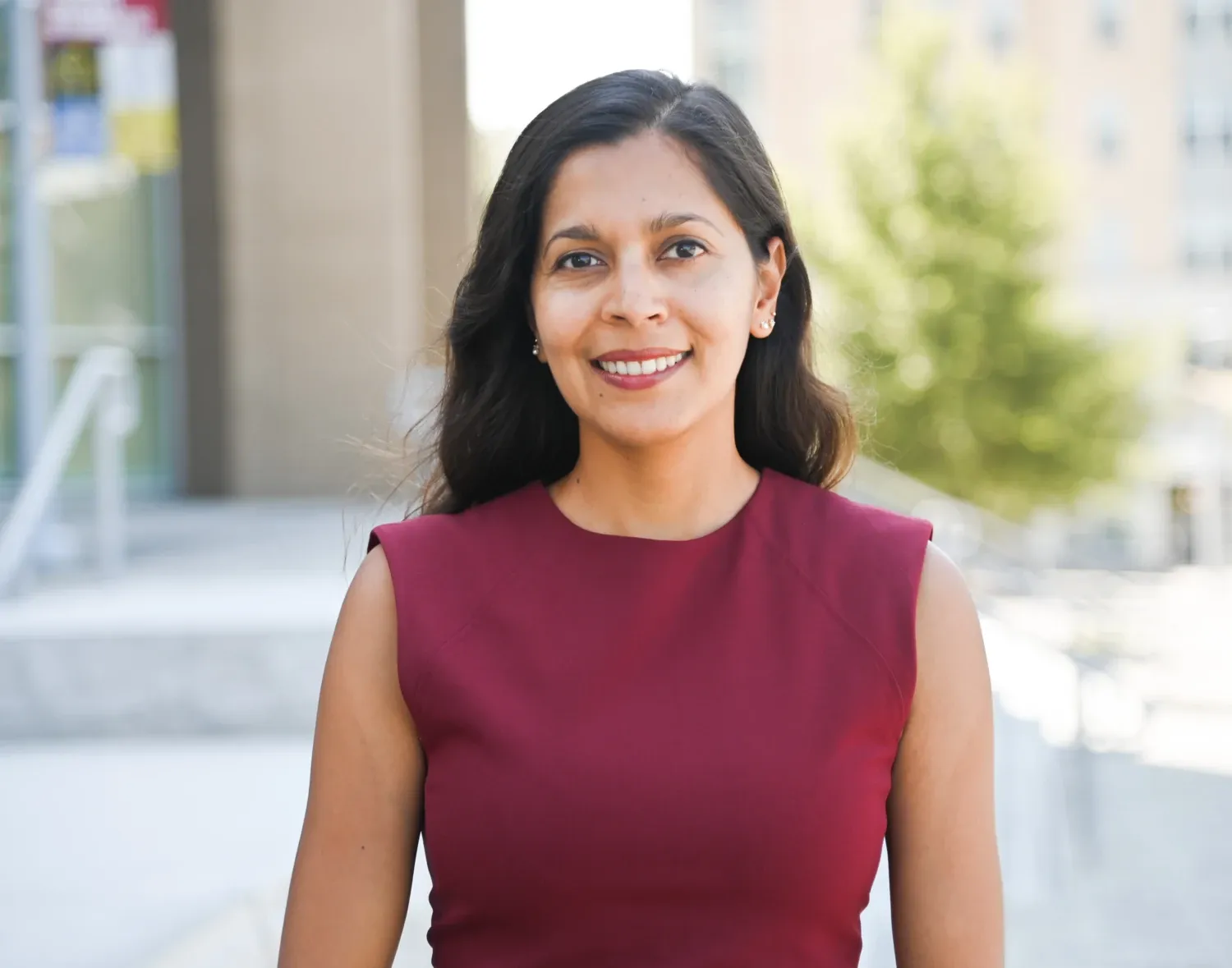
An undergraduate practicum in Kenya helped spark a lifelong interest in global public health. Since then, Nandita Perumal has worked across some of North America's leading universities, building an academic career dedicated to understanding how early-life experiences shape health and development. In her upcoming role as an assistant professor at the Department of Global Public Health, she will focus on building a research program in applied maternal, newborn, and child health.
In 2025, Karolinska Institutet carried out its largest international recruitment initiative to date for assistant professors, announcing 20 positions across as many departments. With a strong emphasis on excellence, each department defined its own research profile and conducted its recruitment process independently.
The Department of Global Public Health advertised an assistant professor position in Public Health Sciences and was delighted by the strong interest from many highly qualified applicants. Following a thorough and engaging recruitment process, the position was offered to Nandita Perumal.
Meet Nandita Perumal
Welcome, Nandita! Please, tell us a bit about your academic background and what you are most looking forward to in your new academic context.
“I have been fortunate in that my academic path has spanned several countries and institutions. I did my undergraduate degree in Human Nutrition at McGill University and obtained my Masters in Public Health and PhD in Epidemiology from the University of Toronto, all in Canada. I then completed my postdoctoral fellowship in the Department of Global Health and Population at the Harvard T.H. Chan School of Public Health, was a Managing Research Scientist at the Institute for Health Metrics and Evaluation at the University of Washington, and, most recently, was an assistant professor in the Department of Epidemiology and Biostatistics at the University of South Carolina. Each of these environments shaped who I am as a researcher, teacher, and mentor, and I am excited to add a Swedish and European perspective to that mix.
Karolinska Institutet has long been a place I associated with rigorous and globally engaged public health science. The Department of Global Public Health stood out to me for the way it brings together methodological depth, real-world impact, and genuine equitable international partnerships. What I am most looking forward to is building a research program in applied maternal, newborn, and child health within a system that values impactful work and long-term investment in partnerships, being closer to European collaborators, and discovering a new academic culture.”
Can you tell us a bit about your research interests and how you hope to develop your work within the Department of Global Public Health?
“My research focuses on maternal, newborn, and child health, with a focus on how nutrition and other early-life exposures shape health and development across the life course. My passion for this field was sparked during my undergraduate years, when a practicum in Kakamega, Kenya introduced me to an agriculture- and health integrated intervention that helped mothers grow orange-fleshed sweet potatoes distributed at antenatal care clinics to improve vitamin A intake during pregnancy. That experience left a lasting impression and became central to my academic journey in global public health.
Methodologically, I work at the intersection of perinatal and pediatric epidemiology, clinical trials, and causal inference. My doctoral and postdoctoral work spanned questions ranging from how we should measure growth in children born preterm to reduce bias, to how prenatal nutrition interventions translate into human capital gains in low- and middle-income countries (LMICs), to individual participant data meta-analysis of tens of pregnancy cohorts and trials in LMICs to generate evidence on gestational weight gain and newborn outcomes. Much of this work has been carried out in close partnership with research groups and communities in sub-Saharan Africa and South Asia.
Within the Department of Global Public Health, I hope to build a research program that complements the core strengths of the department in maternal and child health and to foster new interdisciplinary collaborations with clinicians and scientists. Ultimately, my work aims to generate evidence that can inform guidelines and policy to help women and children in the most critical and vulnerable stages of the life-course. I am also very much looking forward to contributing to the Department's teaching mission and to supervising graduate students, which is one of the parts of academic life I find most rewarding.”
What do you enjoy doing outside work, and how do you hope to spend your free time in Sweden?
“Outside of work, I enjoy hiking outdoors, spending time with family and friends (Canadian cottage country is lovely), and learning about new cultures and cuisines. Sweden feels like a wonderful place to indulge all these interests. I am looking forward to exploring the Swedish outdoors (including a chance to see the Northern lights), learning Swedish, and slowly working my way through Stockholm's food scene. Recommendations welcome!”